paper preview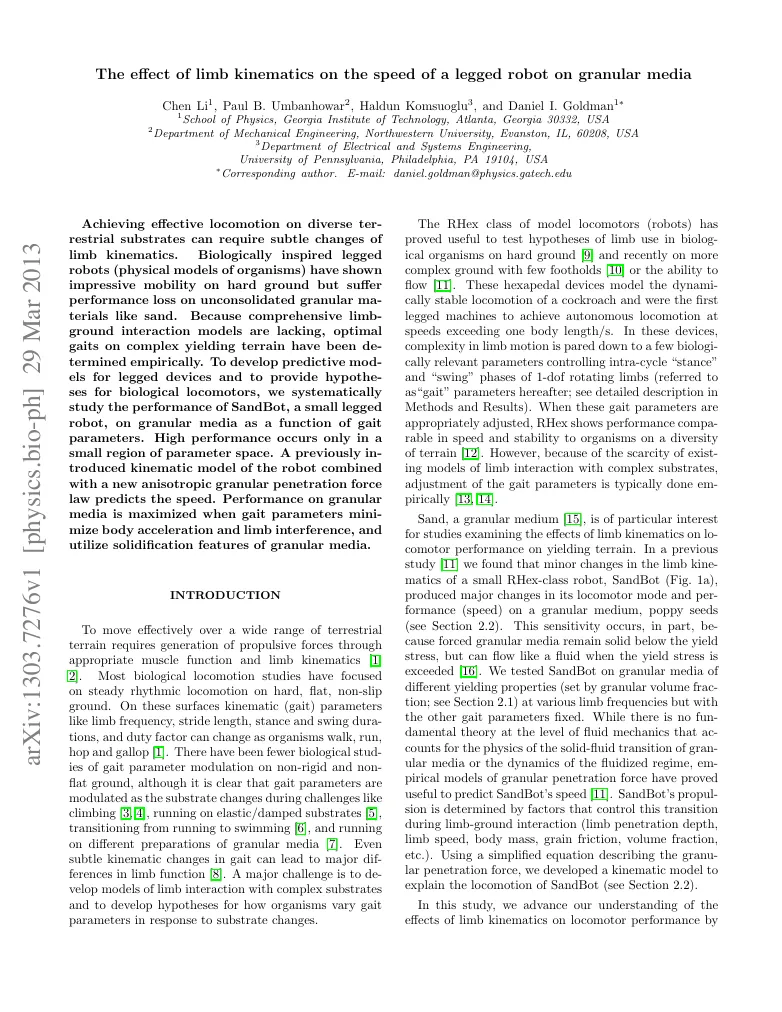
01arXiv
The effect of limb kinematics on the speed of a legged robot on granular media
Tunes gait timing and leg motion to make a small legged robot move faster across sand.
Terrain, gait, robustness, and agile movement.
Tunes gait timing and leg motion to make a small legged robot move faster across sand.
Lets quadrupeds learn gaits and trajectories faster with a differentiable contact model.
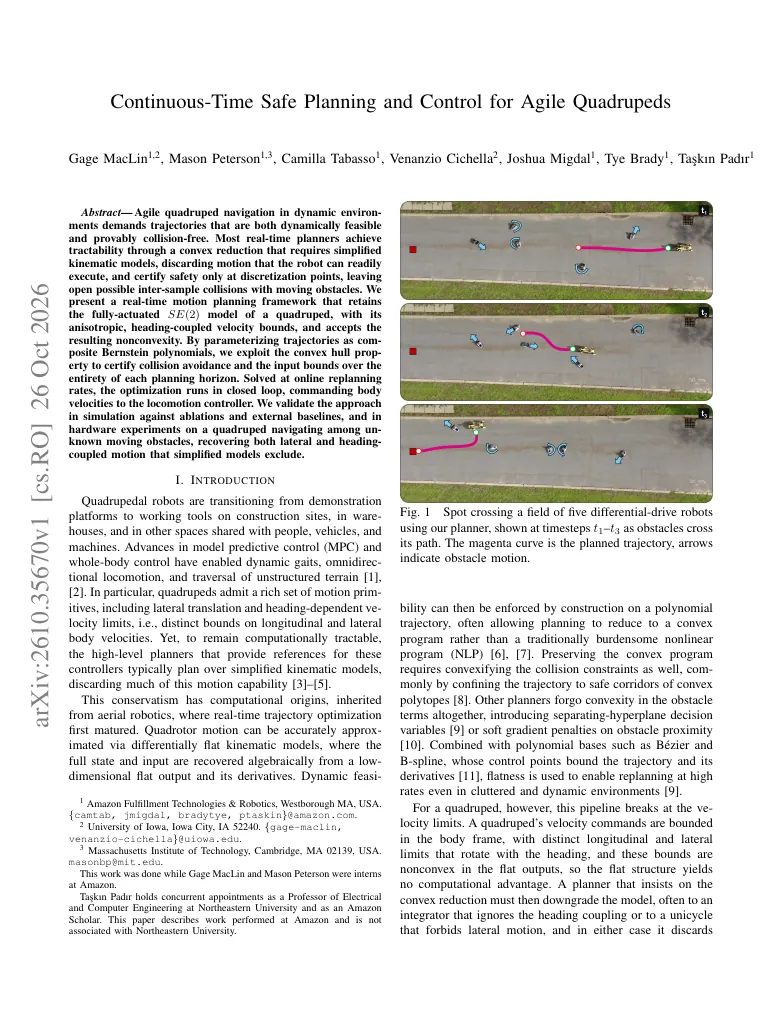
Plans collision-free Spot motion while respecting the robot's different forward and sideways speed limits.
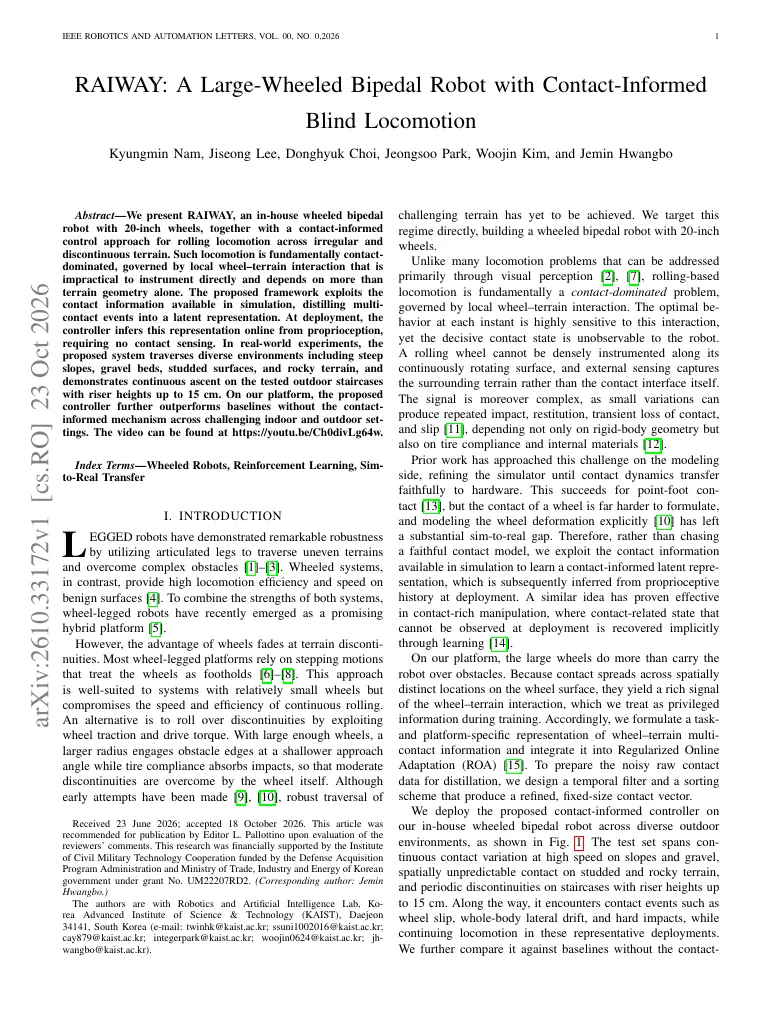
Lets a large-wheel biped climb steps without vision by reacting to wheel and ground contact.
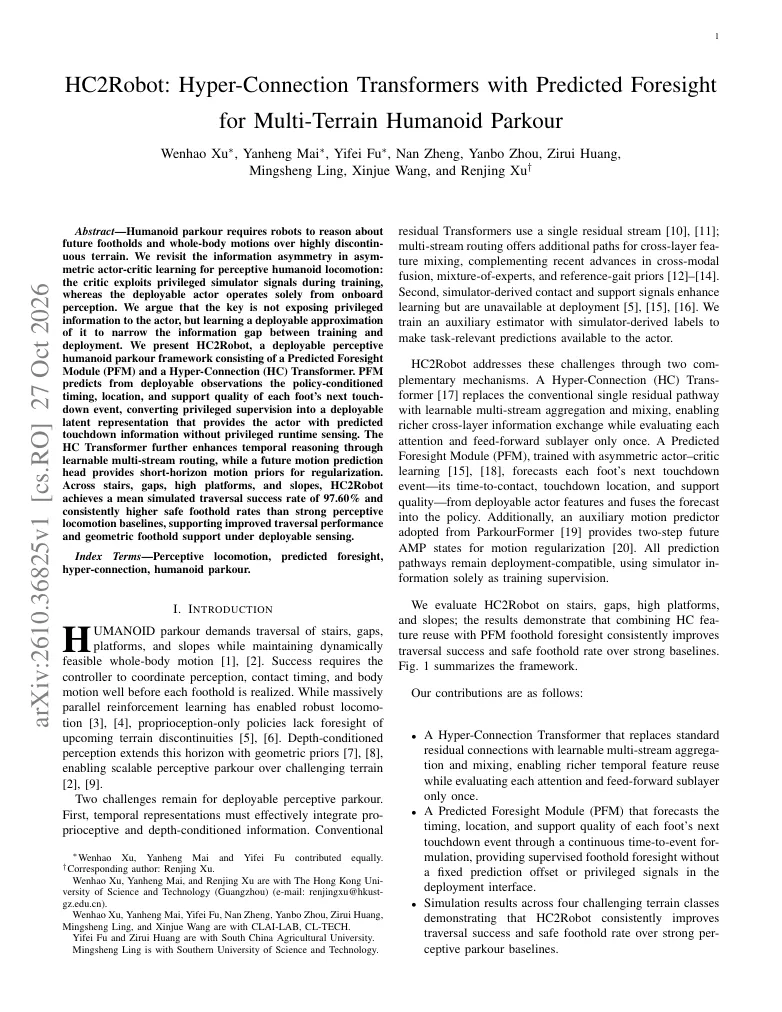
Predicts each foot's next landing from depth and body motion to improve humanoid parkour.
Switches a G1 between walking and crawling so it can pass through low spaces.
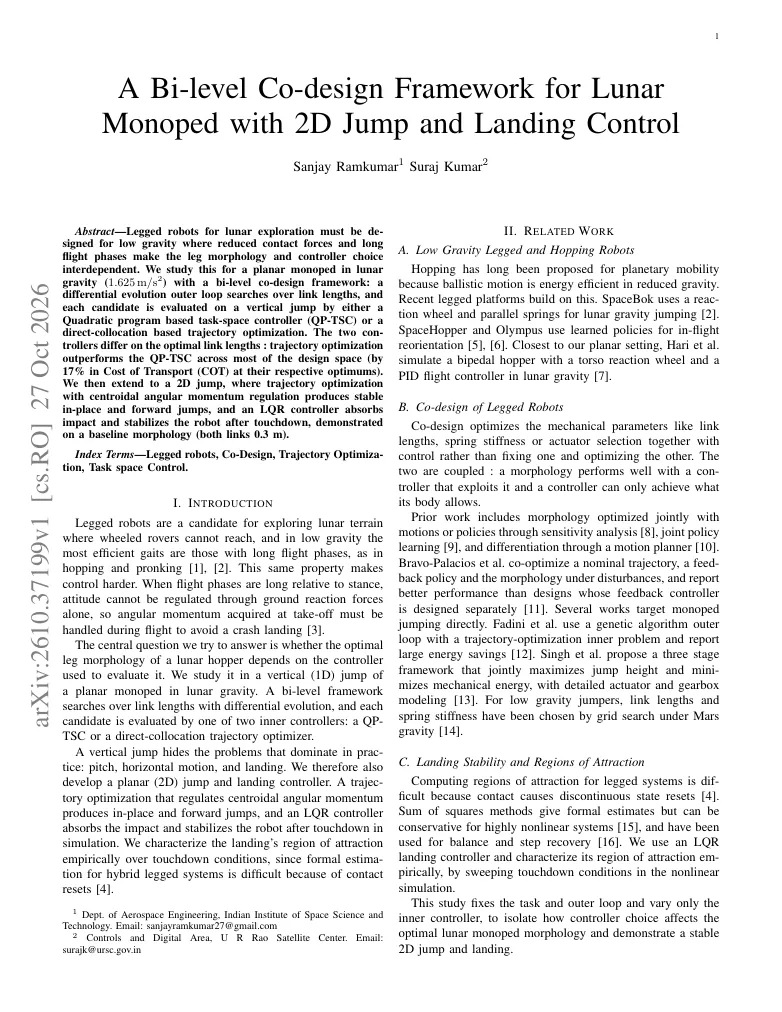
Designs a lunar monoped's body and jump controller together so it can launch and land.
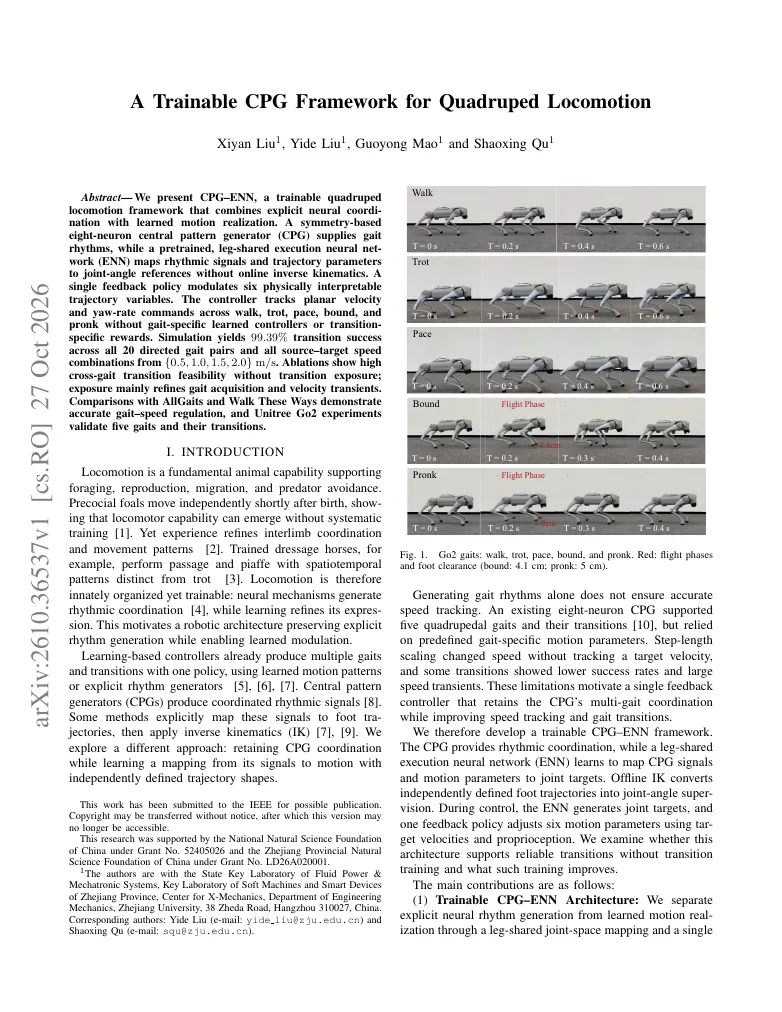
Uses one compact controller to switch a quadruped among five walking gaits.
Gives a Go2 spatial memory so it can explore without forgetting where it already walked.
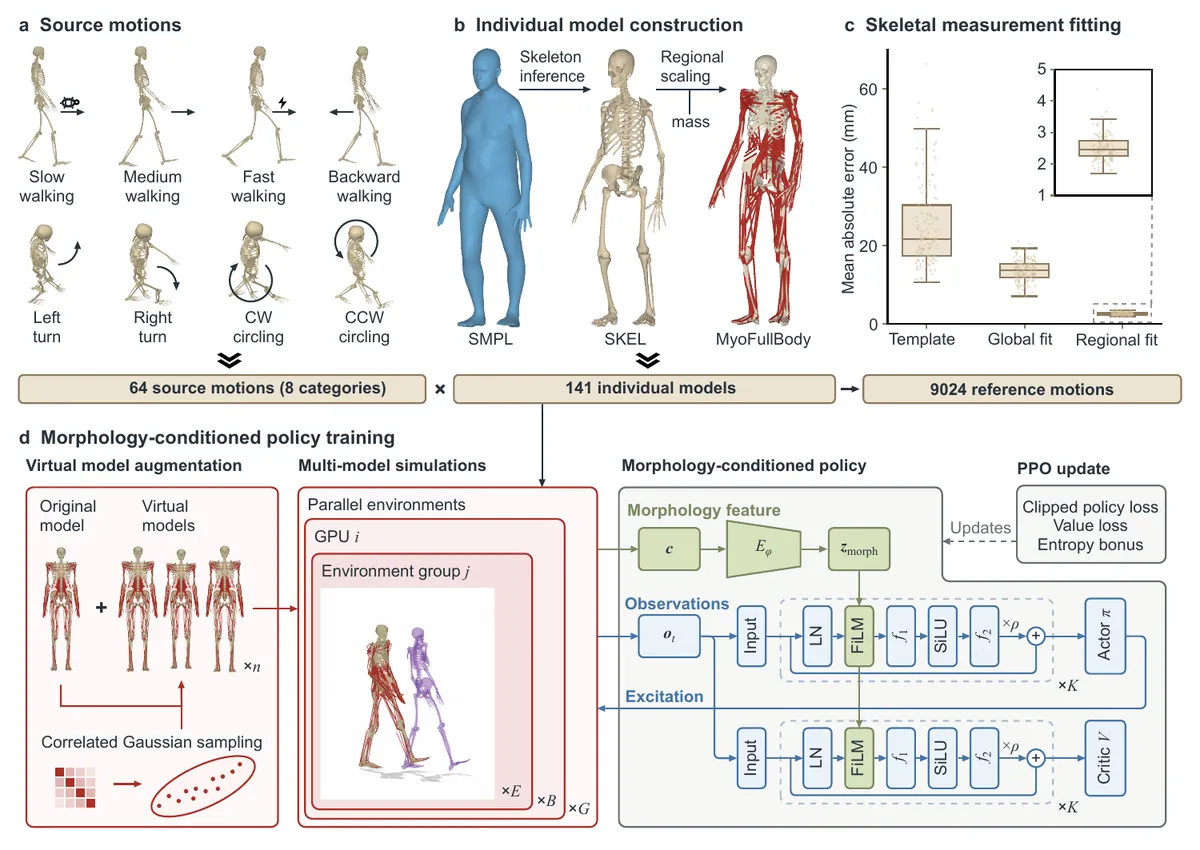
Controls muscle-driven walking across many different human body models with one shared policy.
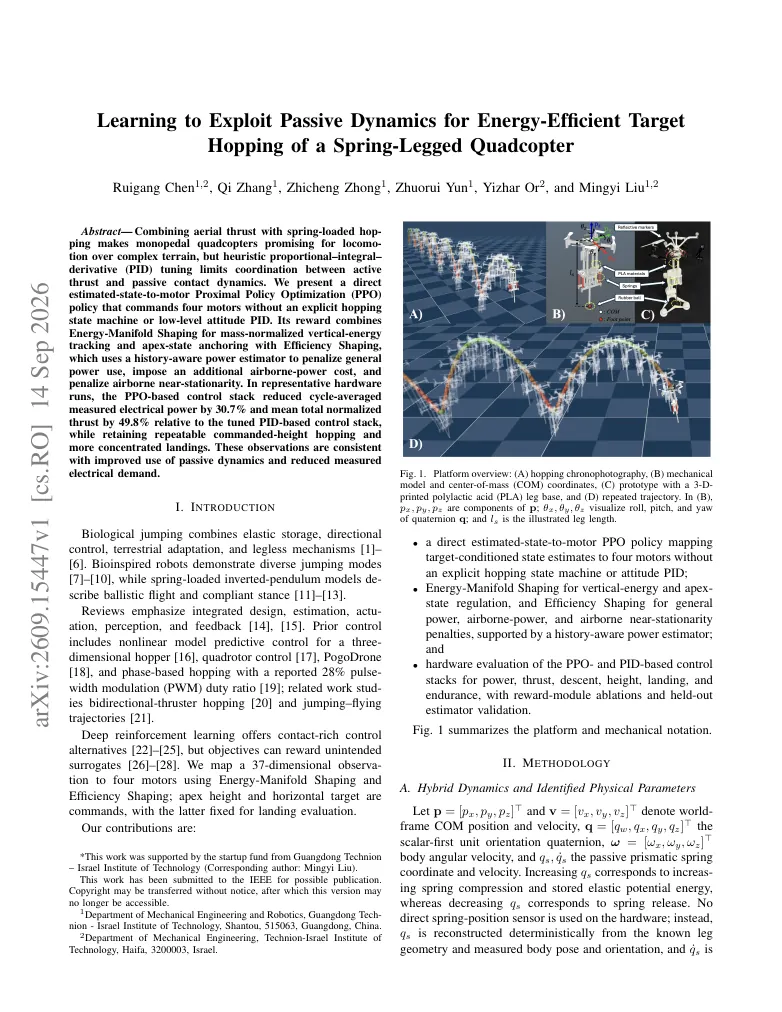
Coordinates rotors with a passive spring leg so a robot can hop toward targets using less power.
Lets a quadruped tow a wagon through narrow passages with wagon-aware walking and planning.
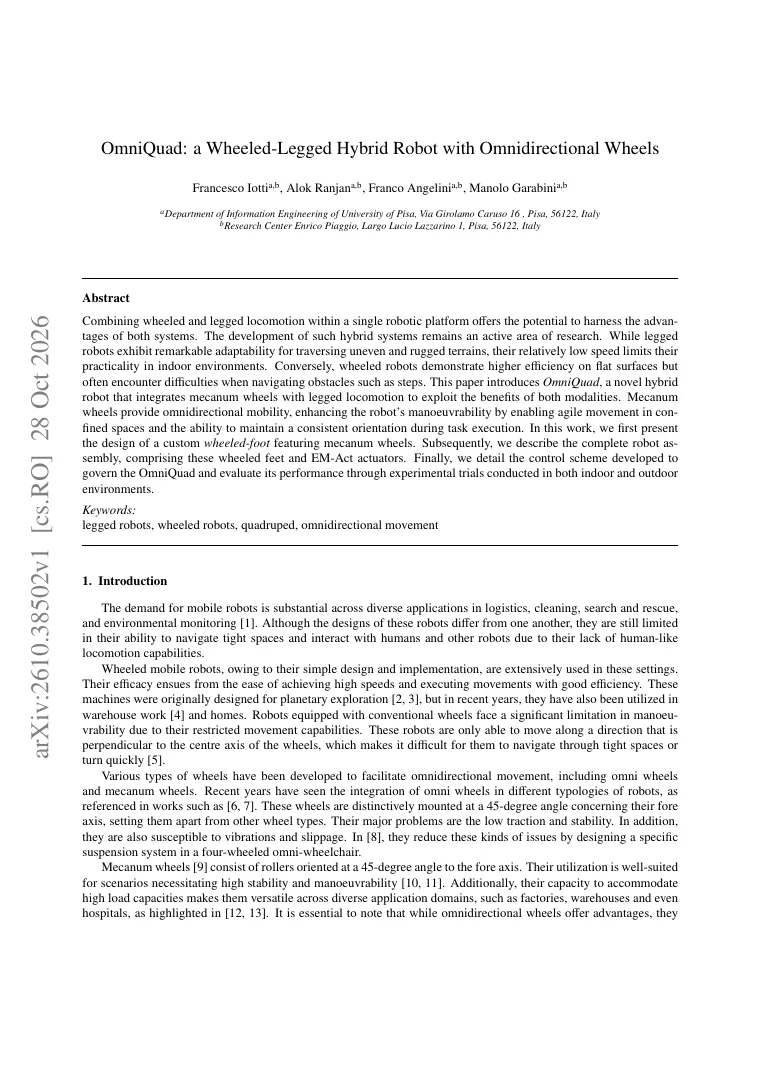
Combines mecanum-wheel feet with legs so a quadruped can drive in any direction and step over obstacles.
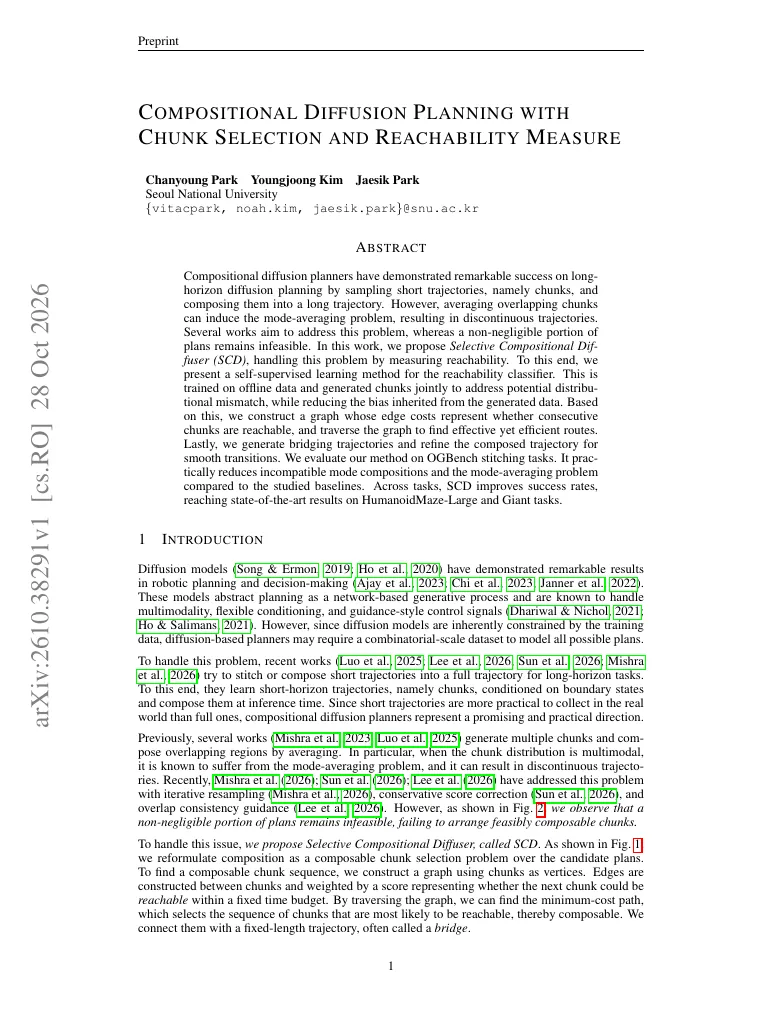
Joins diffusion-generated motion chunks only when the robot can safely reach the next chunk.
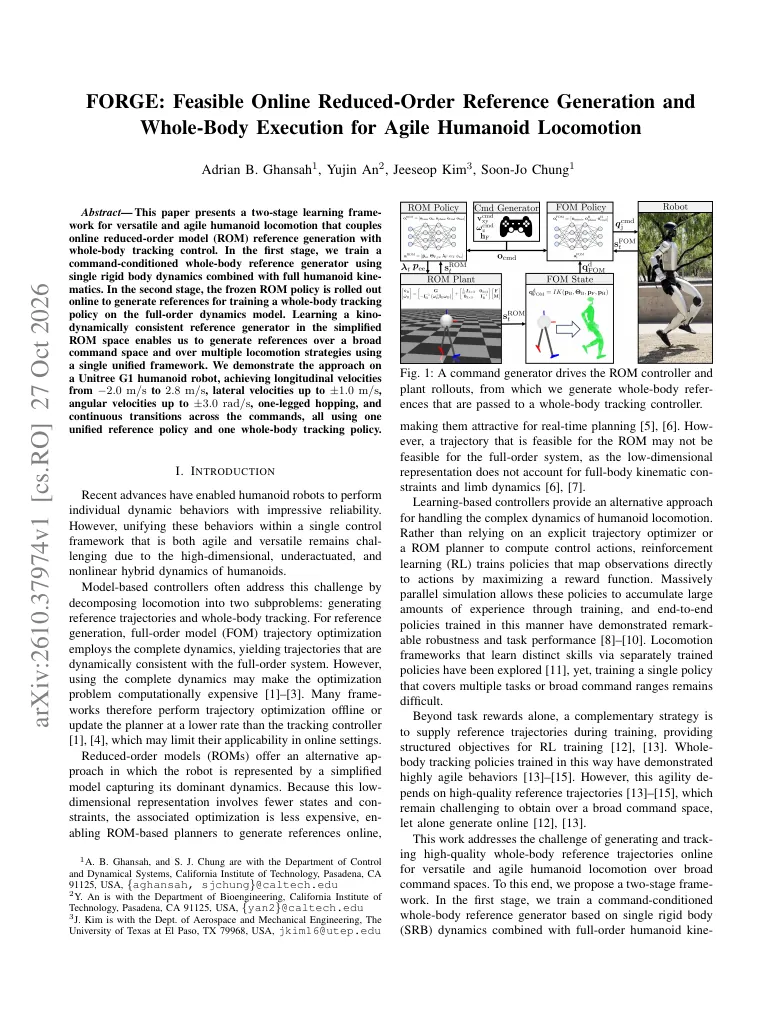
Generates feasible running and hopping references online, then tracks them on a G1.
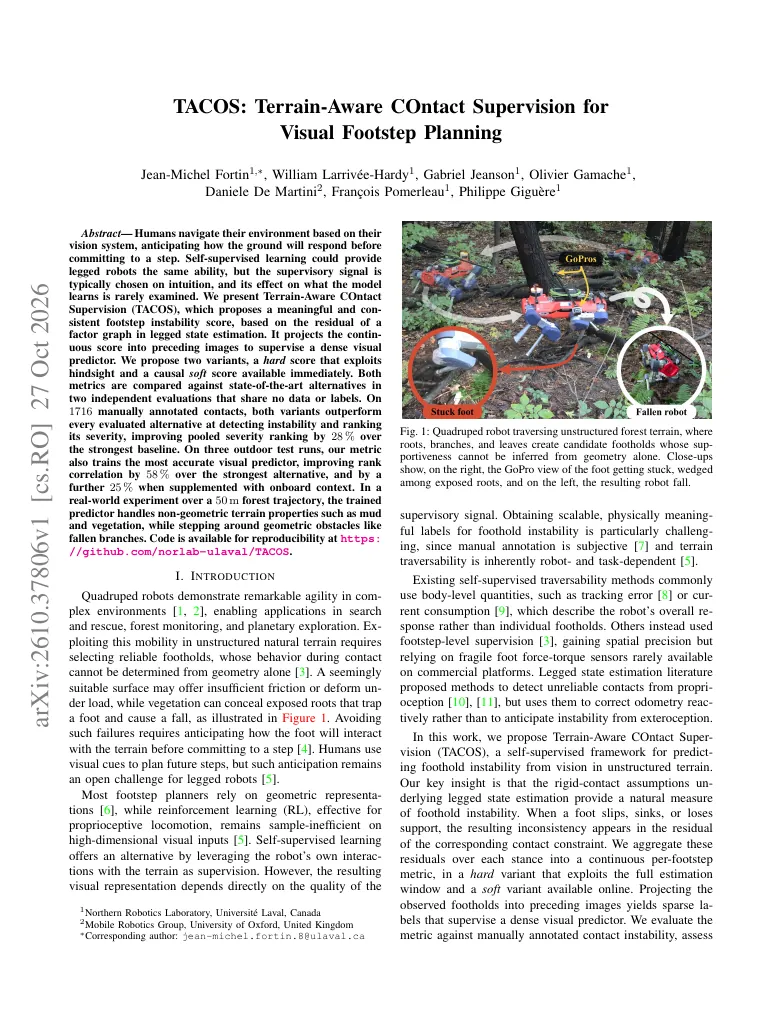
Learns from foot contact which terrain spots are unstable, then uses vision to choose safer footholds.
Reference motion, imitation, retargeting, and behavior priors.
Turns ordinary video into humanoid motion, using tracker feedback to keep the generated moves executable.
Makes humanoid motion trackers tolerate command delays by training them with randomized lag.
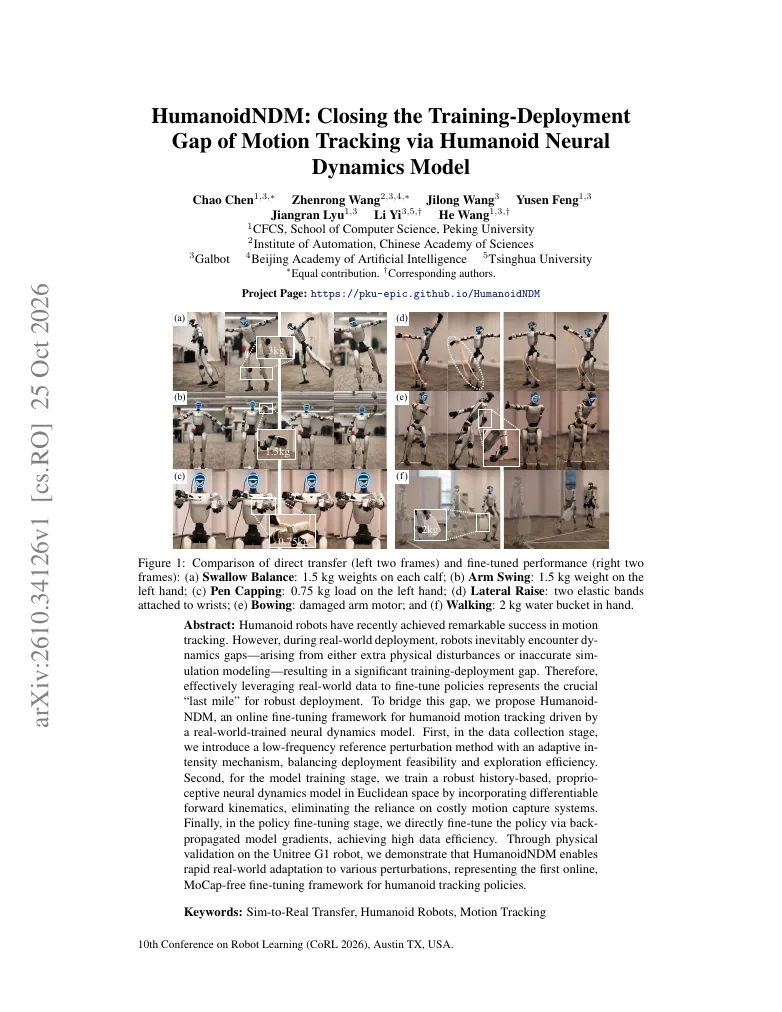
Adapts a humanoid motion tracker to real robot dynamics using the robot's own movement experience.
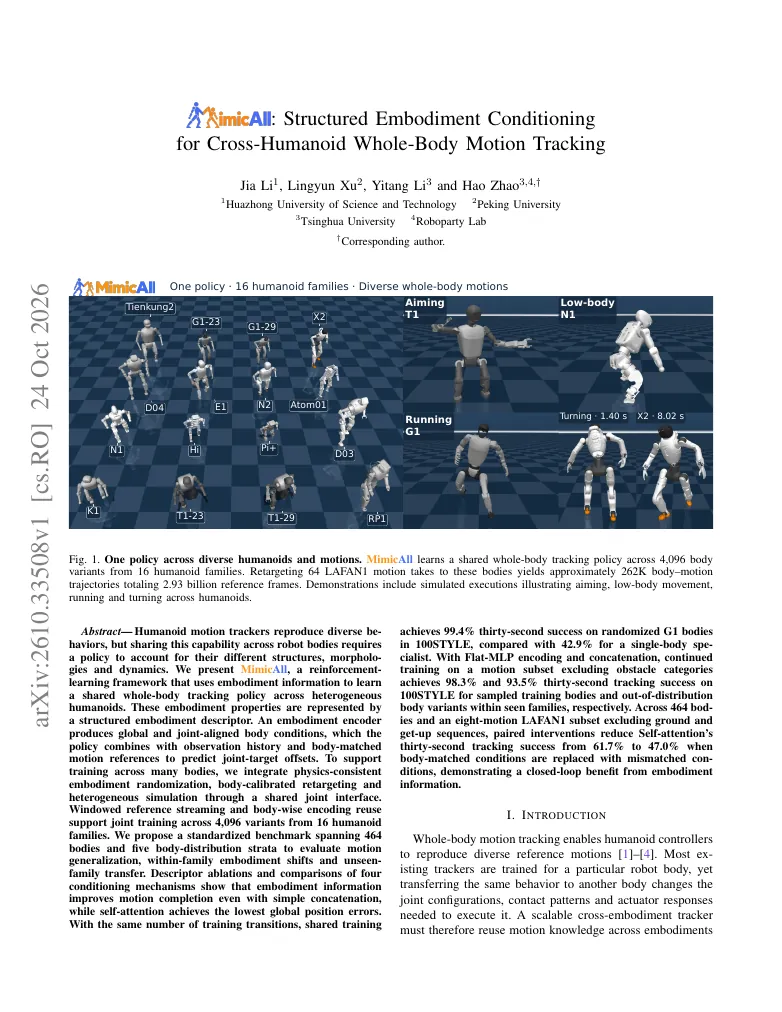
Tracks whole-body motions across many humanoid shapes with one body-aware controller.
Uses the surrounding scene and human cues to choose and adjust expressive motions on a real robot.
Lets humanoids execute new timed body, speed, and style prompts with one frozen whole-body controller.
Adds terrain-aware leg corrections to a frozen whole-body tracker so motions work on uneven ground.
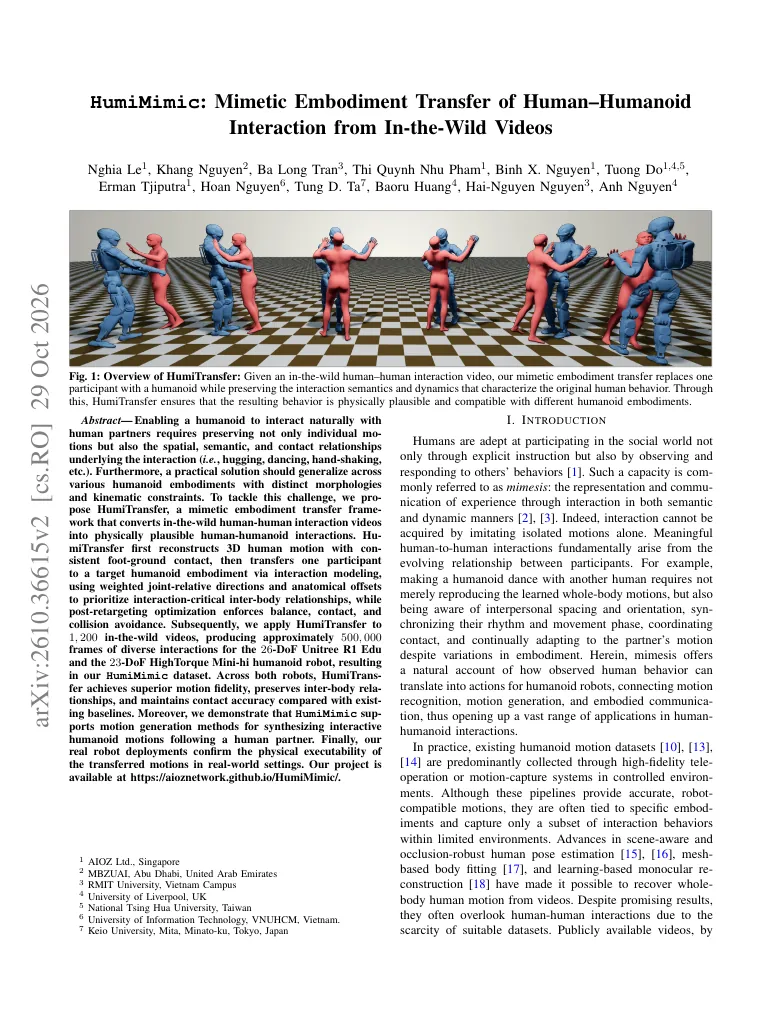
Turns videos of people interacting into coordinated humanoid motions such as hugging and handshakes.
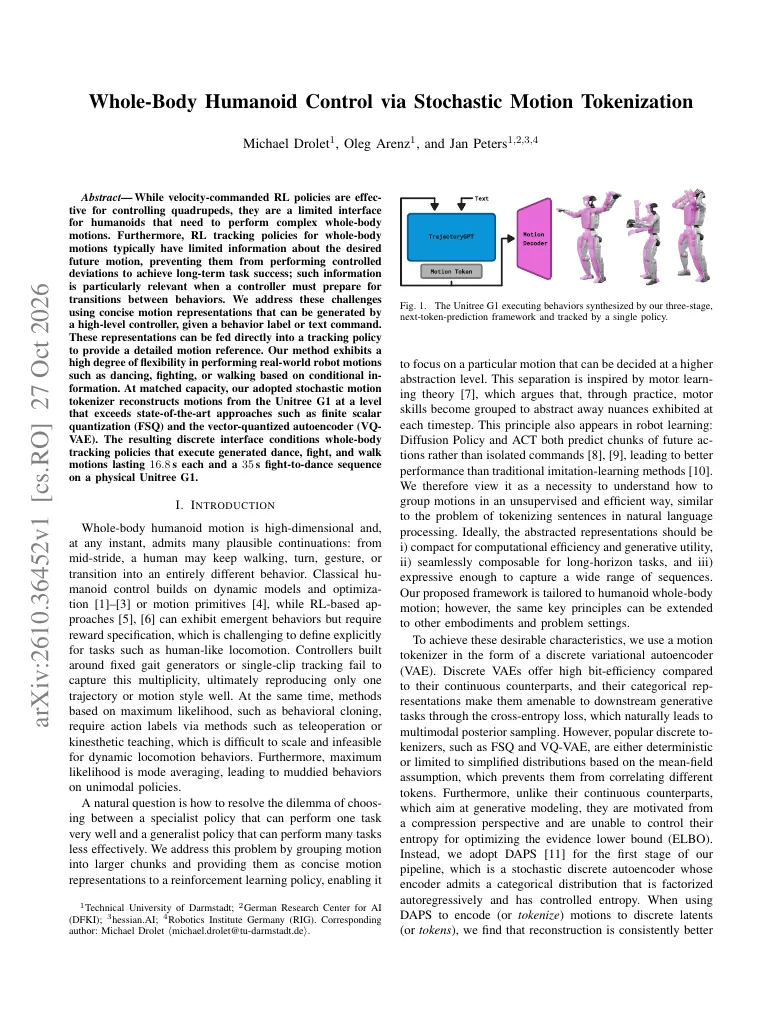
Compresses humanoid motion into tokens so long generated sequences can be tracked by the robot.
Shares one world model and motion tracker across several humanoid bodies and command styles.
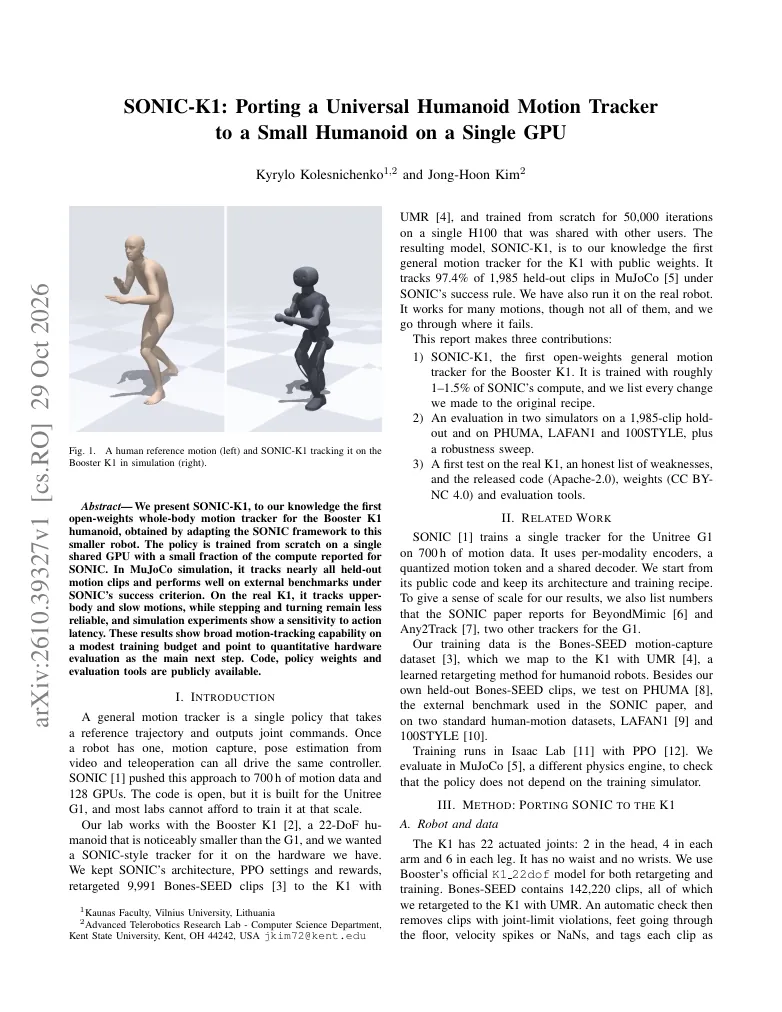
Ports an open whole-body motion tracker to a small K1 humanoid using one GPU.
Whole-body task contact: feet, torso, hands, and objects.
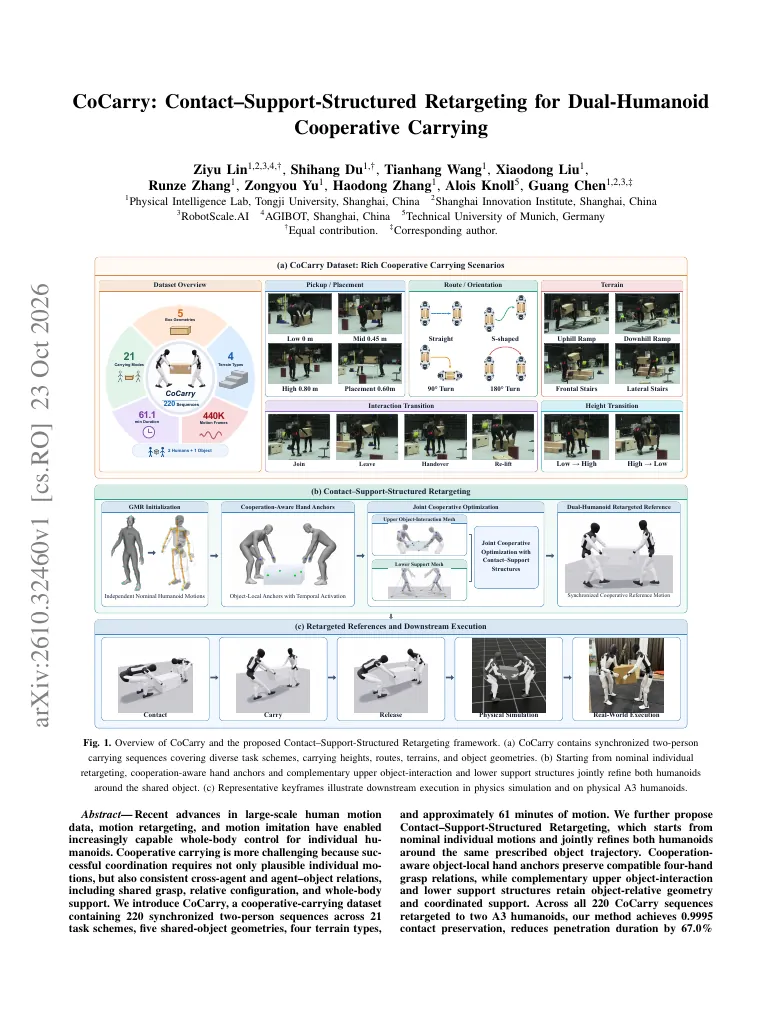
Coordinates two humanoids to carry one object while preserving their shared hand contacts and balance.
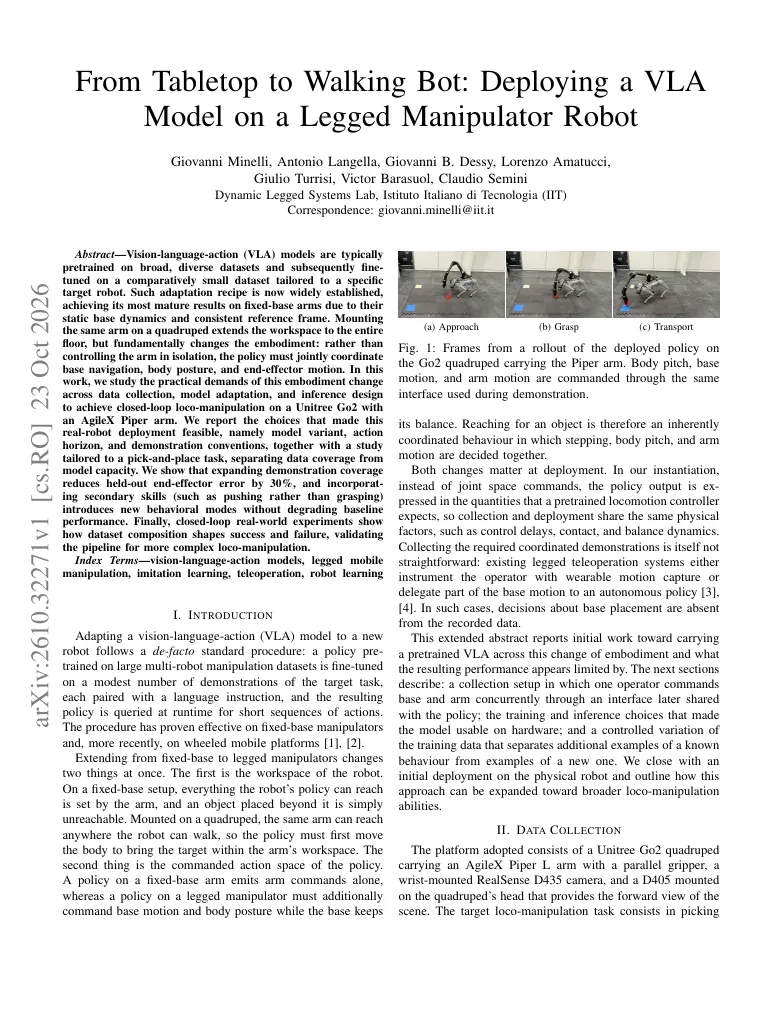
Gives a Go2 with an arm one control interface for walking, leaning, reaching, and following visual instructions.
Teaches a G1 to push and pull while walking by commanding hand forces together with whole-body motion.
Trains a G1 to walk to objects and manipulate them using simulation demonstrations instead of real robot data.
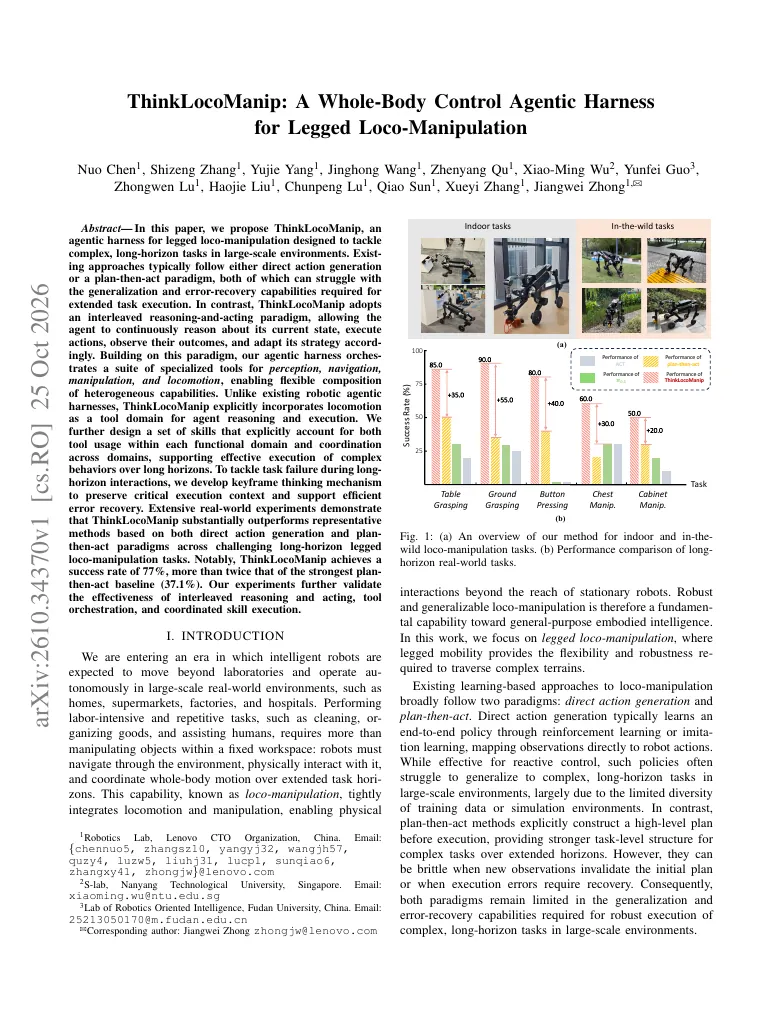
Gives an agent explicit body, driving, arm, and recovery tools for quadruped manipulation.
Uses egocentric human experience to train a G1 to follow visual instructions with its whole body.
Turns videos and scene assets into staged G1 skills, then fixes their contacts in physics.
Coordinates networked humanoids for timed collaboration while each robot keeps its own motion safe.
Coordinates quadrupeds with different bodies so they can carry one object together.
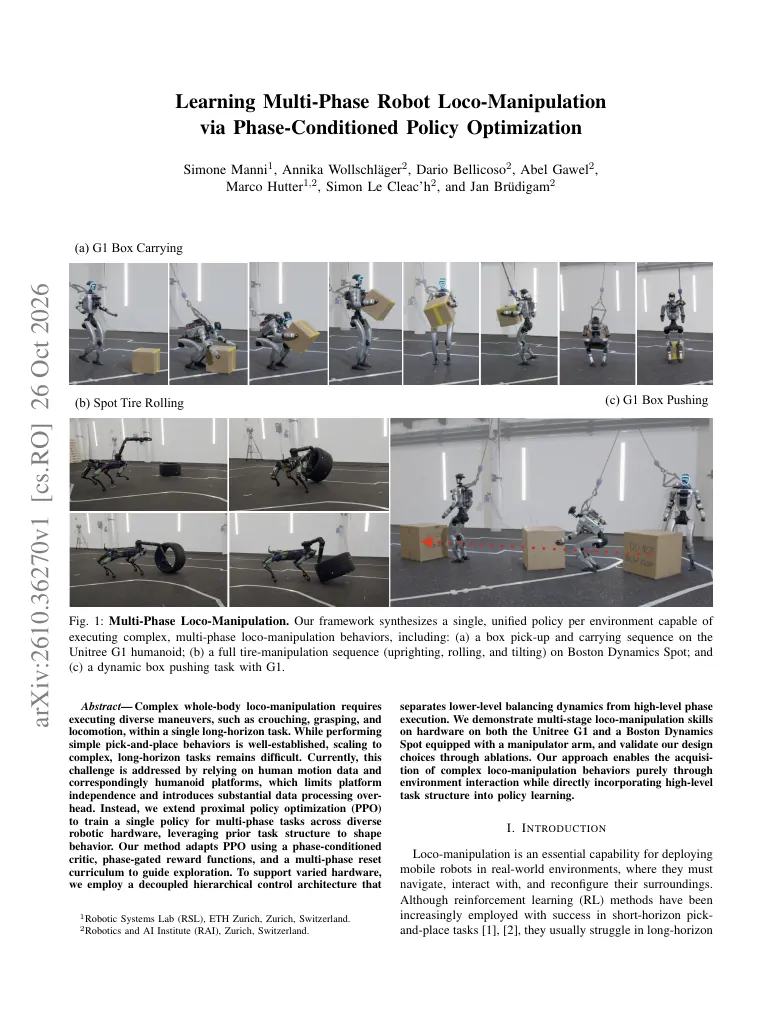
Splits long walking-and-manipulation tasks into phases and trains one policy to complete each phase.
Uses a language planner to chain navigation and whole-body pushing skills on a Go2.
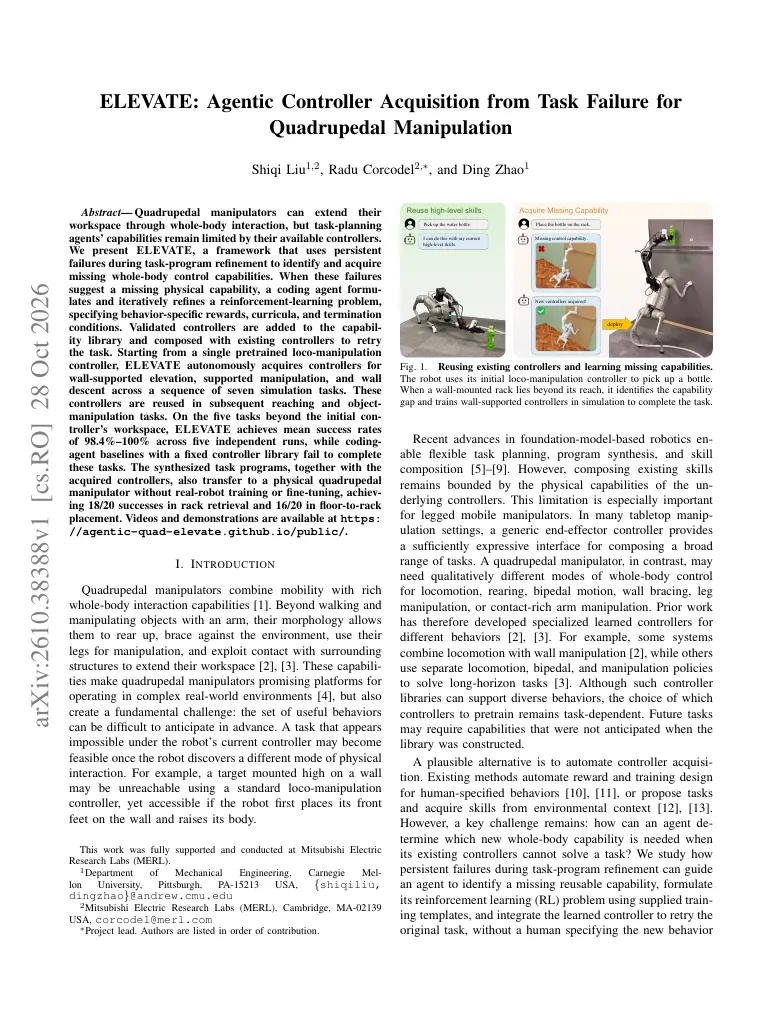
Lets an agent train new elevation, reaching, and descent skills when a quadruped fails a task.
MPC, impedance, safety layers, and whole-body coordination.
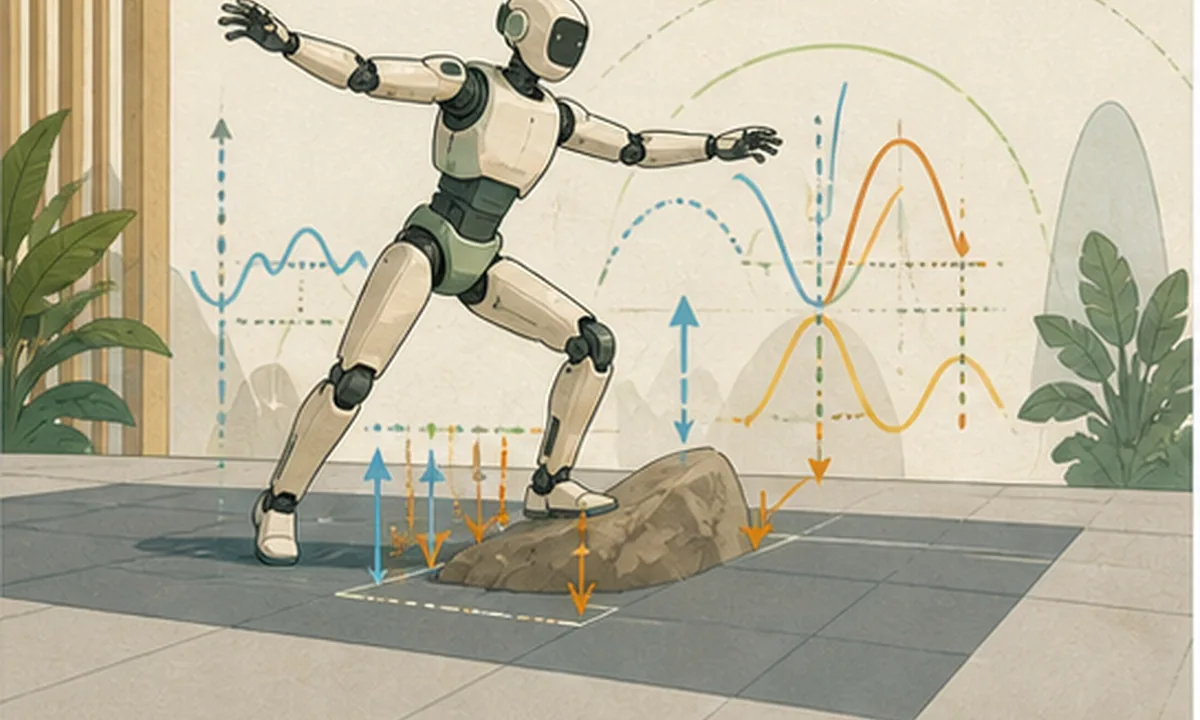
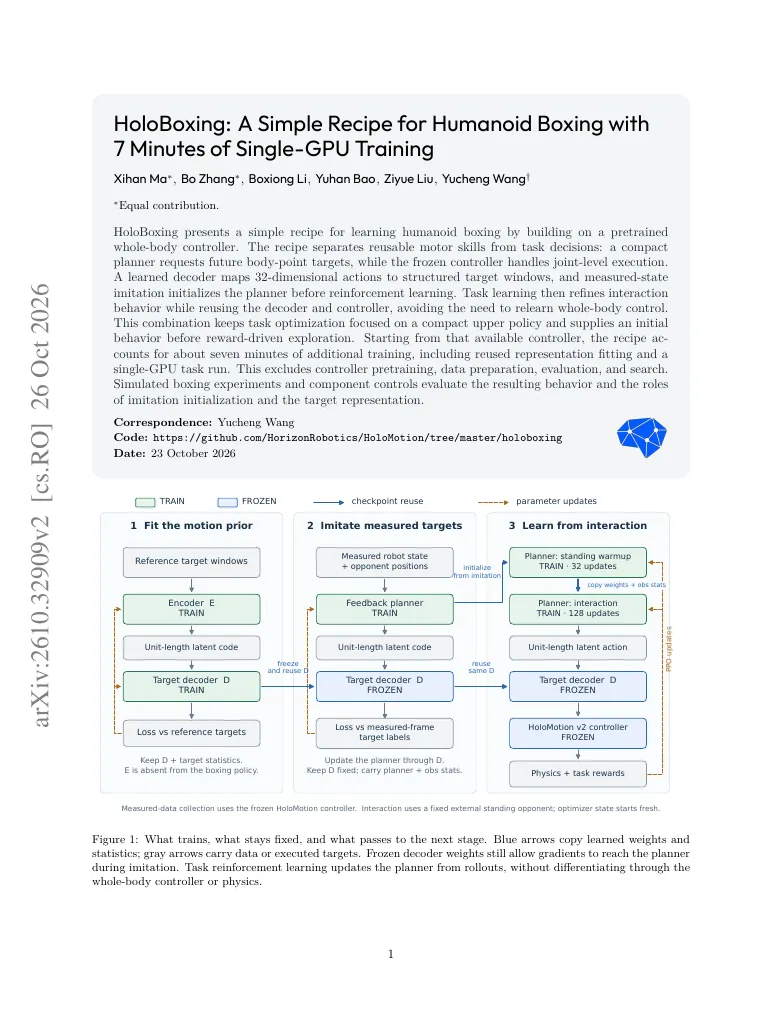
Teaches a G1 humanoid to box by adding a compact planner above a frozen whole-body controller.
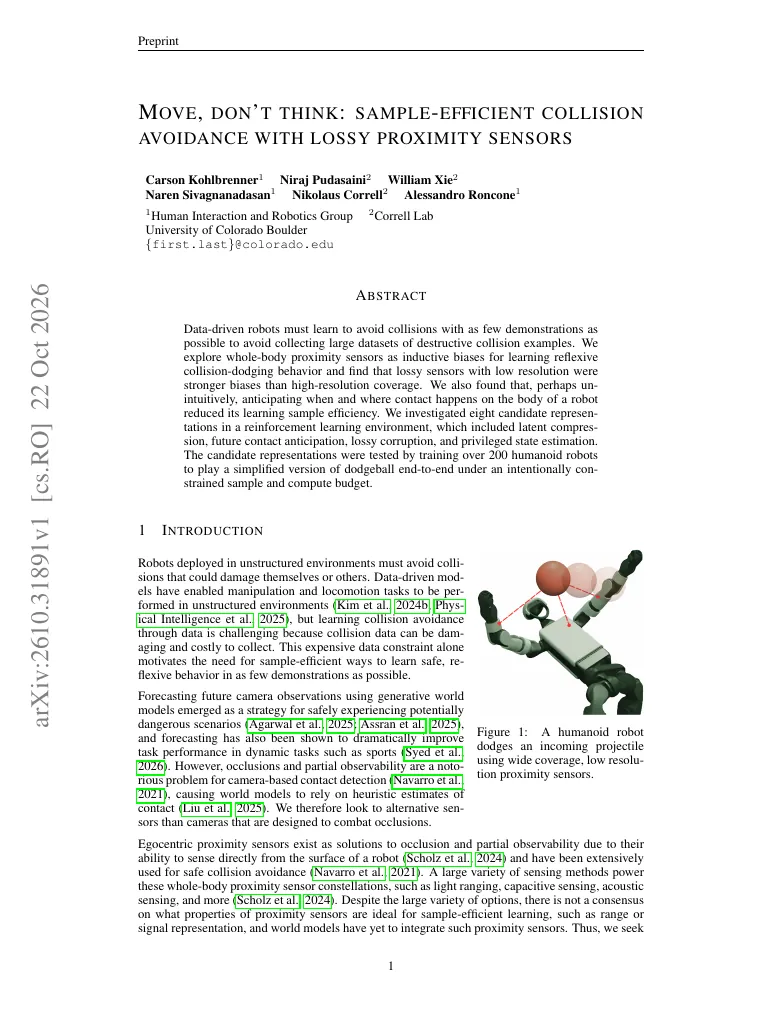
Teaches an H1-2 humanoid to dodge nearby obstacles with compact proximity signals while staying upright.
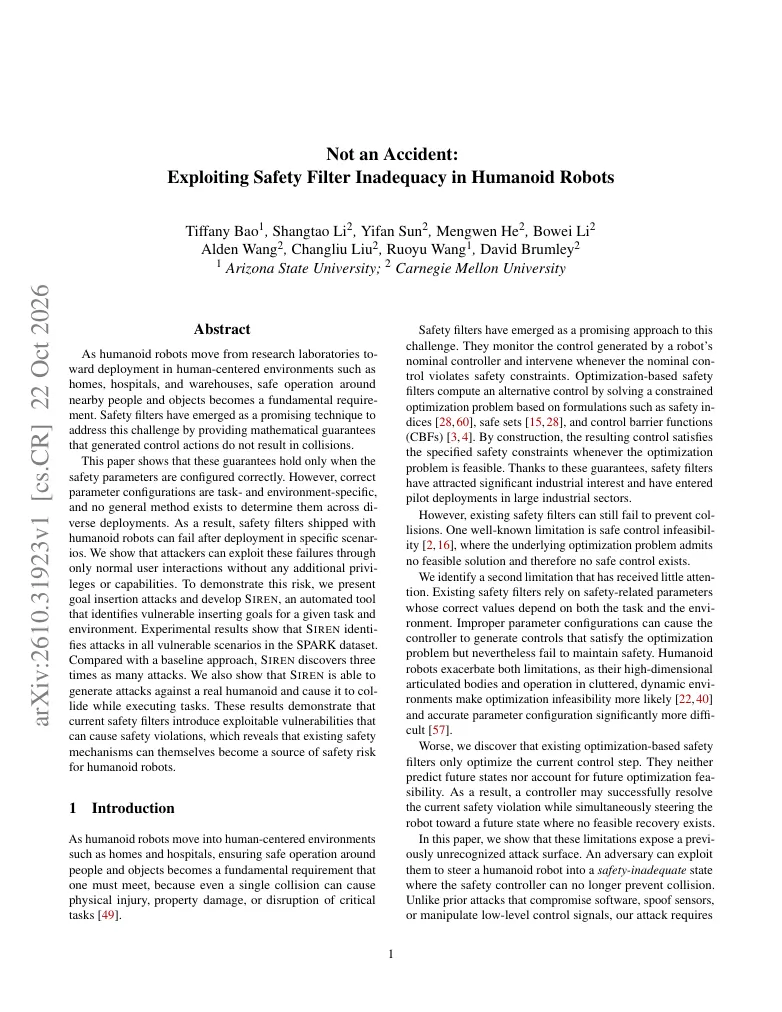
Shows when humanoid safety filters fail and tests safer ways to avoid collisions.
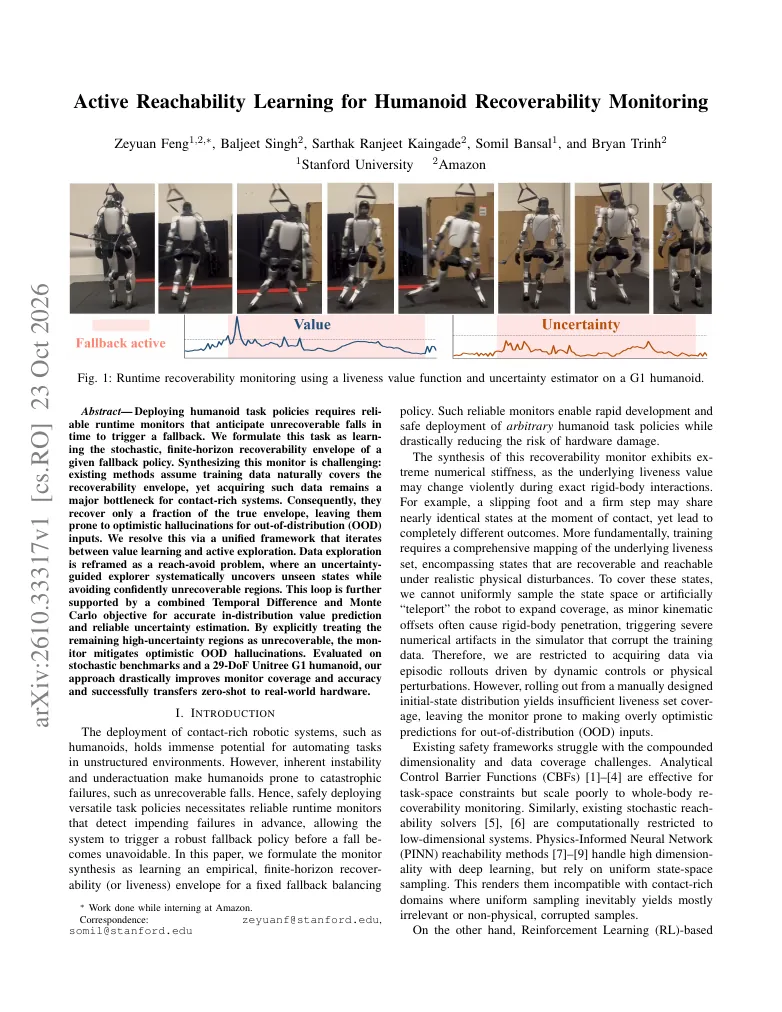
Predicts when a G1 can recover and interrupts unsafe walking before the robot falls.
Teaches a humanoid to roll, brace, and stand back up after a fall while reducing hard impacts.
Uses a diffusion policy's predicted future poses to steer a humanoid onboard without a separate tracker.
Corrects unsafe tracking targets around obstacles before sending them to a frozen Digit controller.
Teaches humanoids to dodge thrown balls with fast directional whole-body movements.
Benchmarks, datasets, rewards, simulators, and tooling.
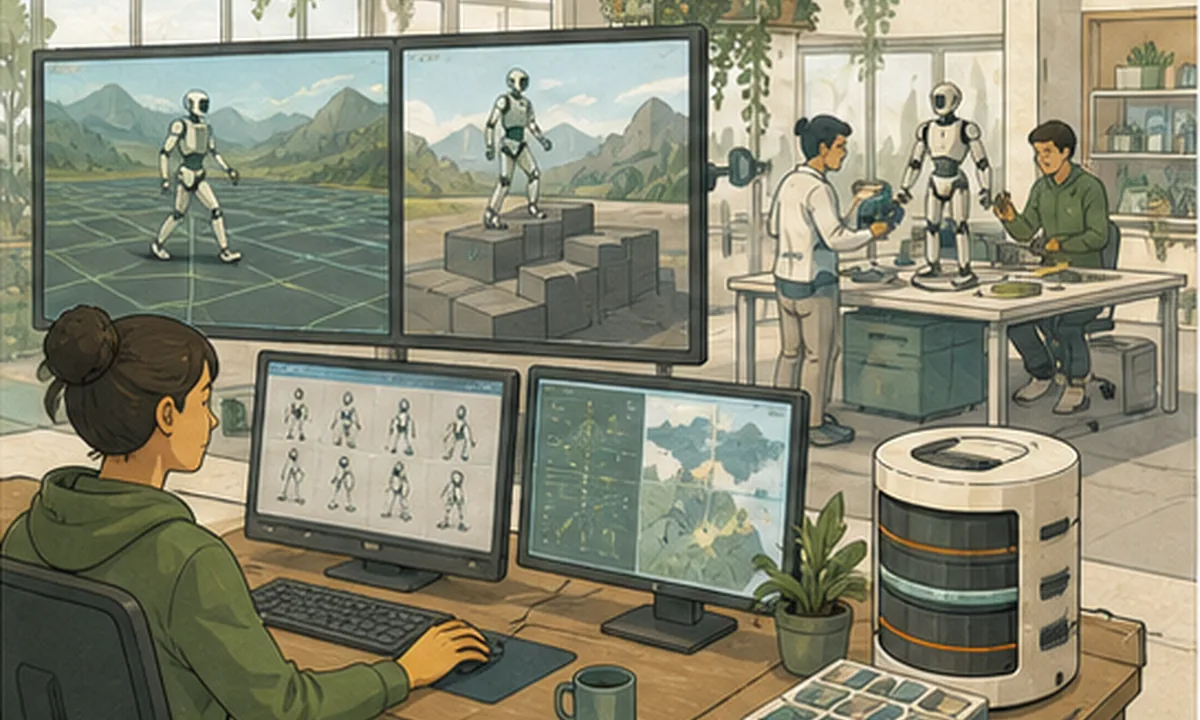
Provides tools for training robot policies that keep working when dynamics, sensors, actions, or timing change.
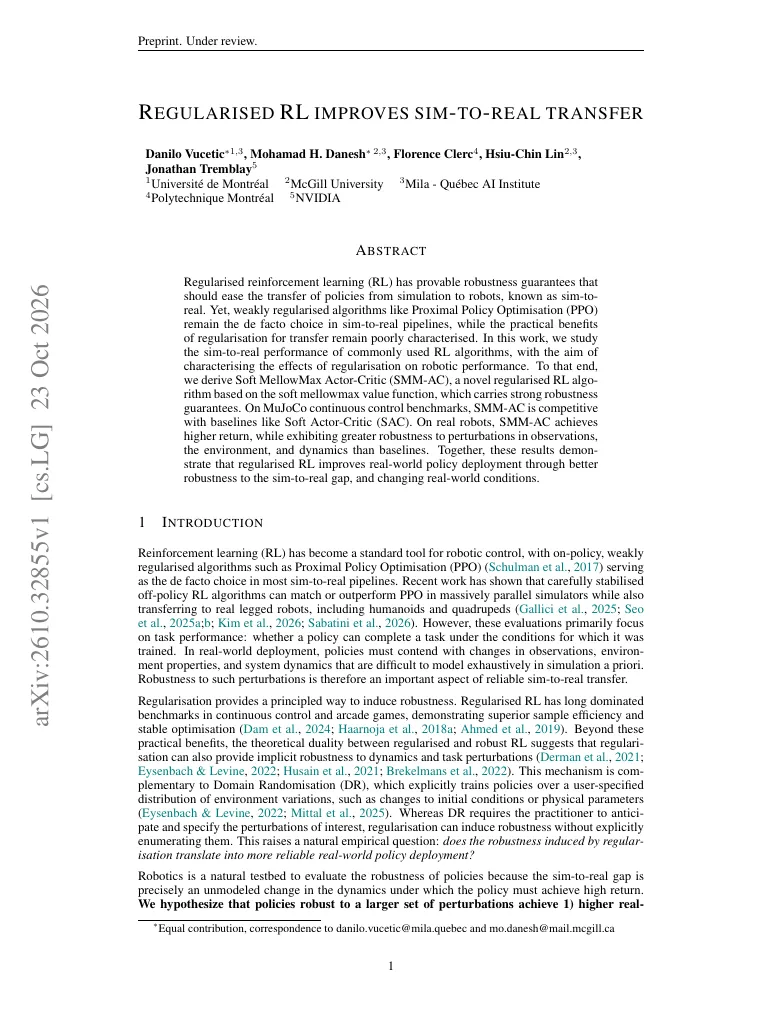
Trains ANYmal walking controllers that transfer to hardware and stay stable through pushes.
Transfers preferences between related tasks so robots can learn new behavior without collecting new labels.
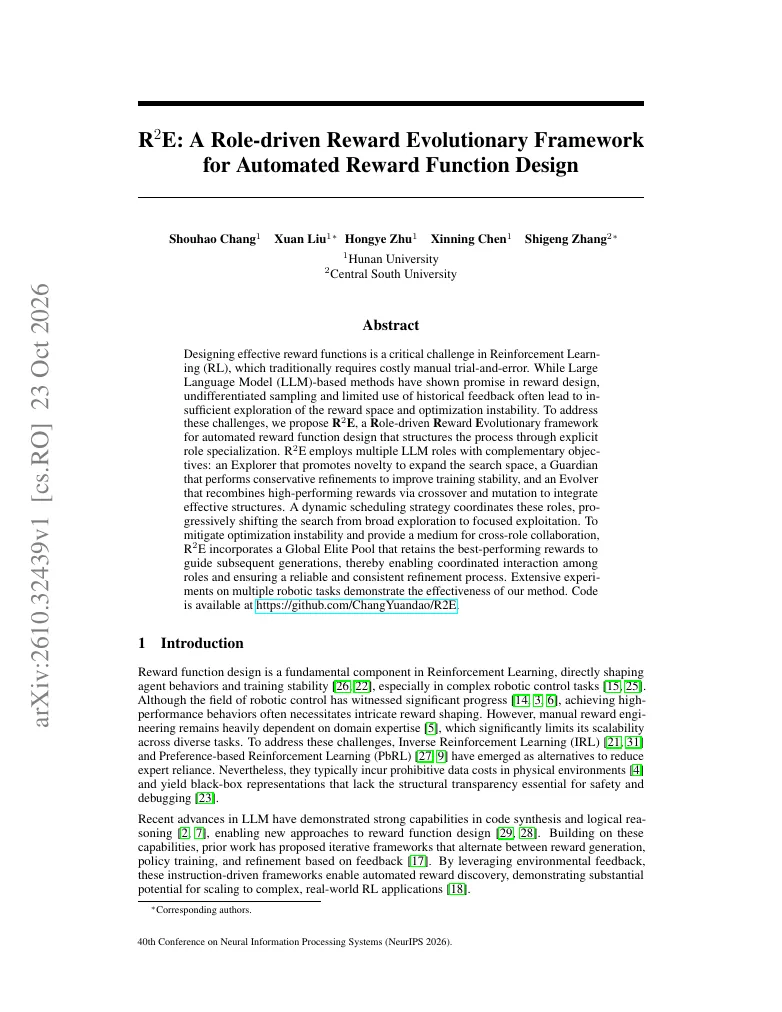
Uses specialized AI agents to design and improve reward functions for robot locomotion.
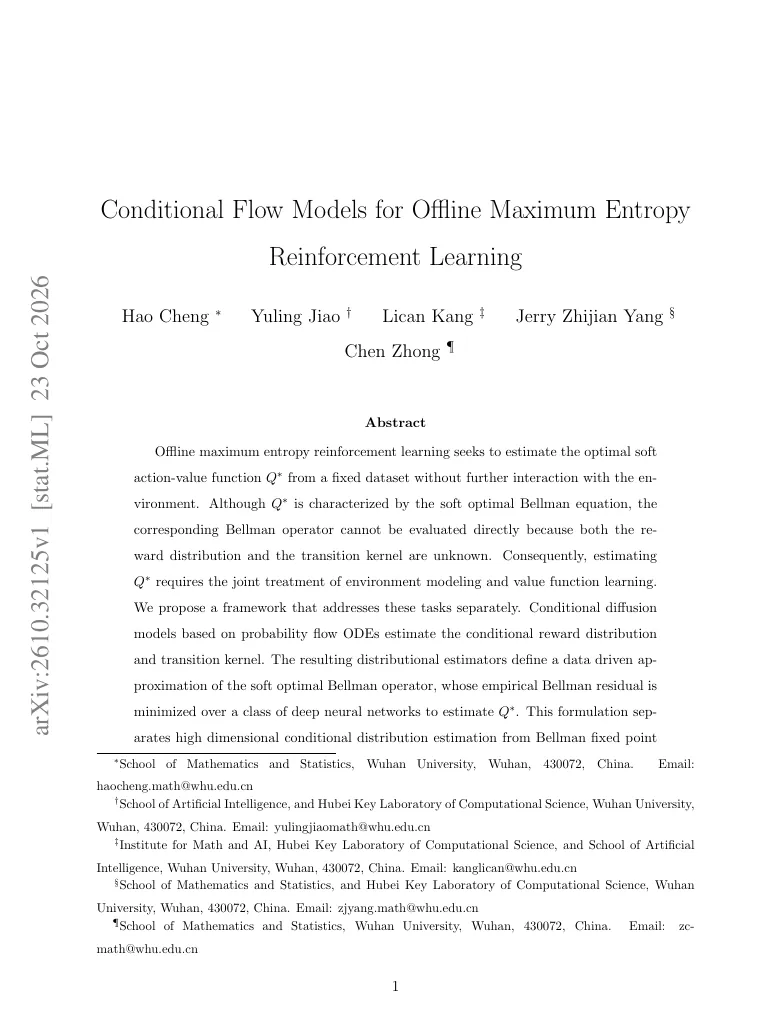
Learns rewards and dynamics from offline data to train simulated locomotion policies.
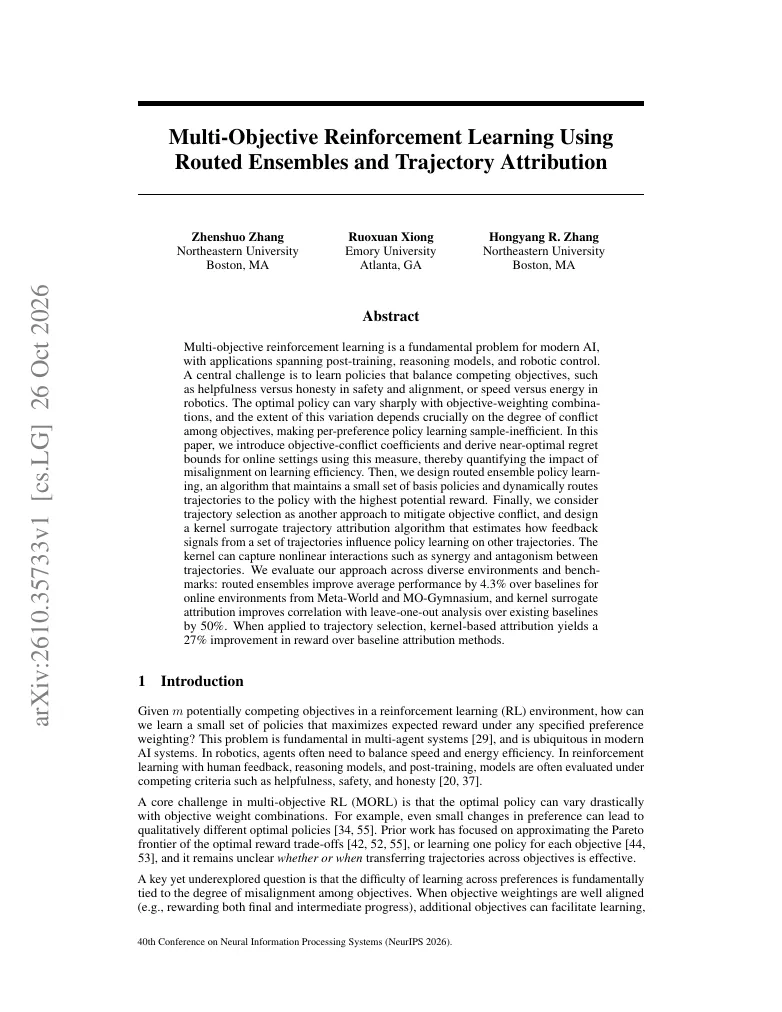
Routes experience across several policies so robots can improve multiple goals without one goal taking over.
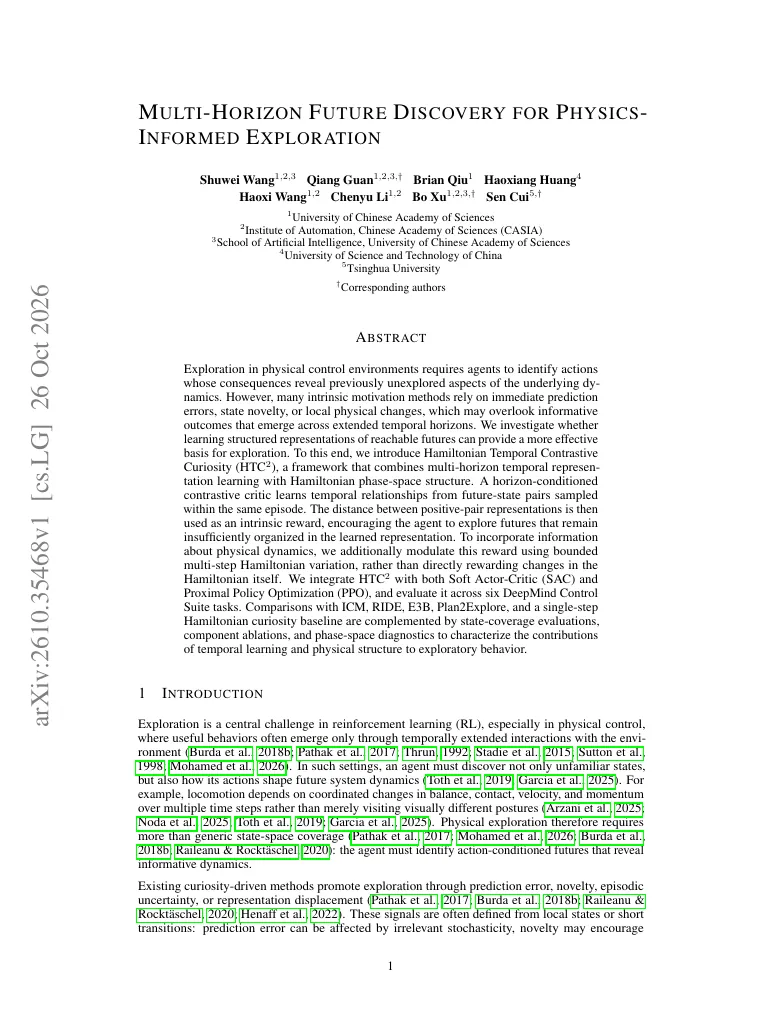
Chooses exploration goals across several time scales while a physics model blocks impossible behavior.
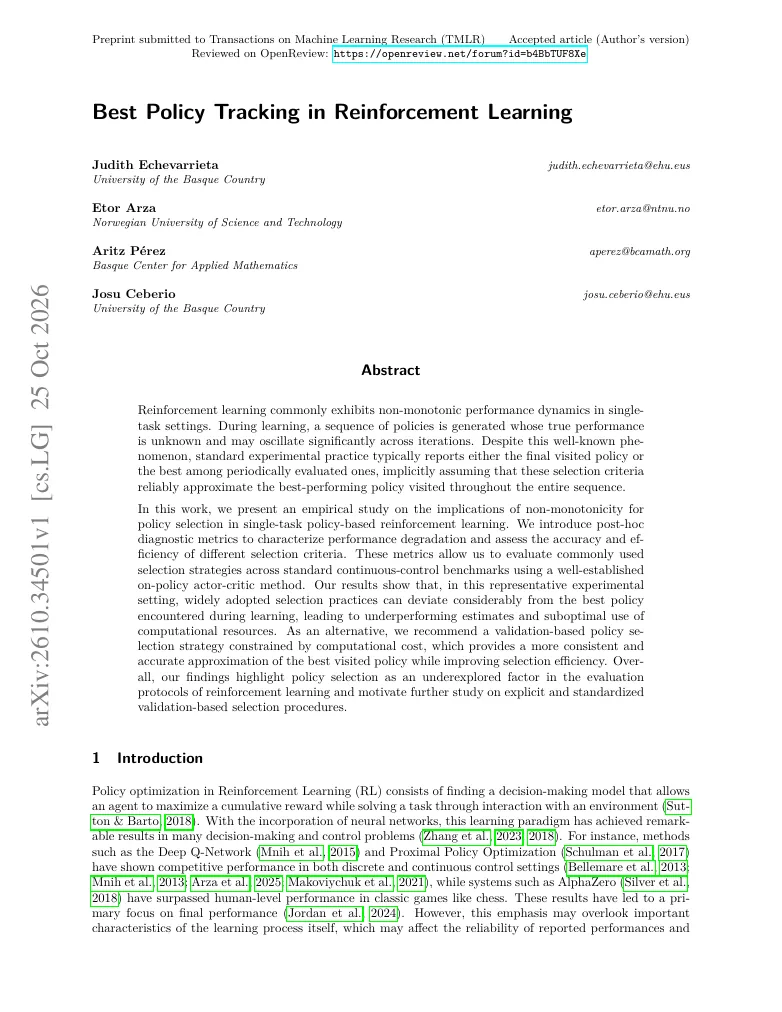
Tracks which training checkpoint is truly best so walking experiments do not select a worse policy by accident.
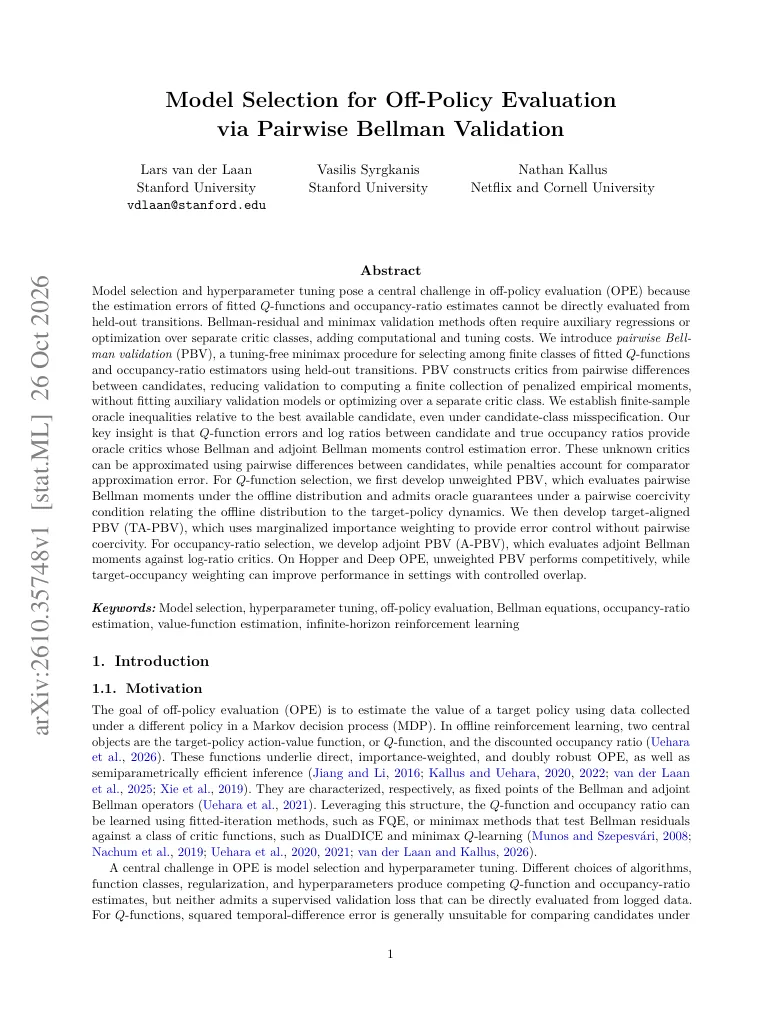
Compares offline value models to choose better robot policies without running every policy.
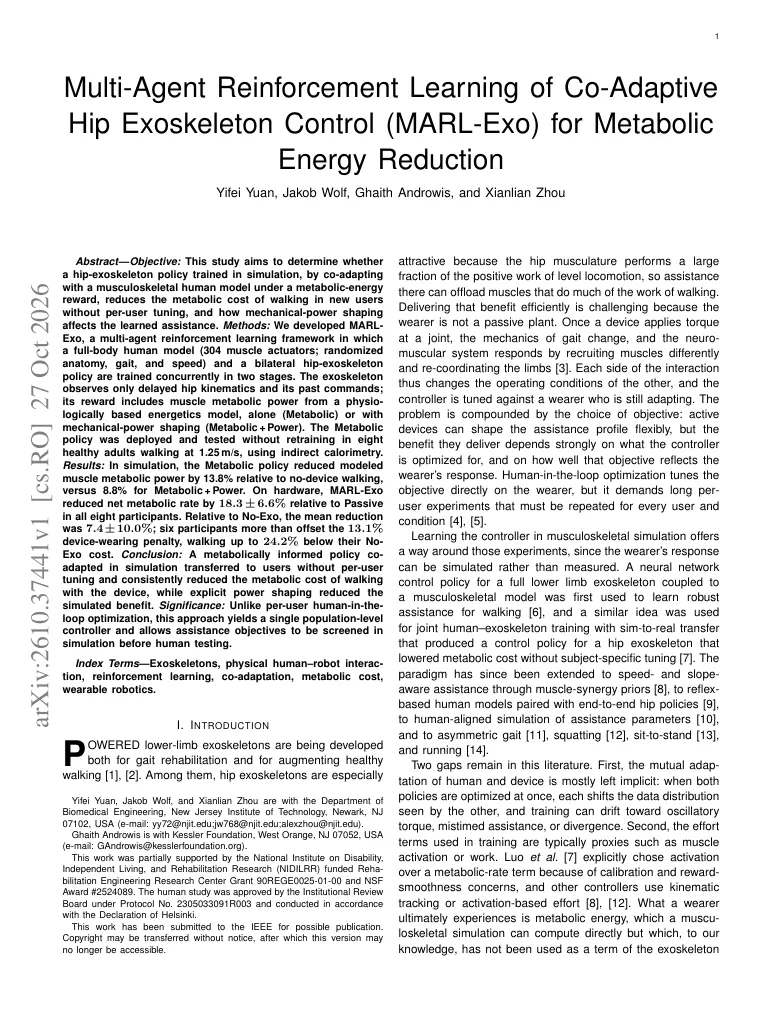
Co-trains a human model and hip exoskeleton controller to reduce the effort needed for walking.
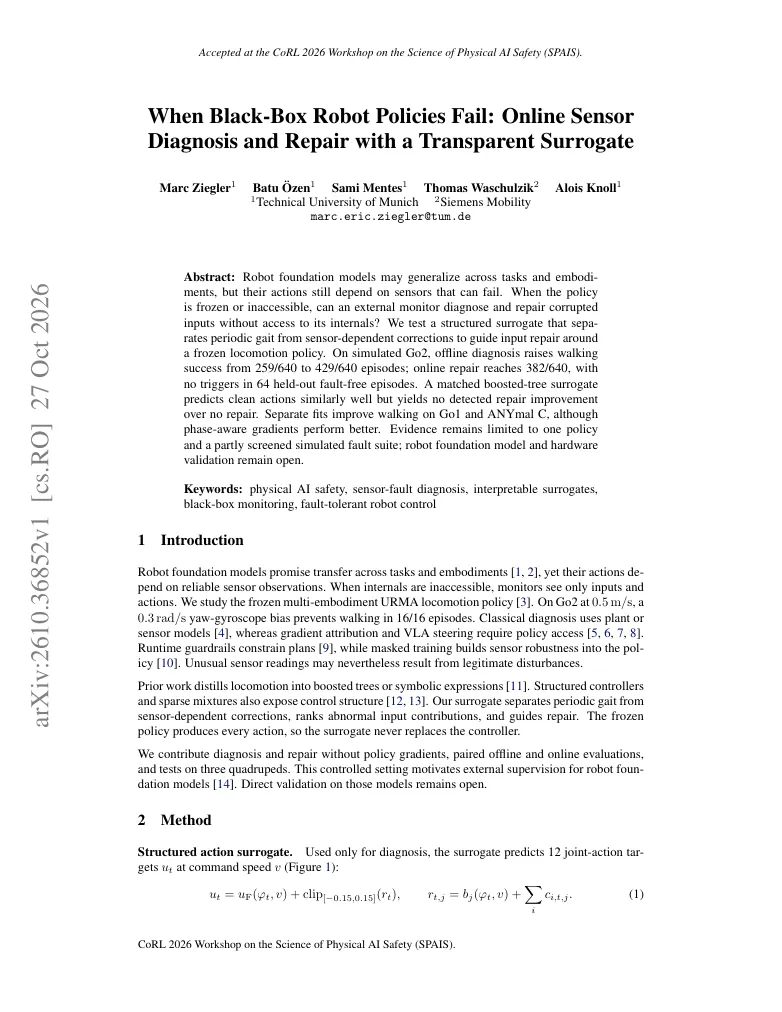
Detects which sensors have failed and repairs their inputs around a frozen quadruped walking policy.
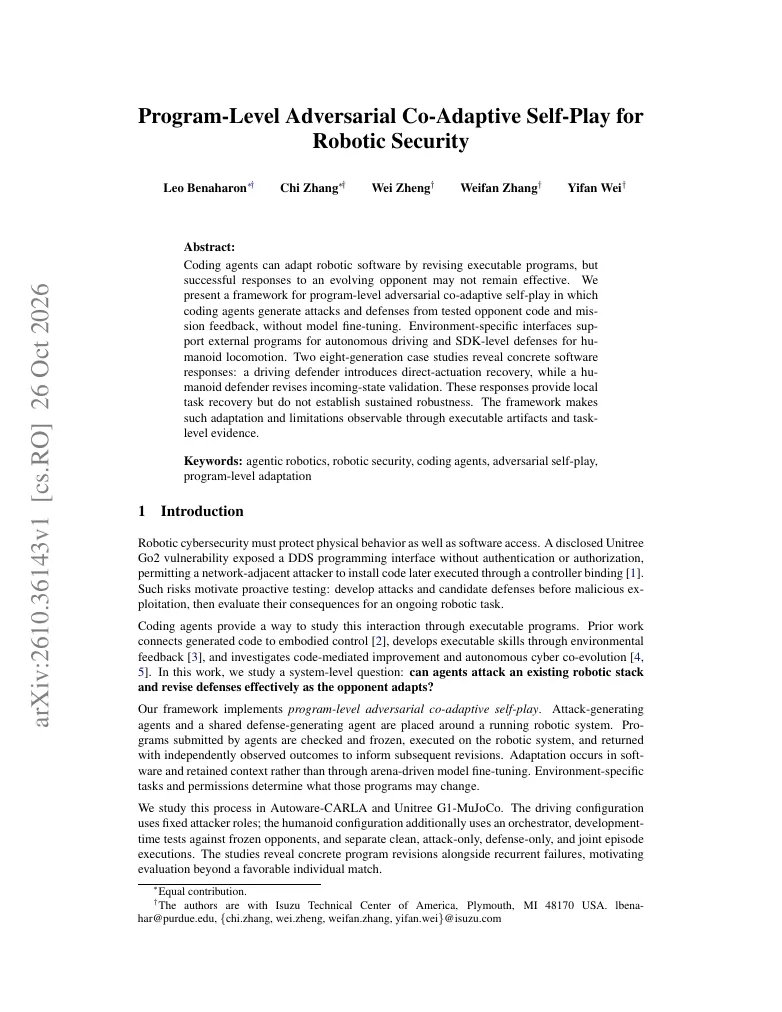
Uses adversarial coding agents to harden G1 control software against attacks that disrupt walking.
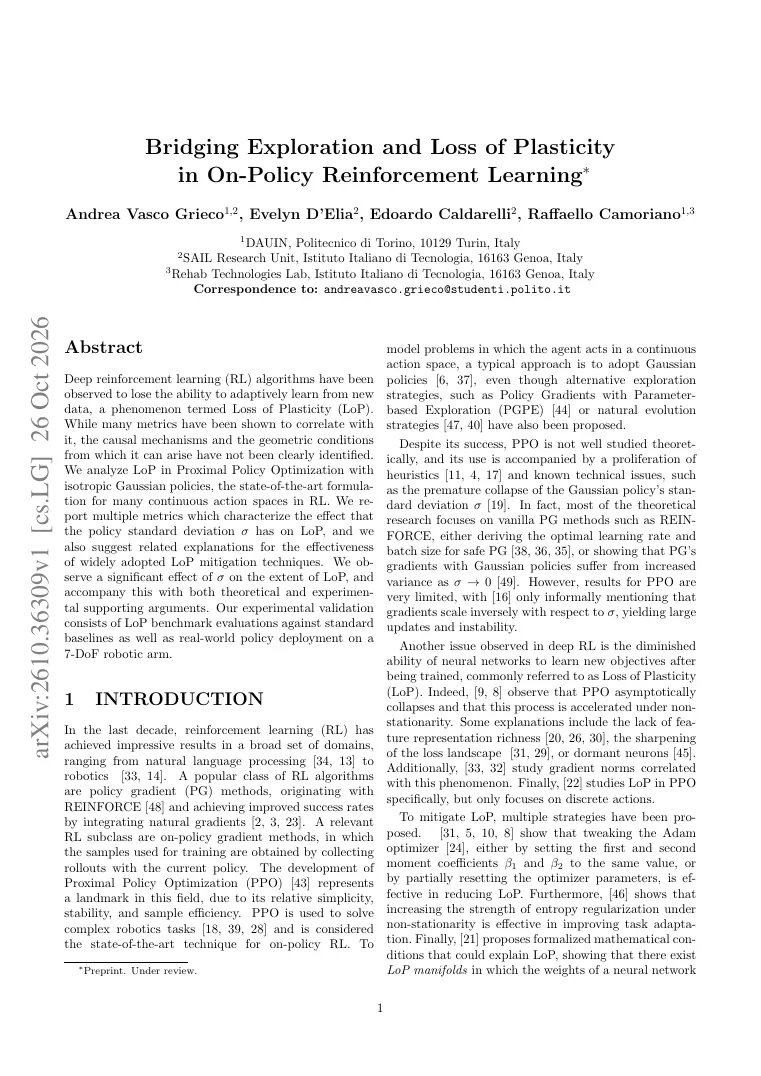
Keeps PPO policies adaptable by preventing their exploration from collapsing during training.
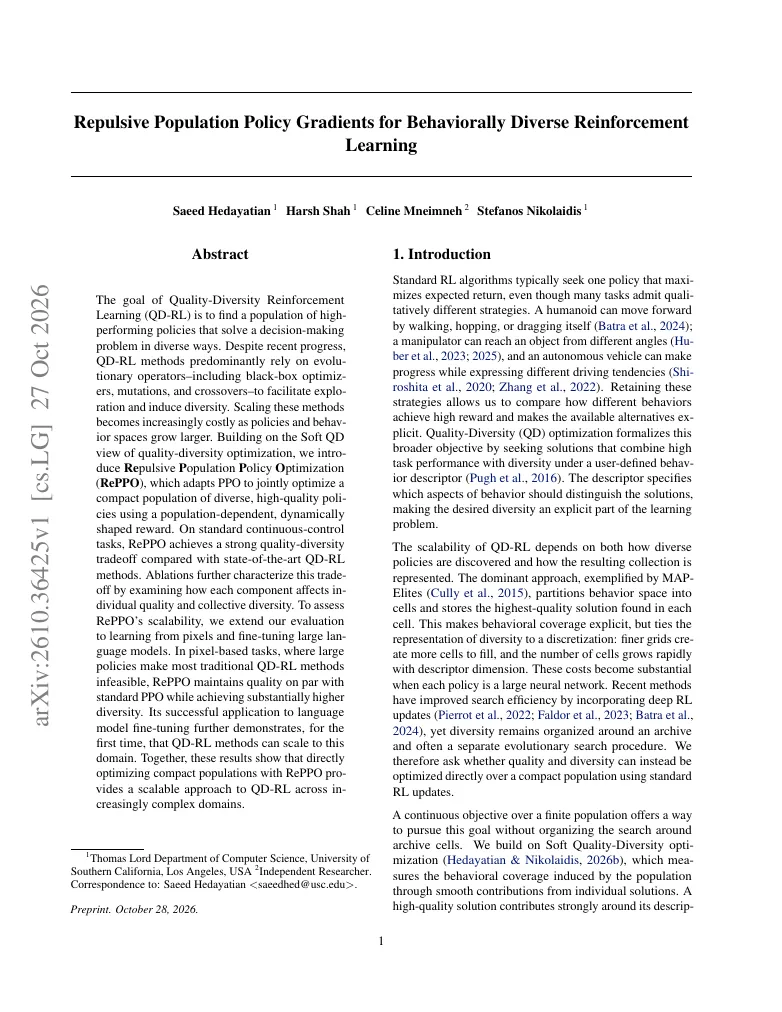
Trains a population of policies to discover different useful gaits instead of all learning the same motion.
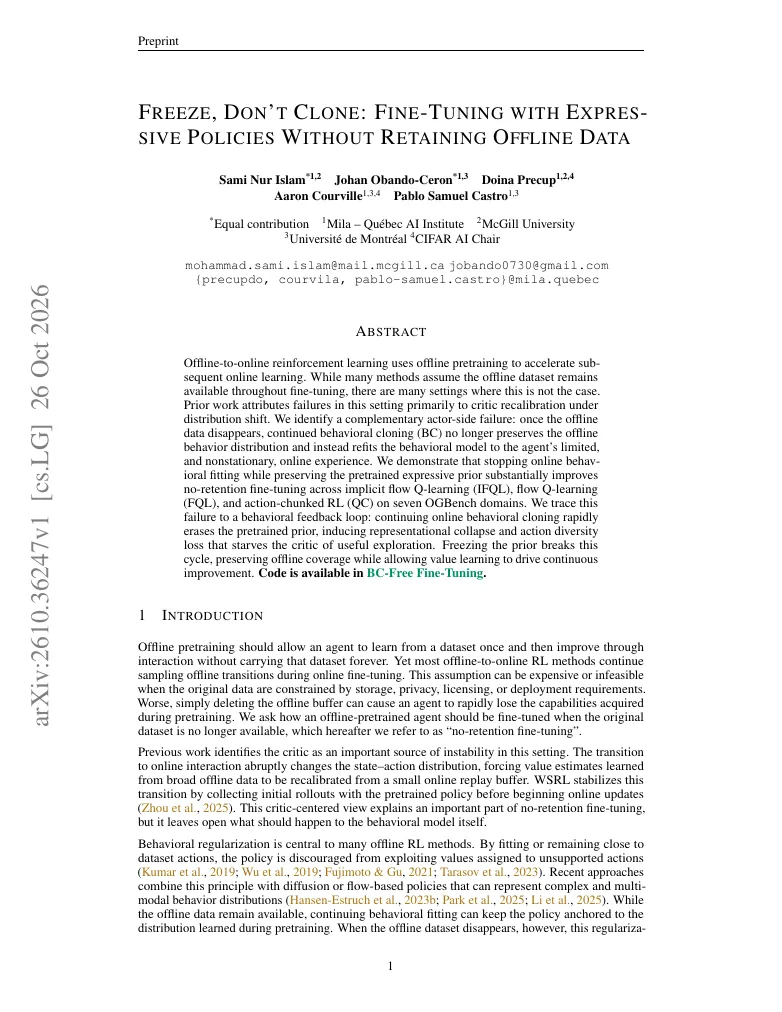
Fine-tunes expressive robot policies online without keeping their original offline training data.
Collects informative robot actions so a controllable world model can learn from much less data.
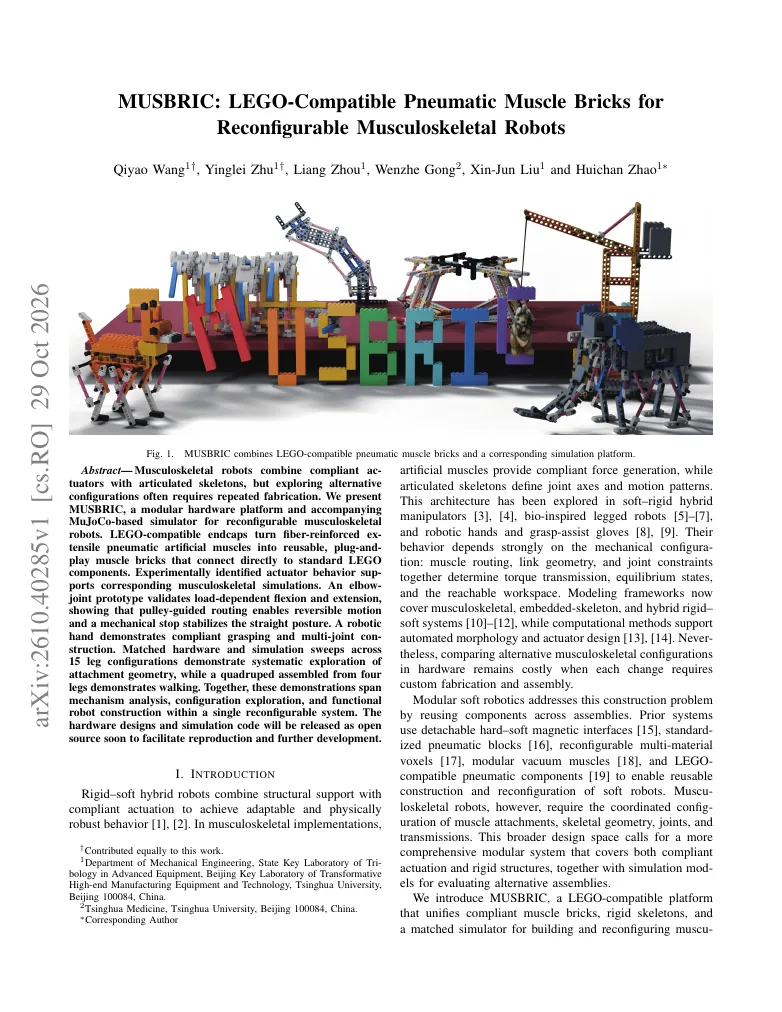
Provides modular pneumatic muscles and a matching simulator for rapidly building walking robots.
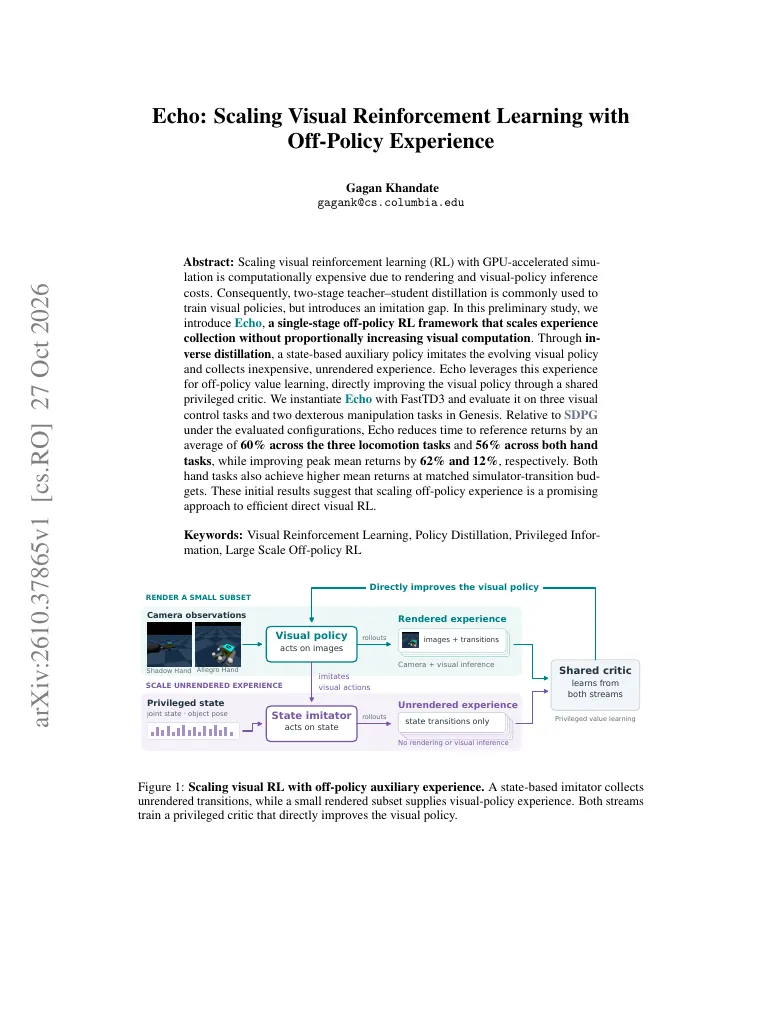
Speeds up visual robot learning by letting a state-based policy gather many unrendered experiences.
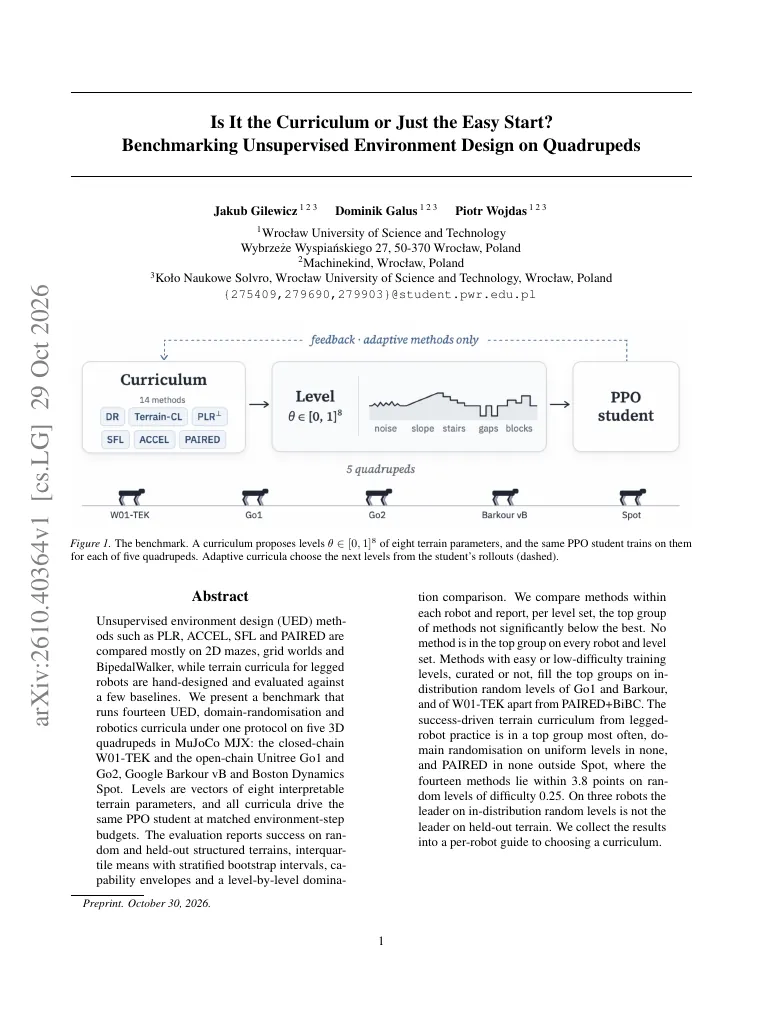
Separates real curriculum improvements from easy starts in quadruped terrain training.
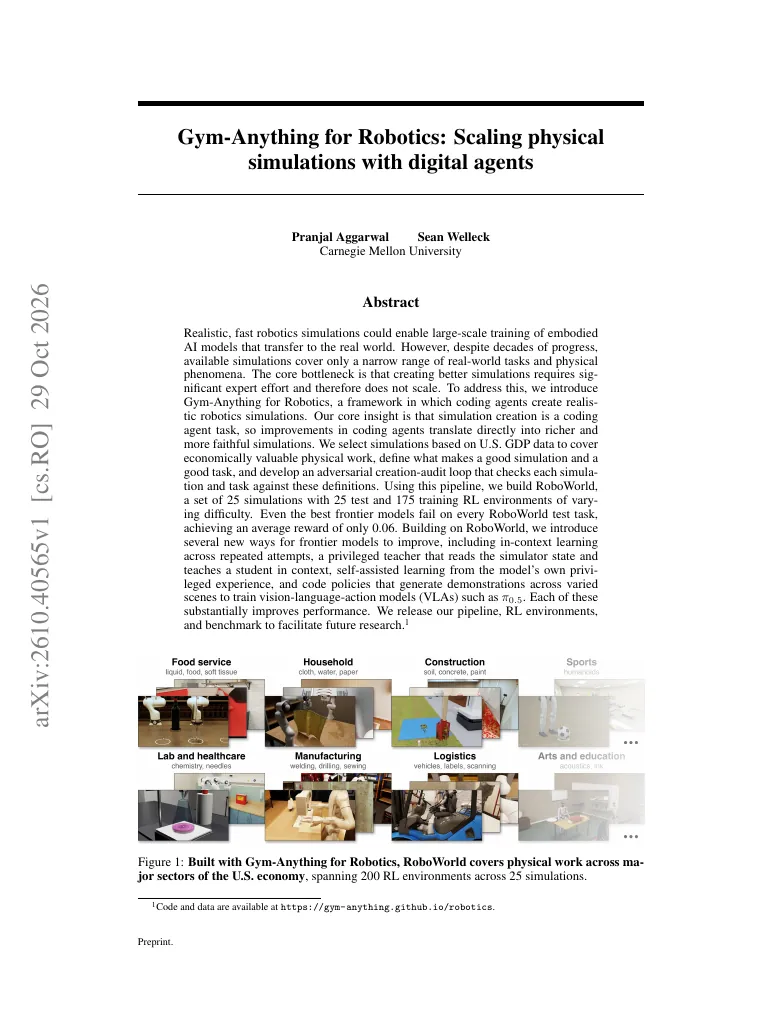
Uses digital agents to build and verify robot simulation tasks, including G1 football training.
Terrain, state, slip, sensors, and local context.
Learns body velocity from each robot's unlabeled IMU data to improve inertial odometry.