project clip
01arXiv
Around the World: Unified Learned Locomotion on a 270 g Continuous-Rotation Quadruped
Lets a tiny quadruped walk upright or upside down and recover after landing.
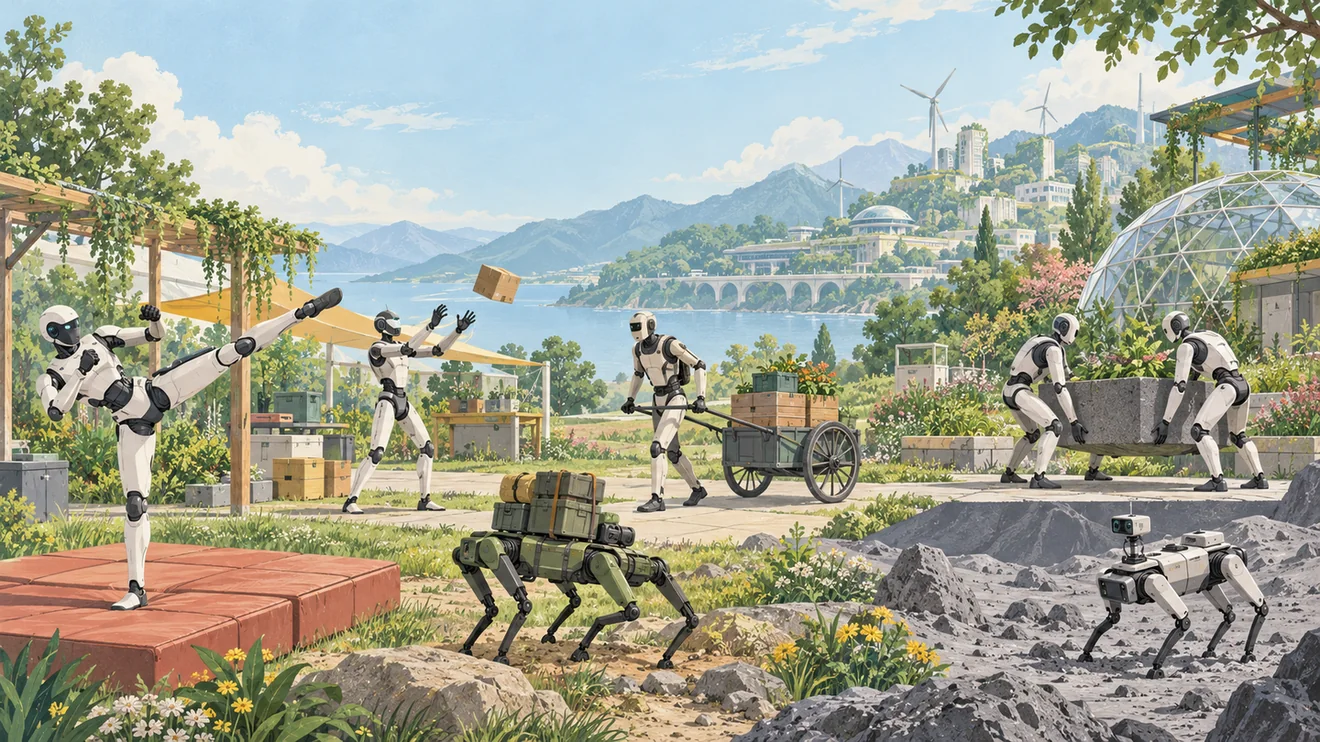
Terrain, gait, robustness, and agile movement.
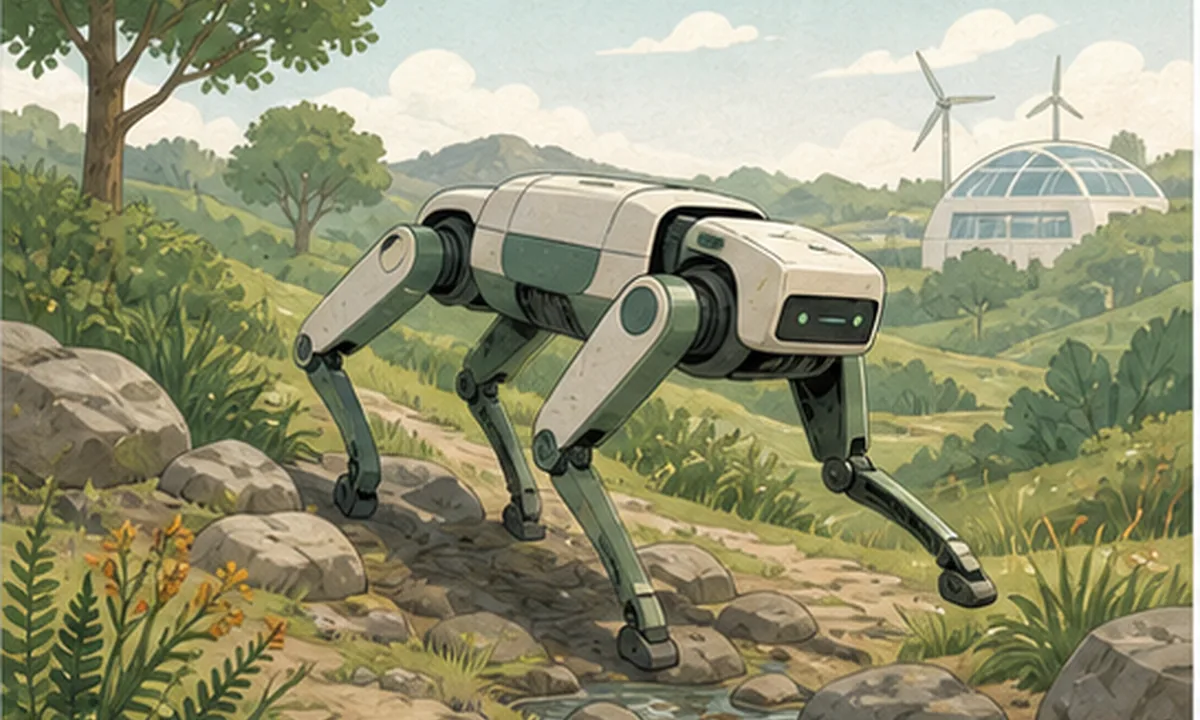
Lets a tiny quadruped walk upright or upside down and recover after landing.
Teaches an ANYmal to climb onto boxes without demonstrations by expanding practice from both the start and goal.
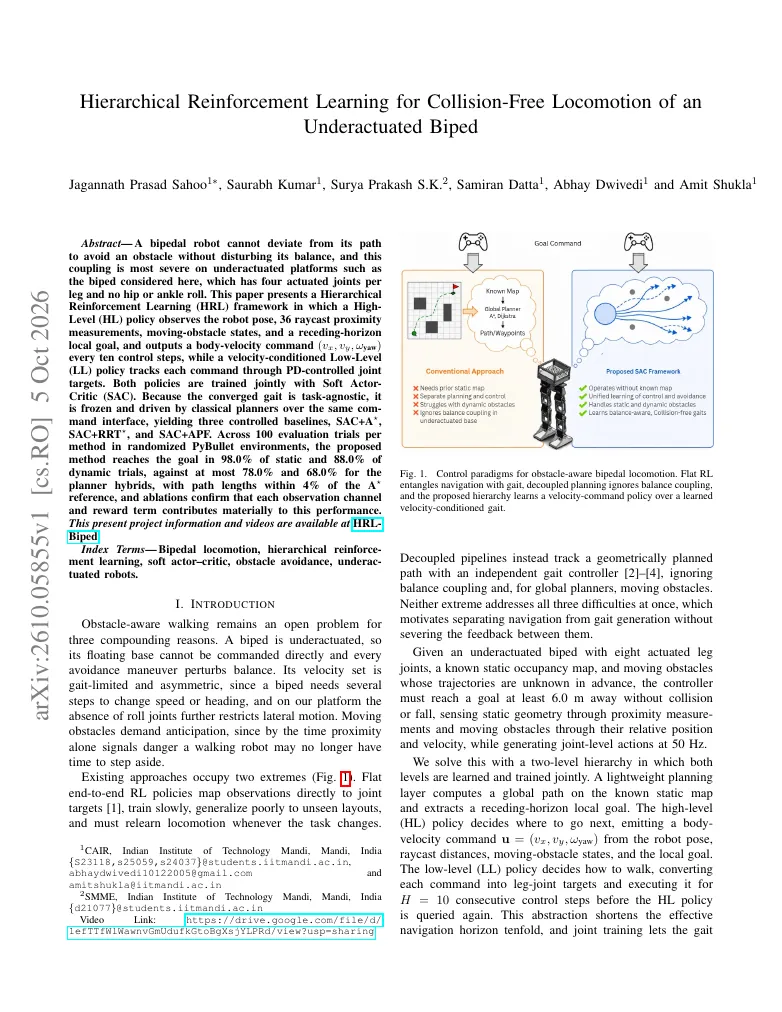
Teaches an underactuated biped to steer around obstacles while keeping a stable walking rhythm.
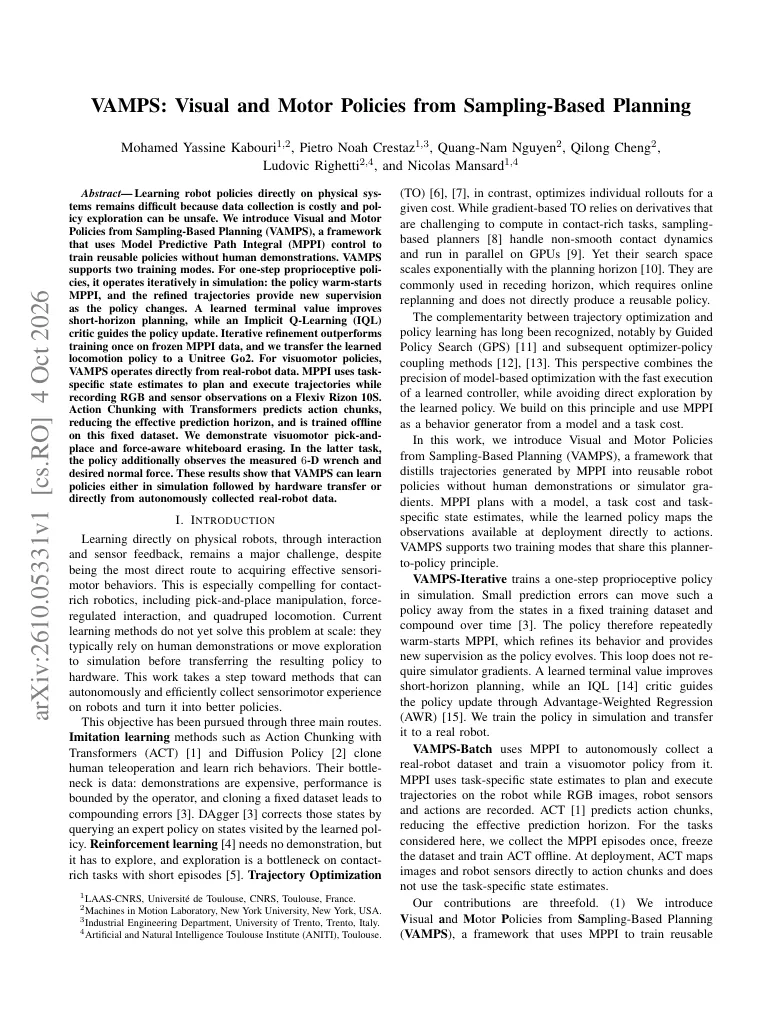
Turns planned examples into a reusable Go2 walking policy that transfers from simulation to hardware.
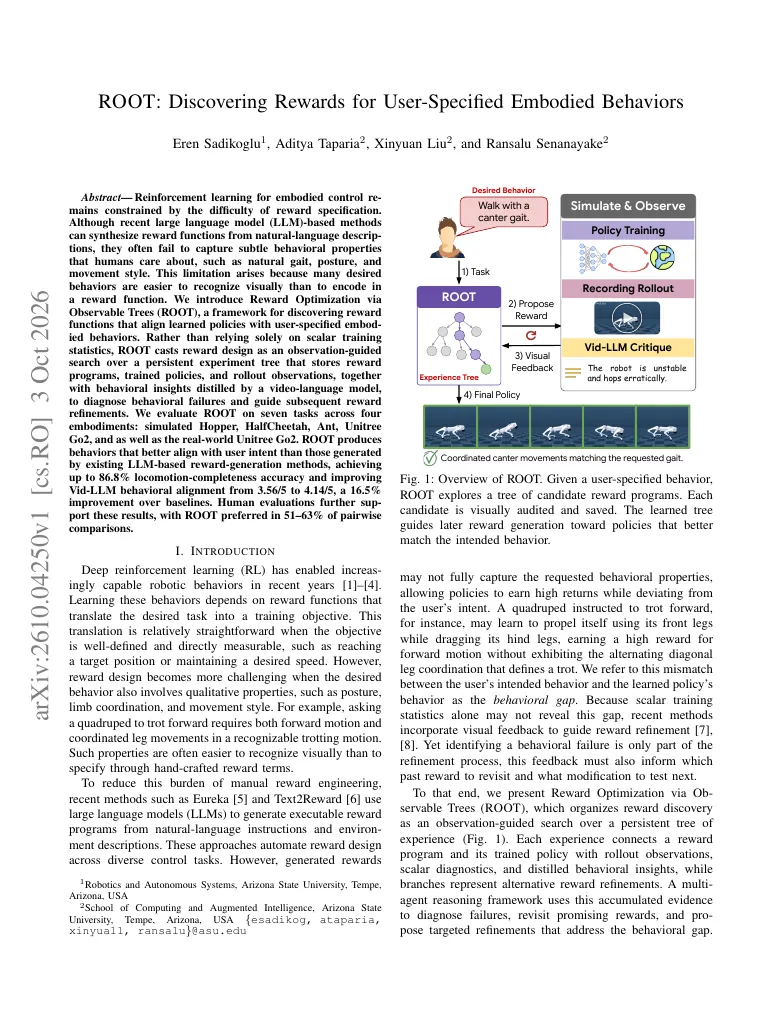
Searches for rewards that produce the gait a user asks for, then transfers the behavior to a Go2.
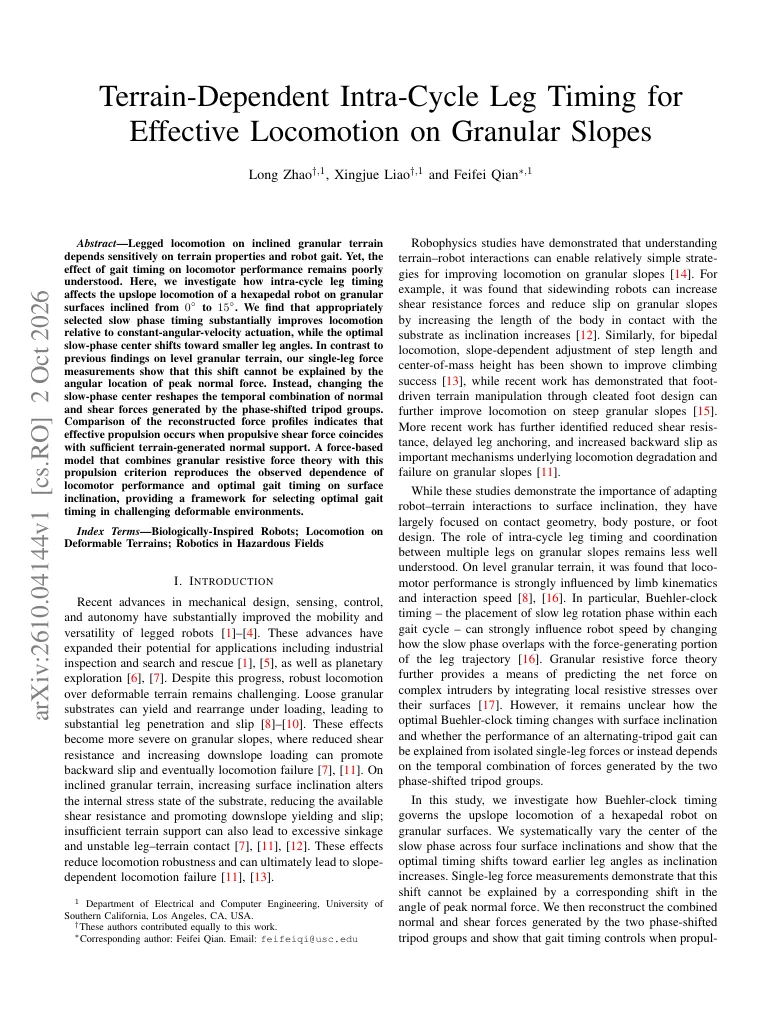
Changes leg timing within each stride so a hexapod can make better progress on loose slopes.
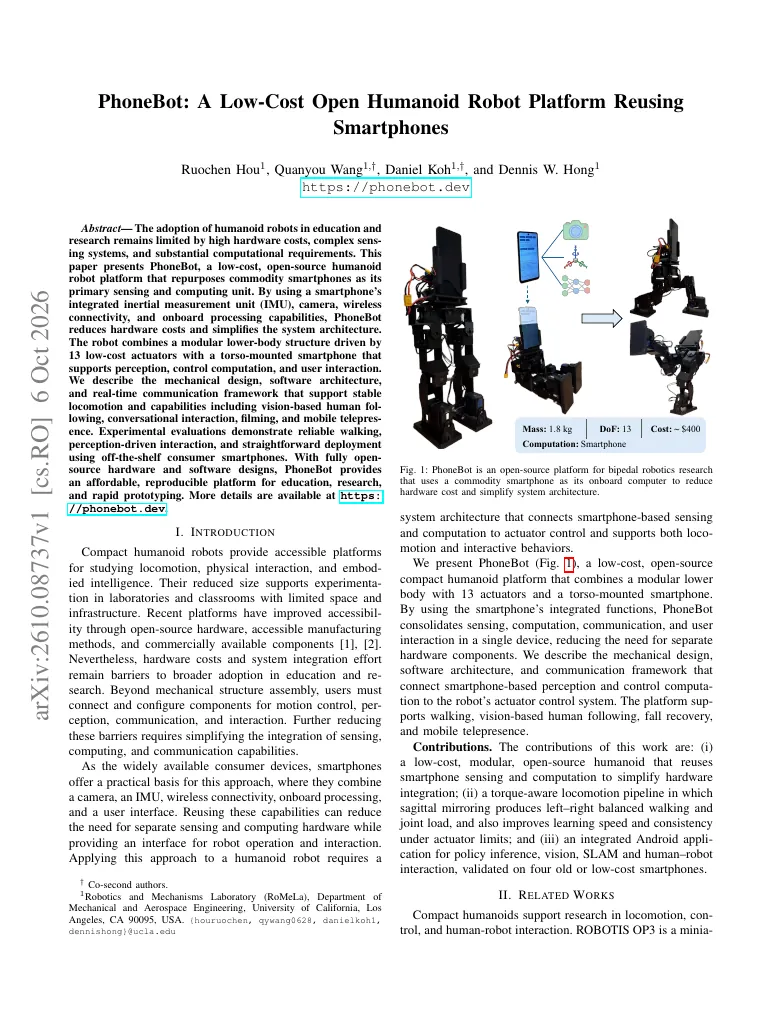
Builds a low-cost smartphone-powered humanoid that can walk and stand back up after falling.
Lets a Go2 feel pushes through an unsecured payload and compliantly follow a person's guidance.
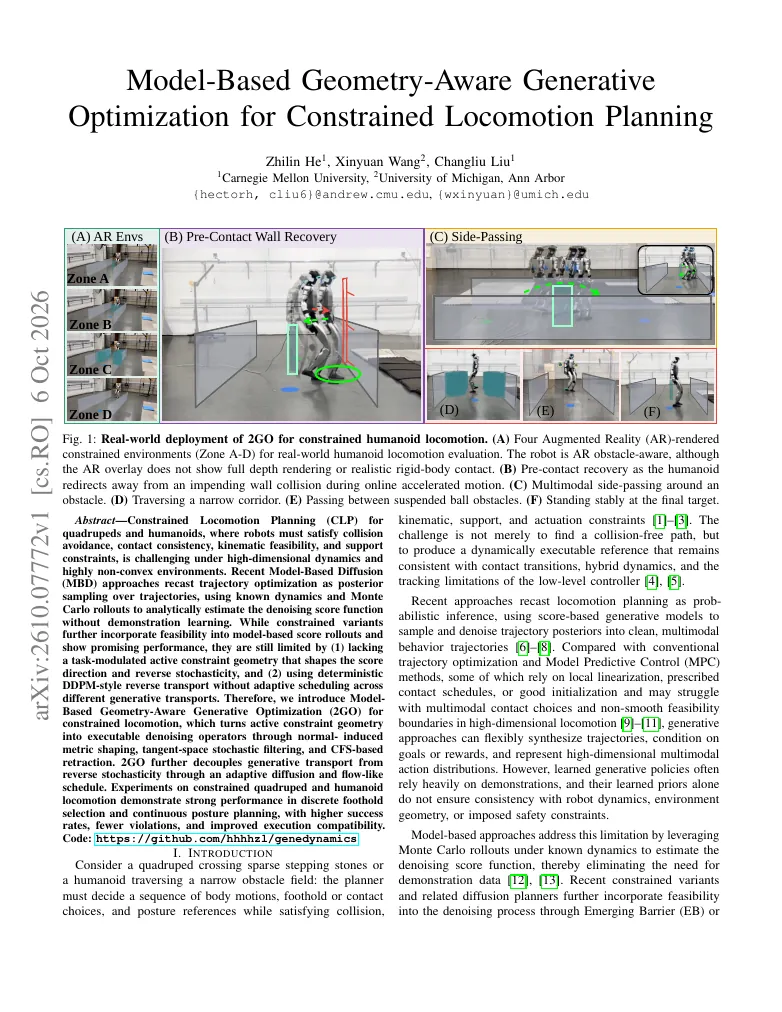
Plans quadruped footholds and humanoid postures while respecting obstacles, balance, and body clearance.
Learns compact, steerable humanoid walking styles from human motion and transfers them across several robot bodies.
Automatically changes a quadruped's gait to save energy across different terrain and speeds.
Teaches a humanoid to walk over rough terrain using only onboard body sensing.
Helps a Go1 keep walking when several actuators weaken by reasoning about how its limbs connect.
Trains one Unitree B1 policy for 22 walking, posture, digging, and combined skills.
Reports what lunar dust, lighting, terrain, and field operations demand from real legged robots.
Tests a Go2 on sloped roof rigs to expose why it slips, loses balance, and fails to recover.
Reference motion, imitation, retargeting, and behavior priors.
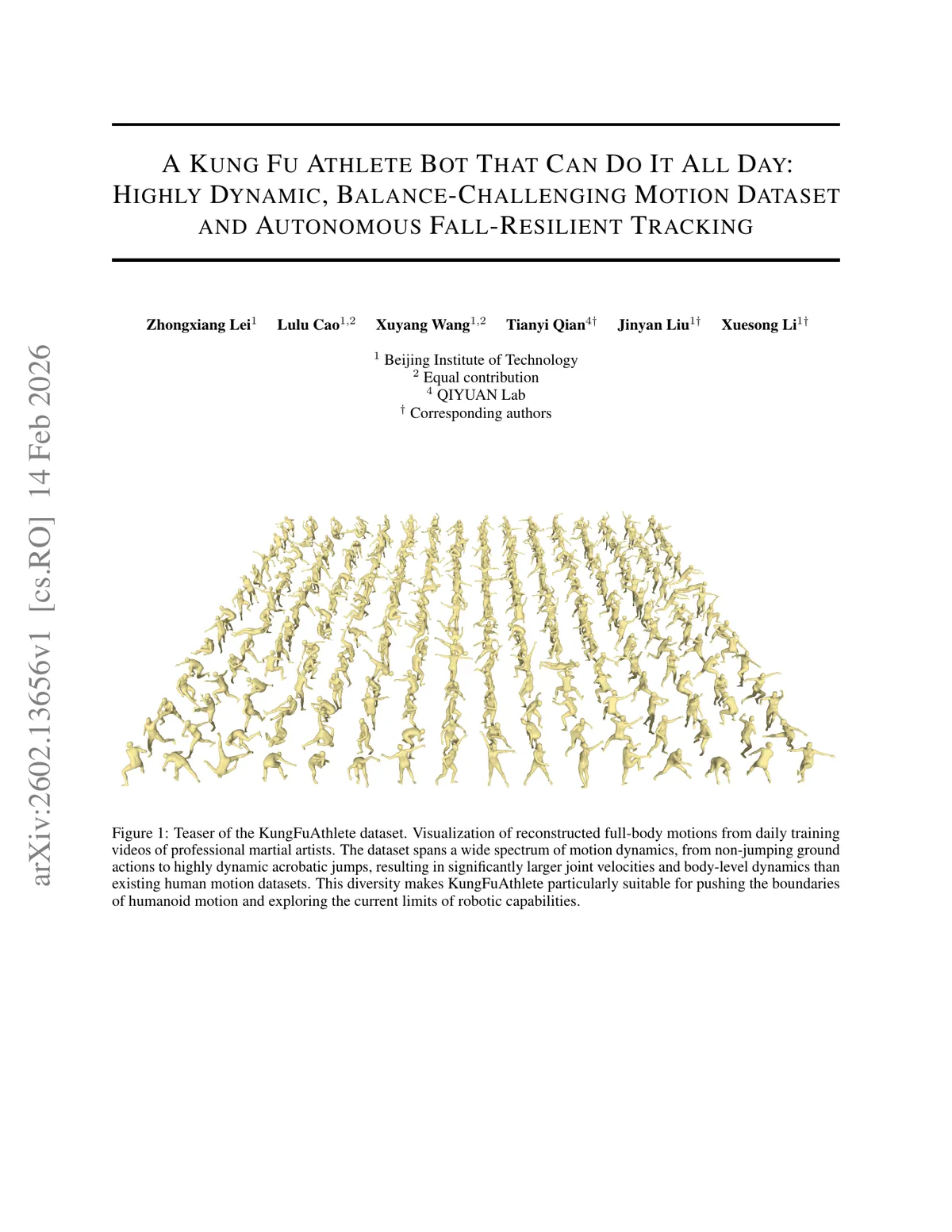
Teaches a G1 humanoid athletic moves from video and lets the same controller recover after a fall.
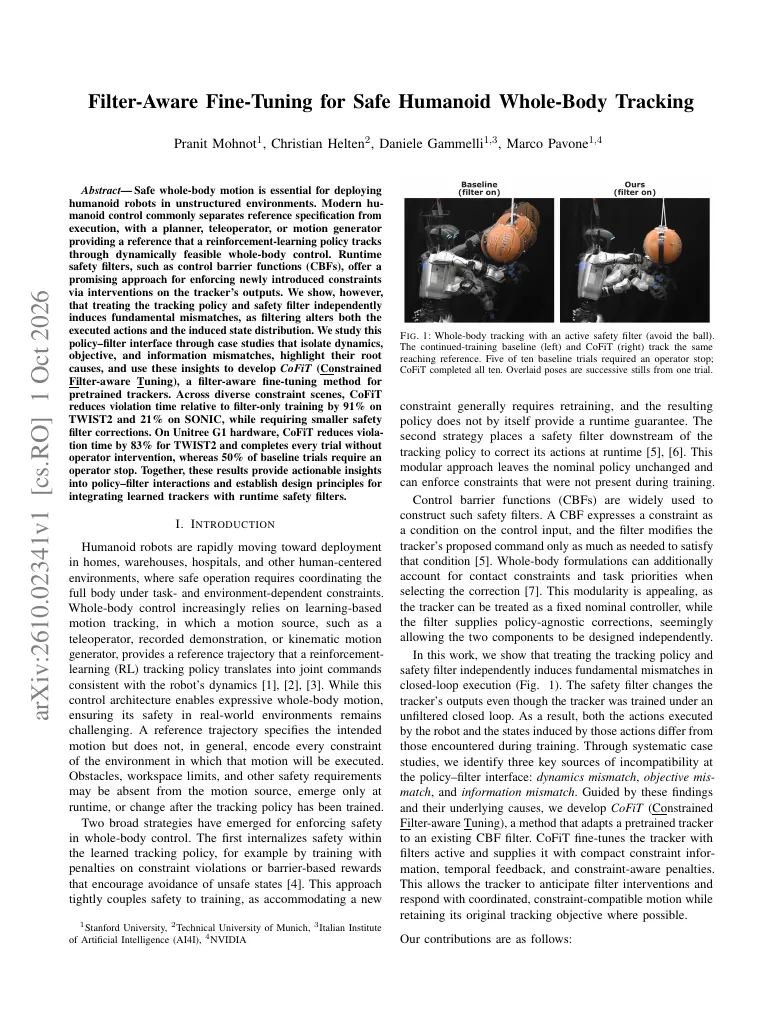
Helps humanoids follow whole-body motions while an active safety filter keeps them within safe limits.
Lets a G1 learn new motion skills one after another without forgetting earlier ones.
Generates human motions from text while allowing specific joints and moments to be constrained.
Makes flow-based robot learning fast enough to train G1 walking and motion tracking from scratch.
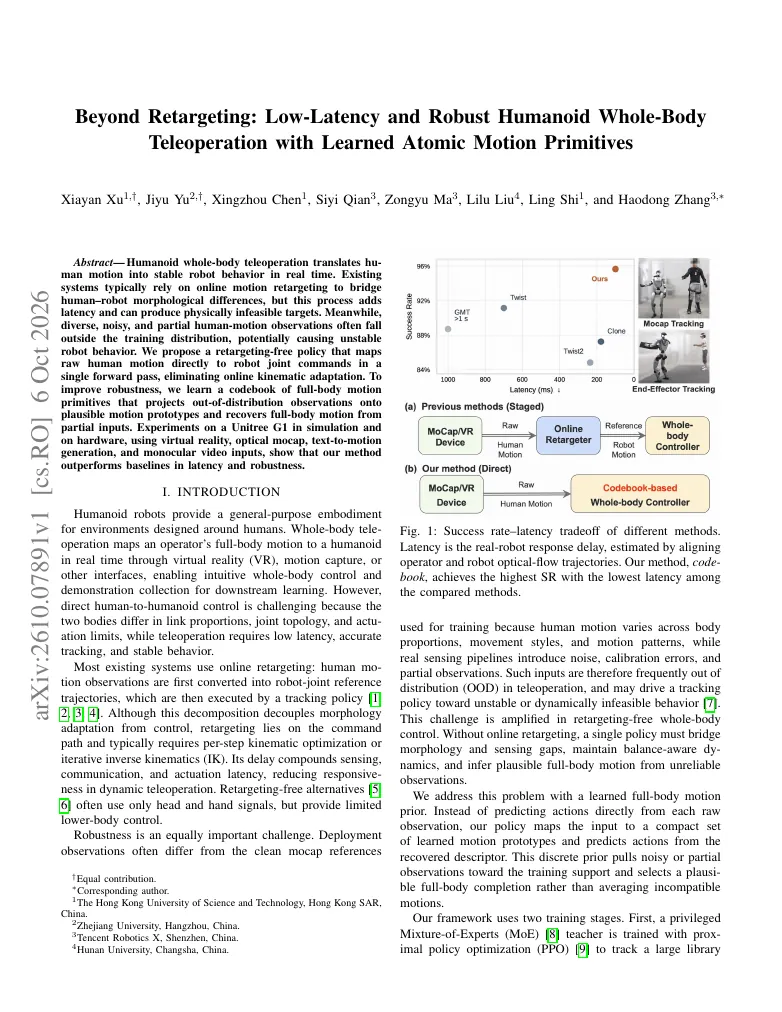
Teleoperates a G1 with a library of full-body motion pieces that stays stable when human pose input is noisy or missing.
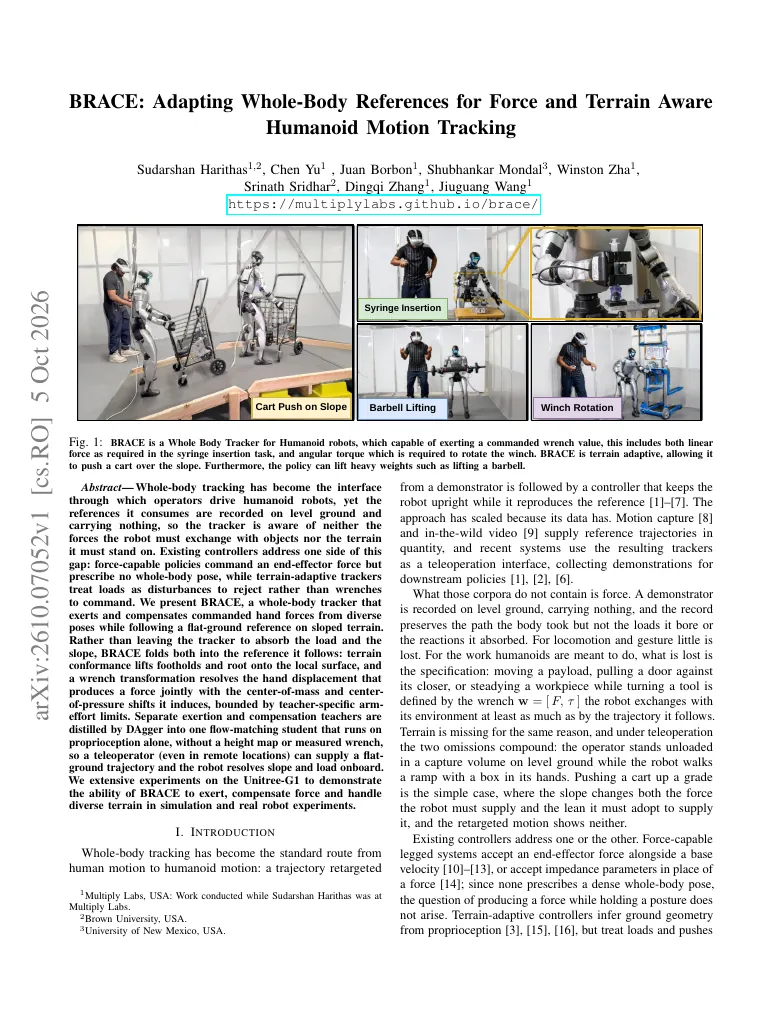
Adapts humanoid motion references to uneven ground and hand forces so one G1 tracker can handle both.
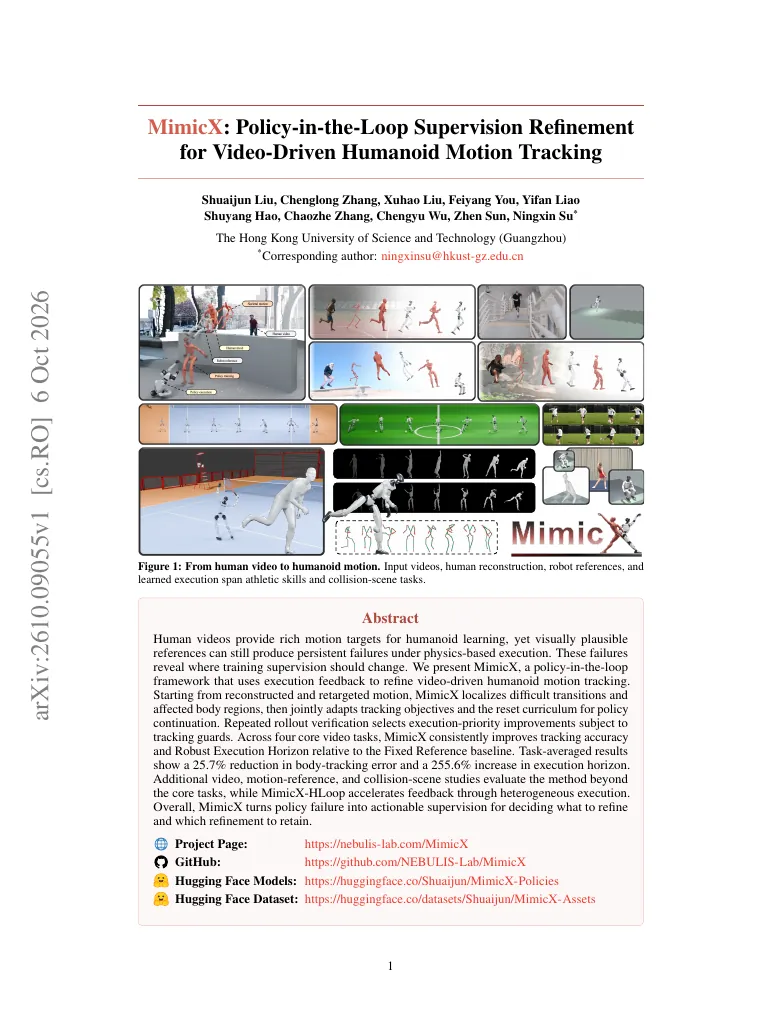
Finds where video-driven humanoid motions fail, then improves the training examples around those failures.
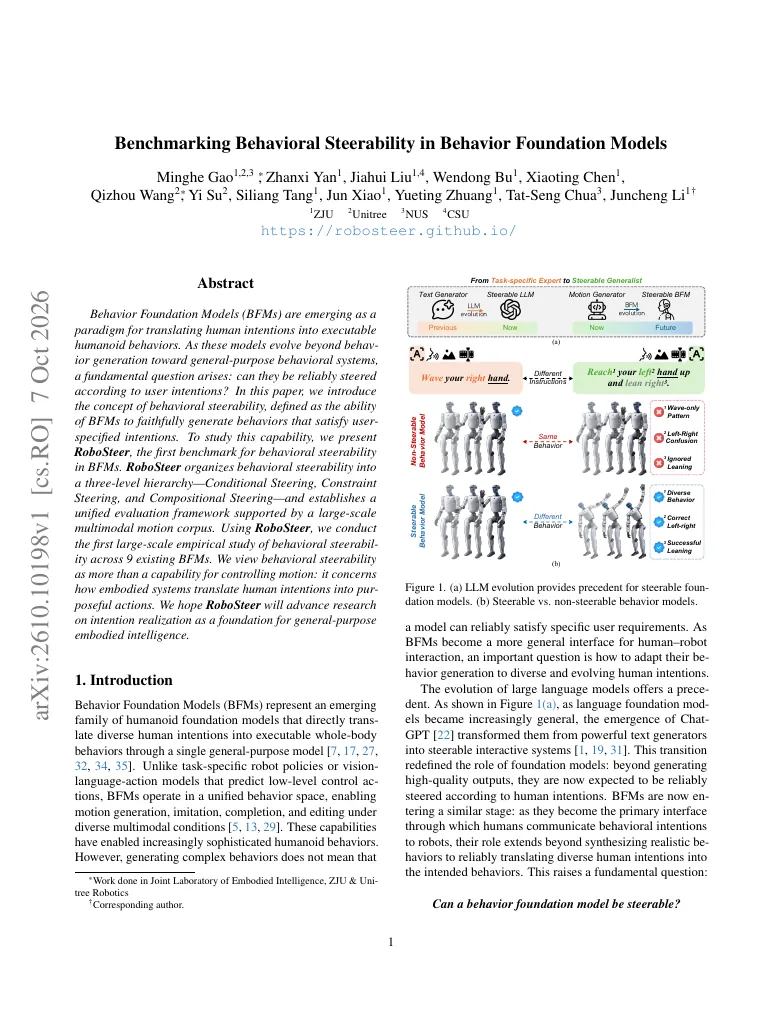
Tests whether humanoid motion models can obey combined style, constraint, and composition requests on a real G1.
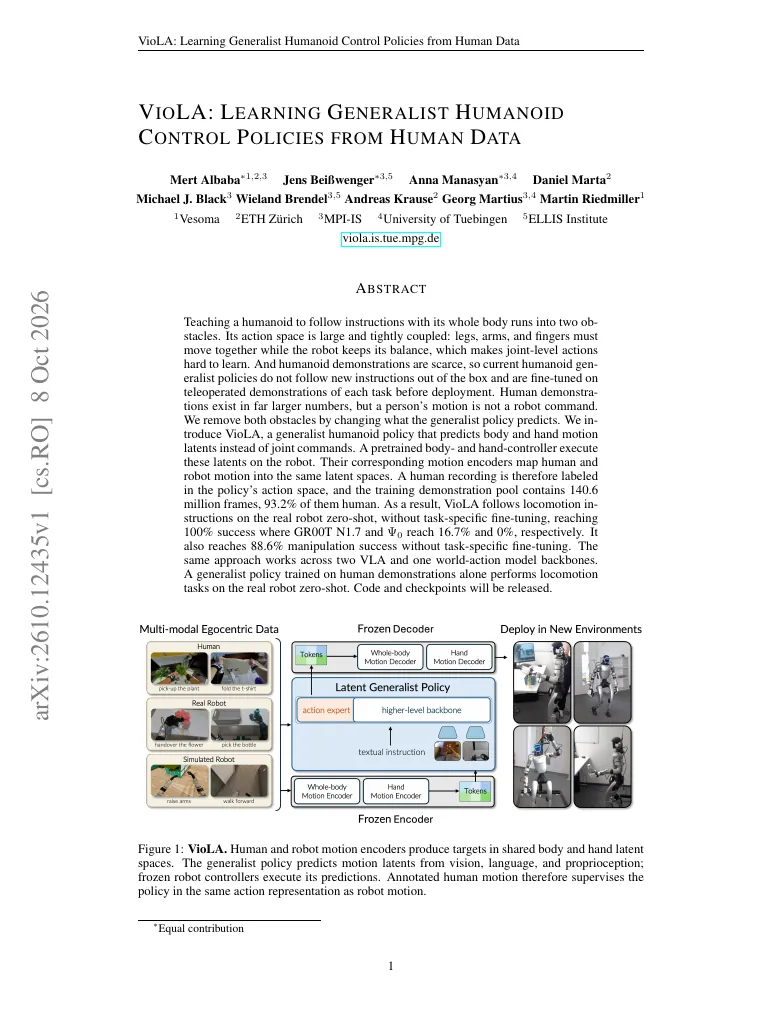
Learns reusable body and hand skills mostly from human data, then executes them through humanoid controllers.
Whole-body task contact: feet, torso, hands, and objects.
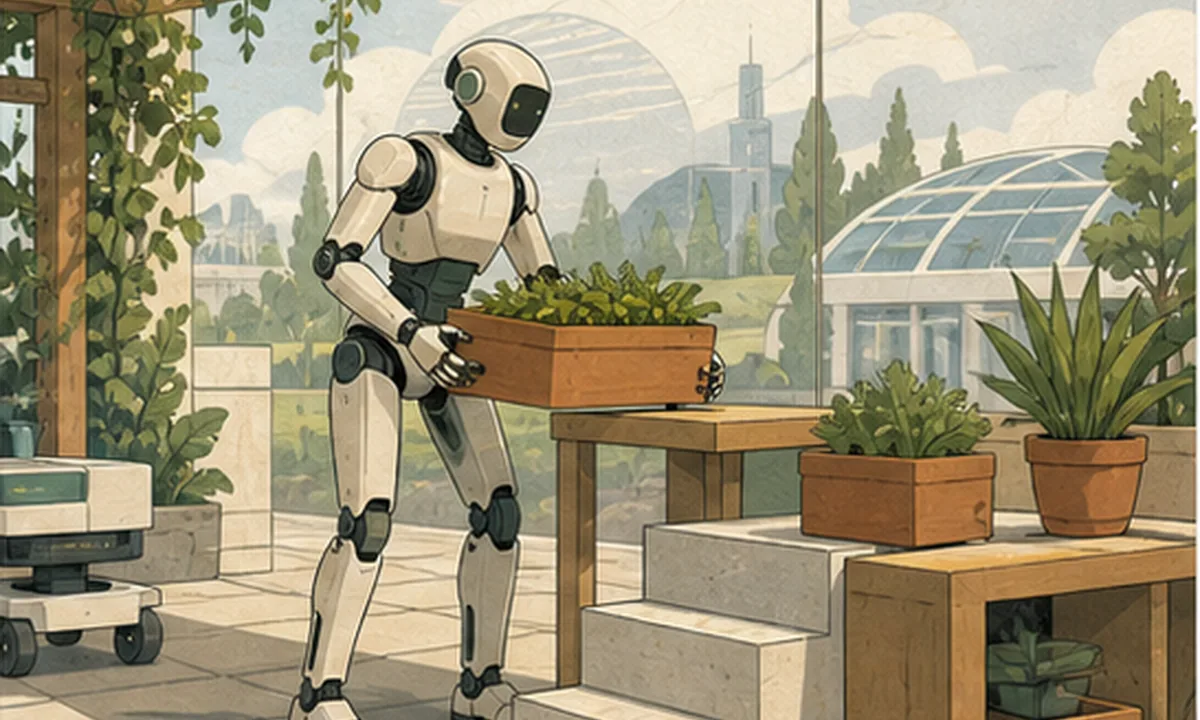
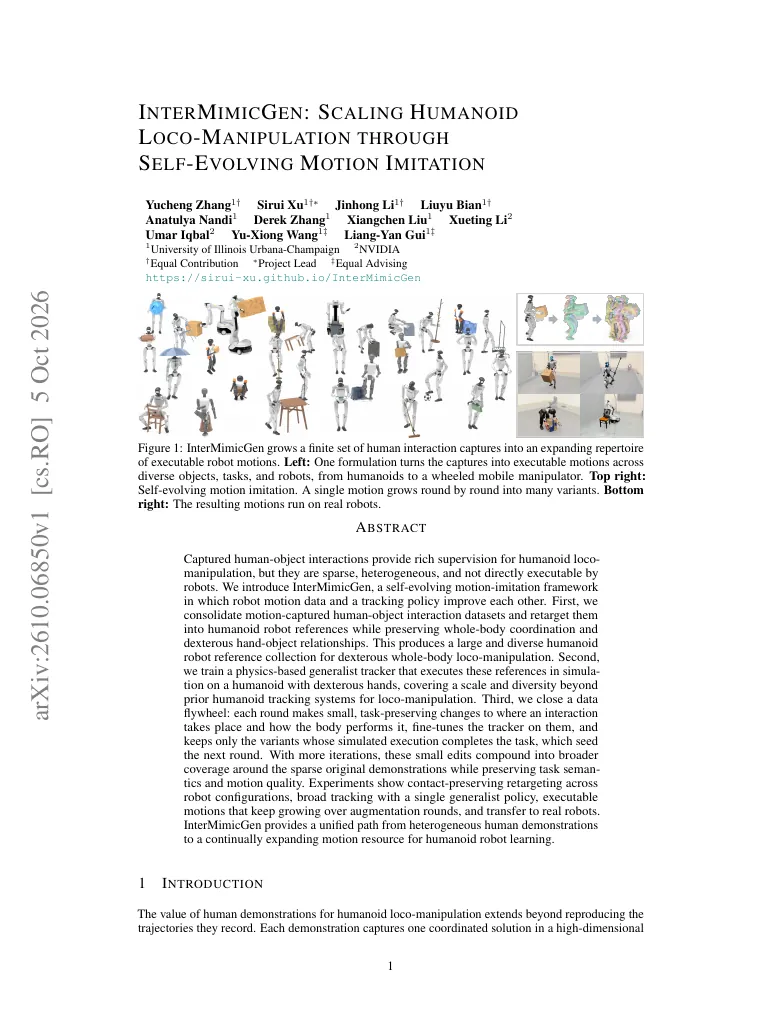
Builds a large library of successful humanoid object skills by repeatedly improving motions copied from people.
Gives one humanoid policy many object skills, including carrying, pushing, kicking, recovering, and chaining tasks.
Lets a humanoid move and handle objects compliantly using only hand targets, without human motion recordings.
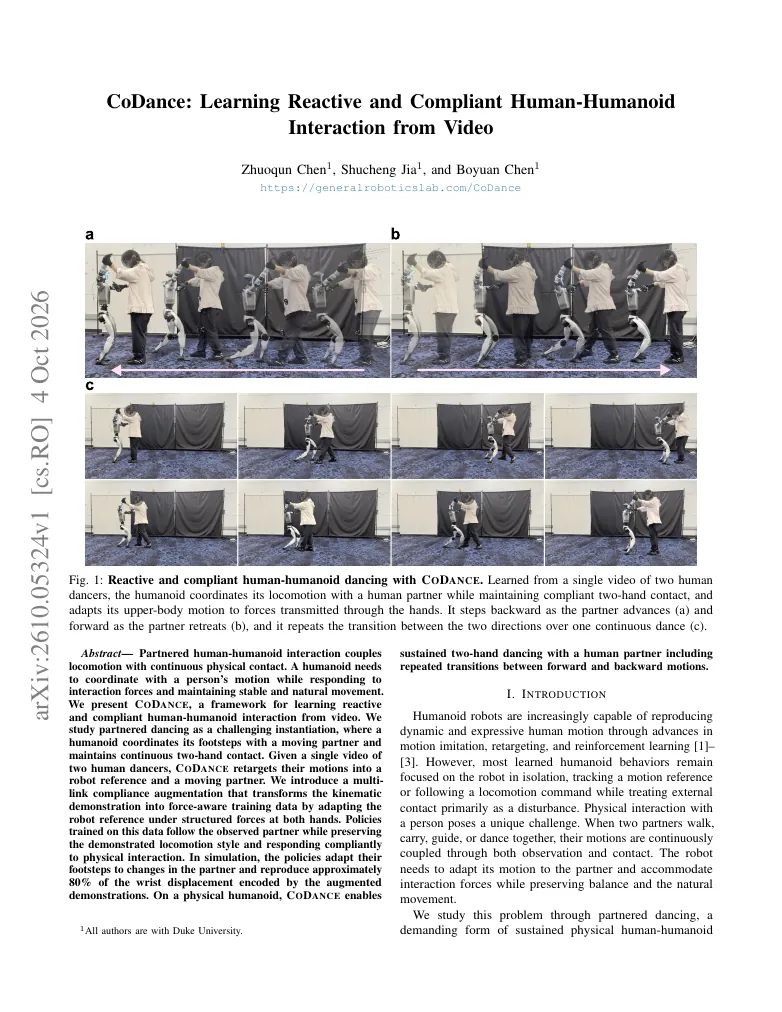
Teaches a humanoid to dance responsively with a person while keeping two-hand contact soft and stable.
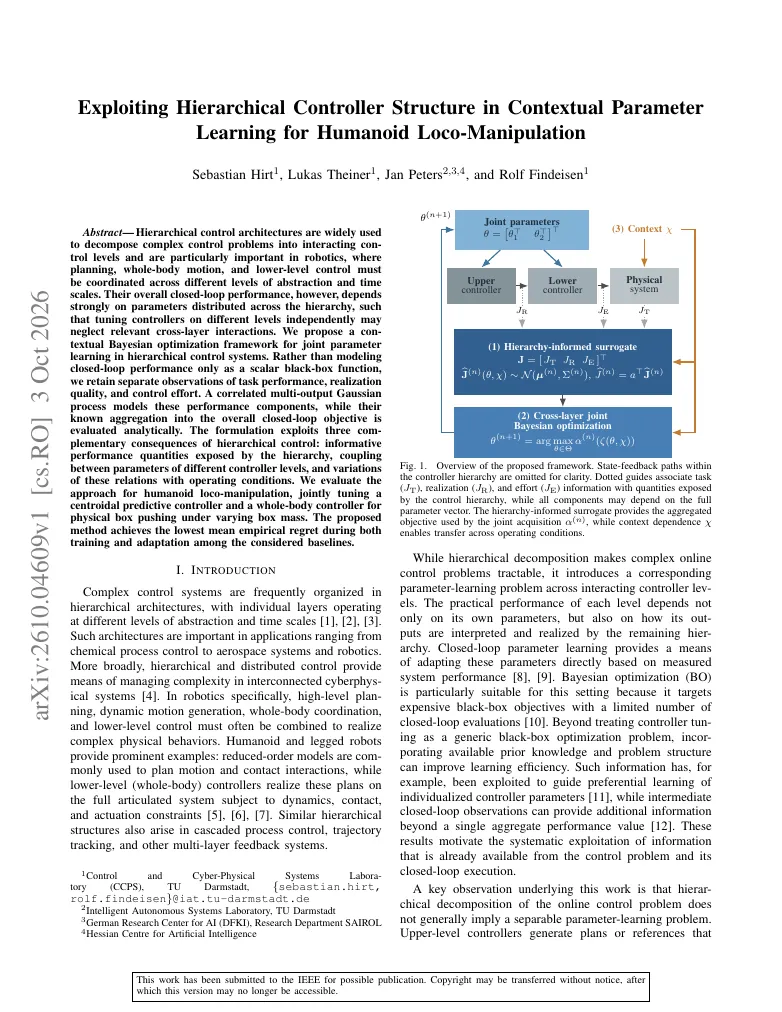
Automatically tunes a humanoid's walking and whole-body controllers for pushing boxes of different weights.
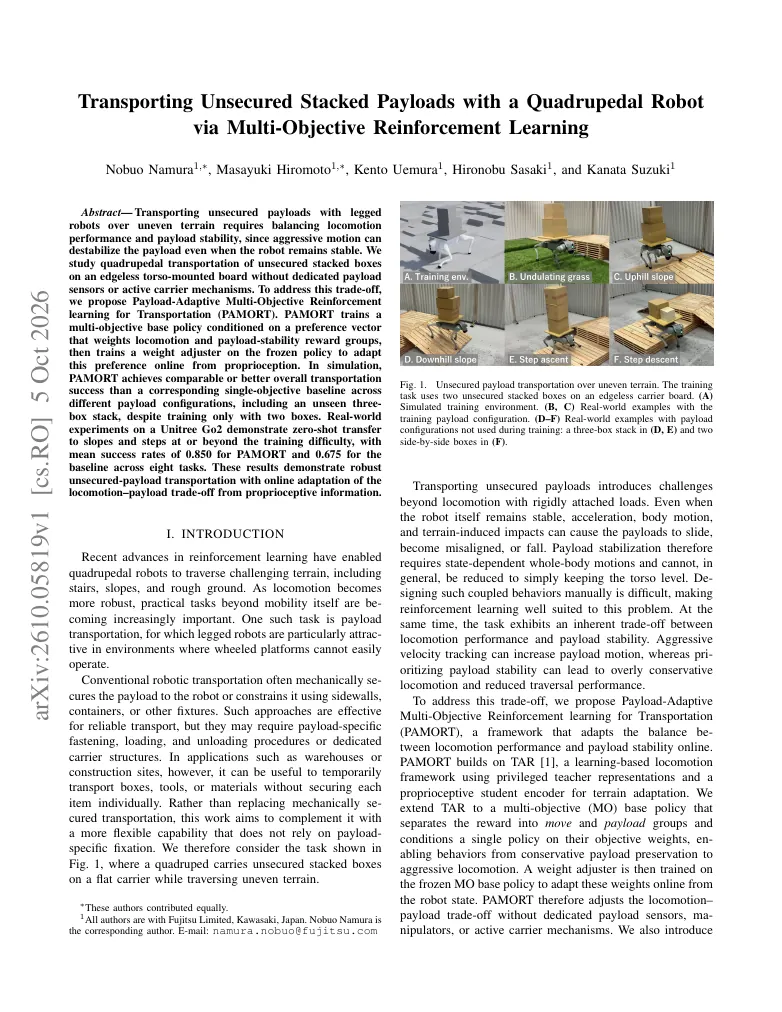
Lets a Go2 carry unsecured stacked boxes while adjusting how carefully it balances the load.
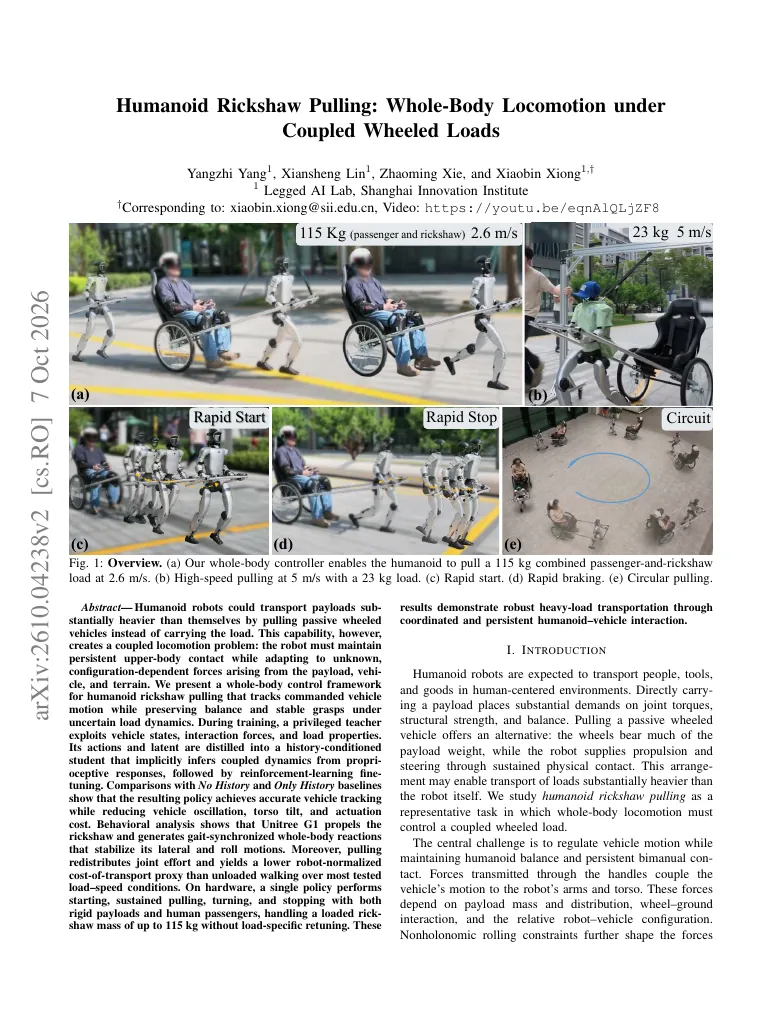
Teaches a G1 humanoid to pull a loaded rickshaw weighing as much as 115 kilograms.
Coordinates two or three quadrupeds carrying one object safely through narrow passages.
Trains one humanoid policy to complete a long five-object rearrangement without stopping between stages.
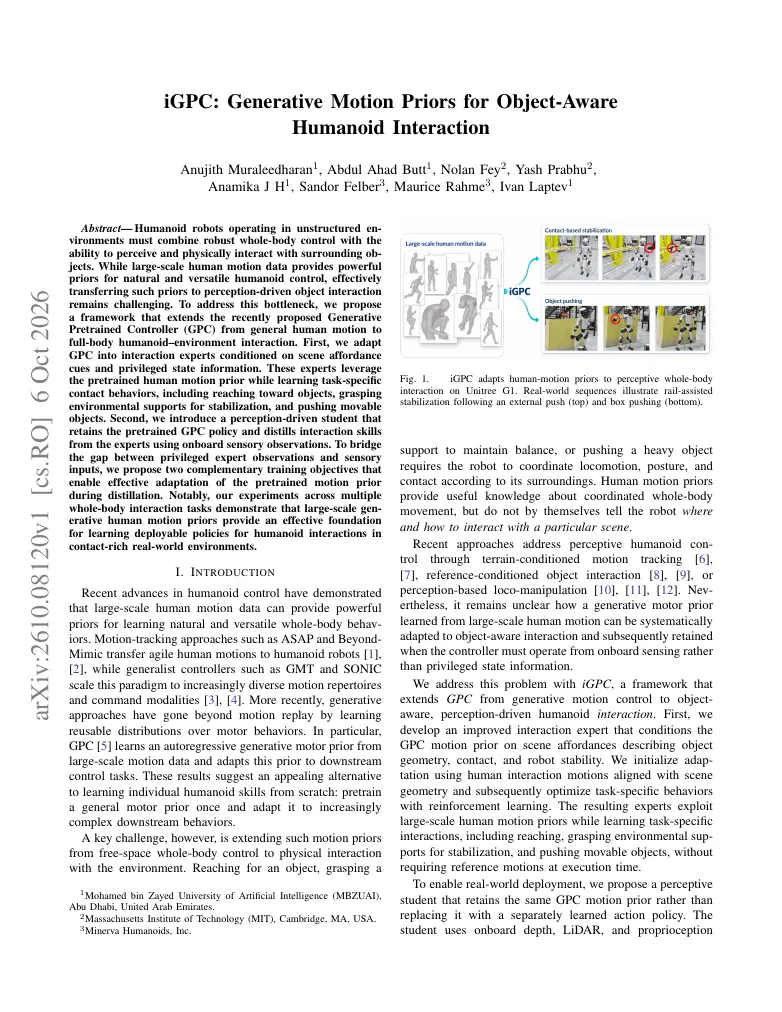
Teaches a G1 to seek support, recover from pushes, and move objects using depth and LiDAR sensing.
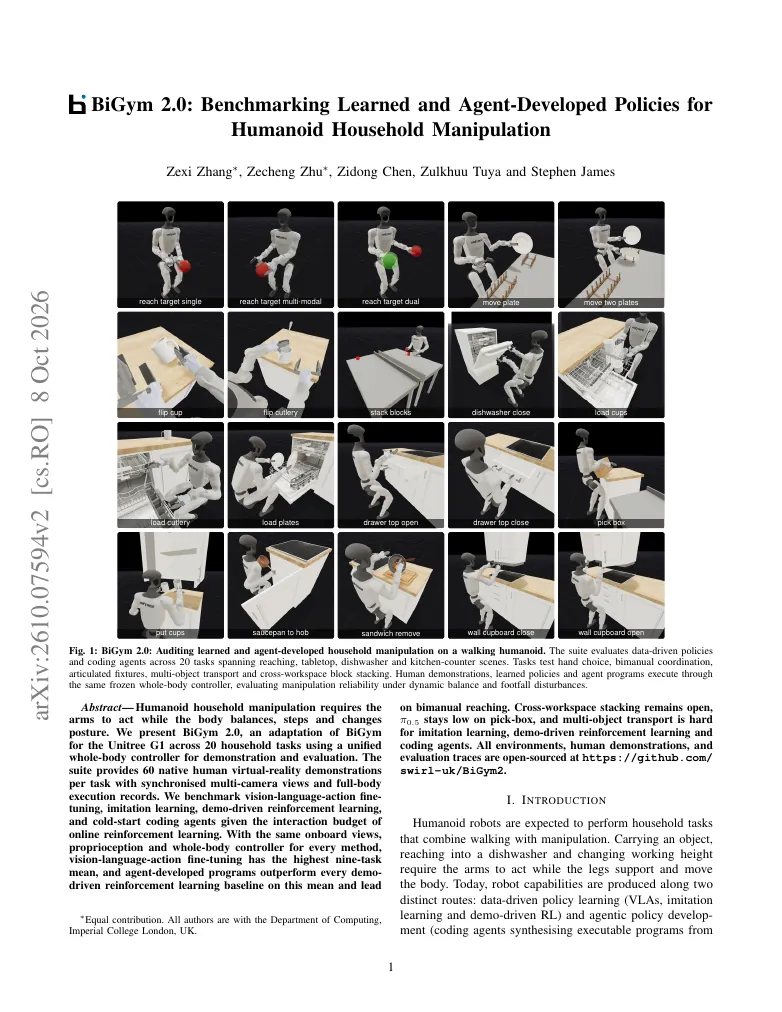
Provides 20 household tasks for comparing learned and agent-written humanoid manipulation policies on G1.
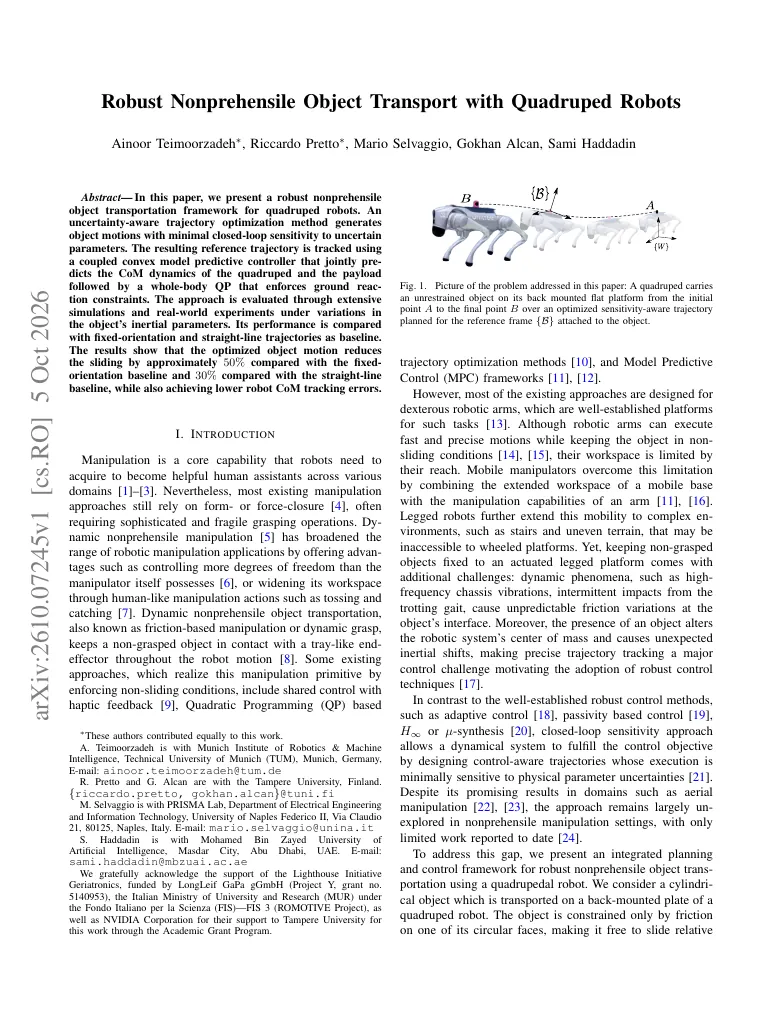
Carries loose objects on a quadruped's back while reducing sliding during turns and disturbances.
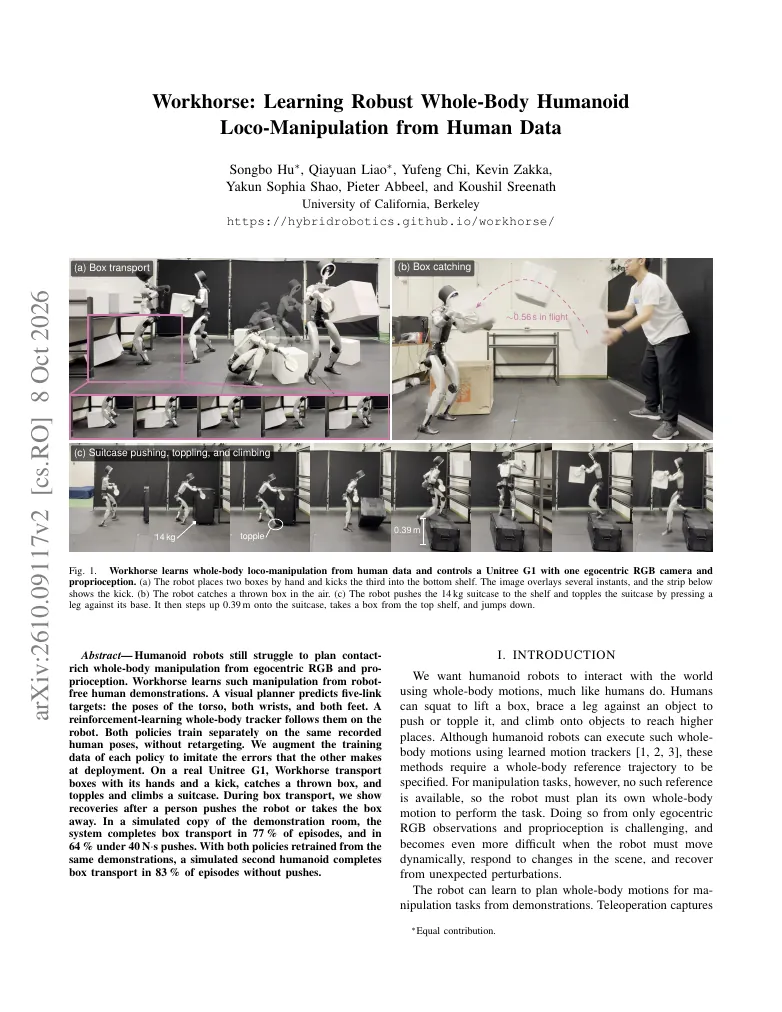
Learns dynamic humanoid object skills from first-person human videos without robot-specific motion retargeting.
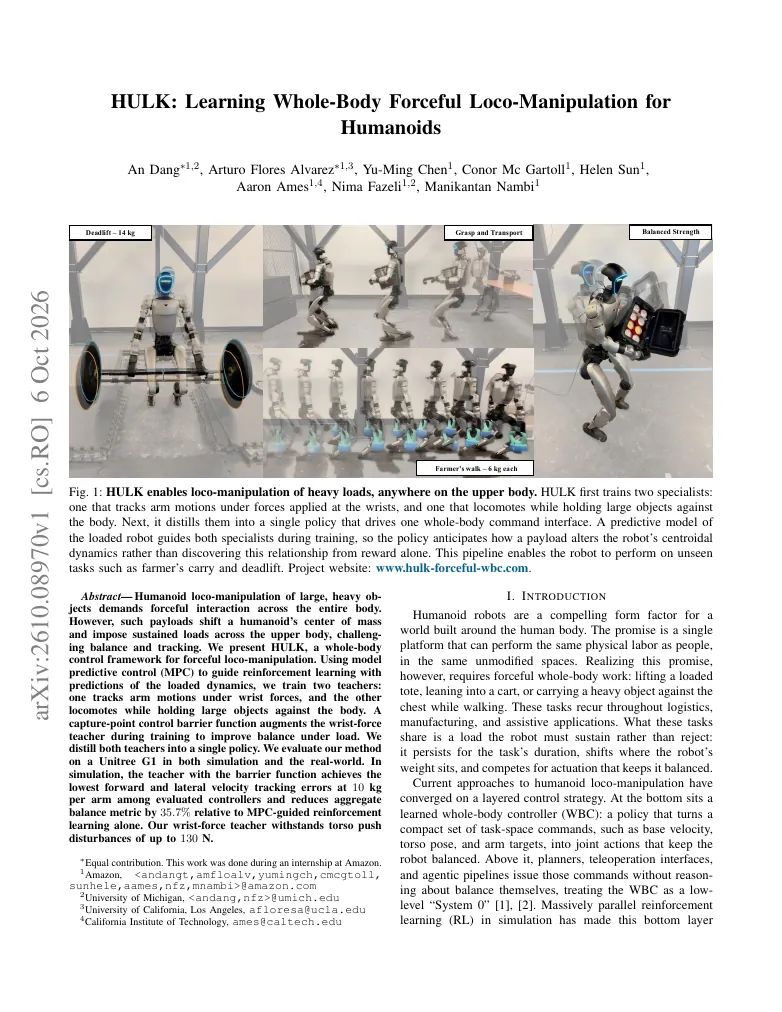
Teaches a G1 to walk while pushing, pulling, and carrying heavy loads with its wrists and torso.
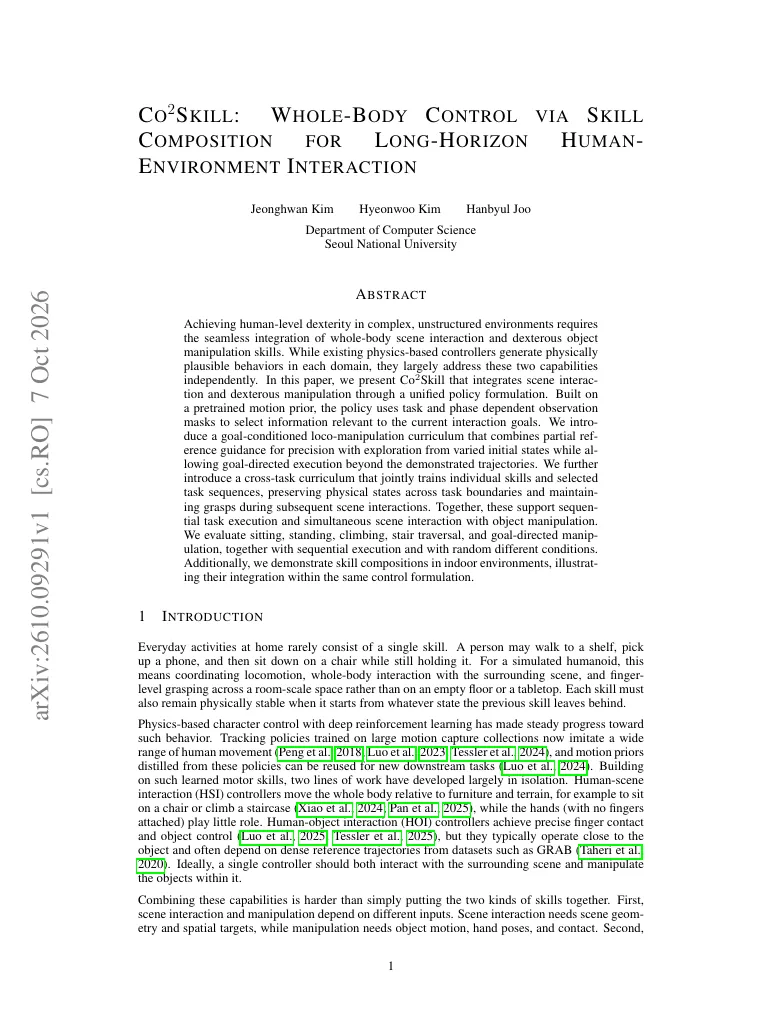
Combines sitting, standing, climbing, stairs, navigation, and hand skills inside one humanoid controller.
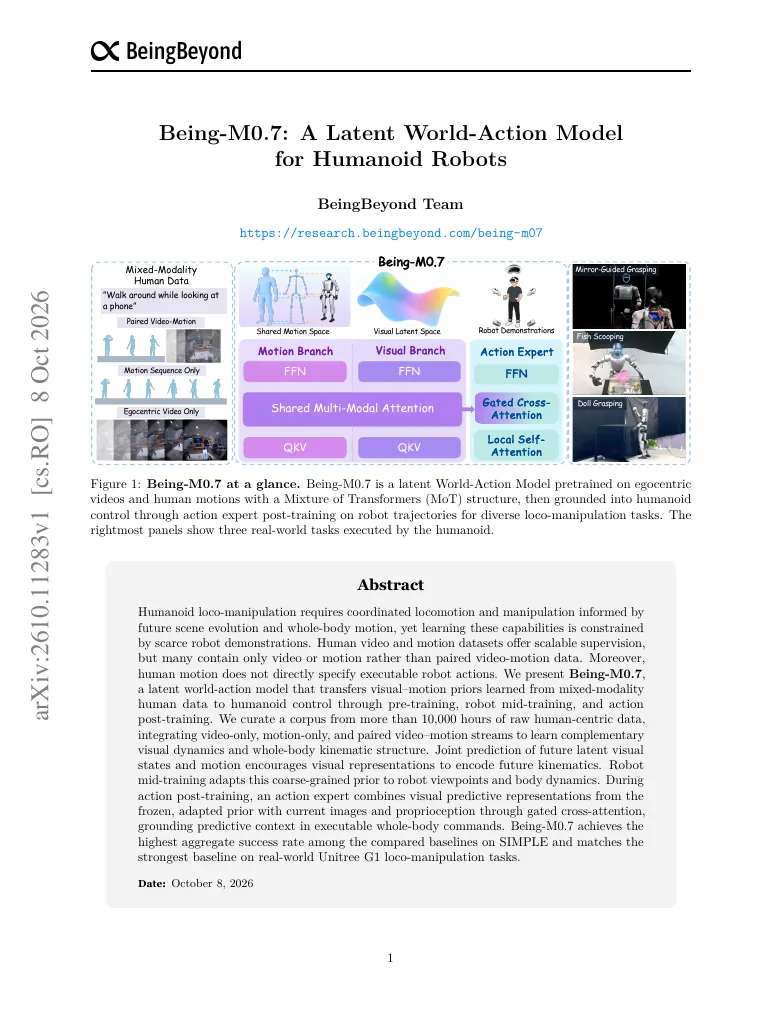
Turns more than 10,000 hours of human video and motion into executable G1 whole-body object skills.
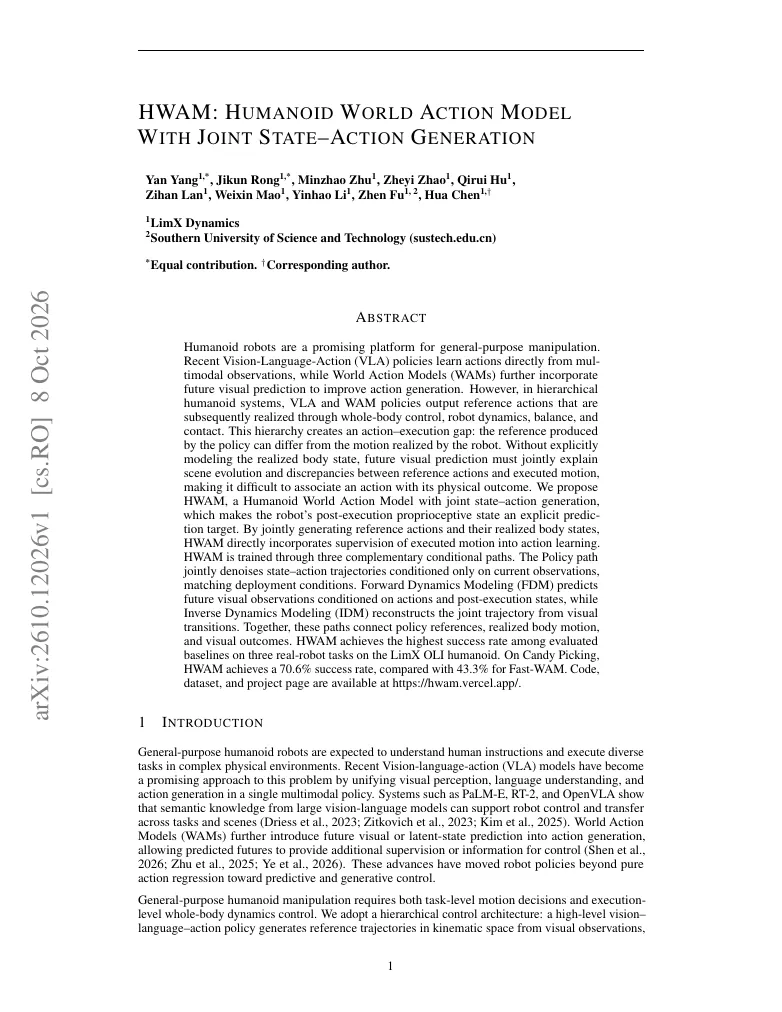
Predicts both the next humanoid action and the body state that action should produce.
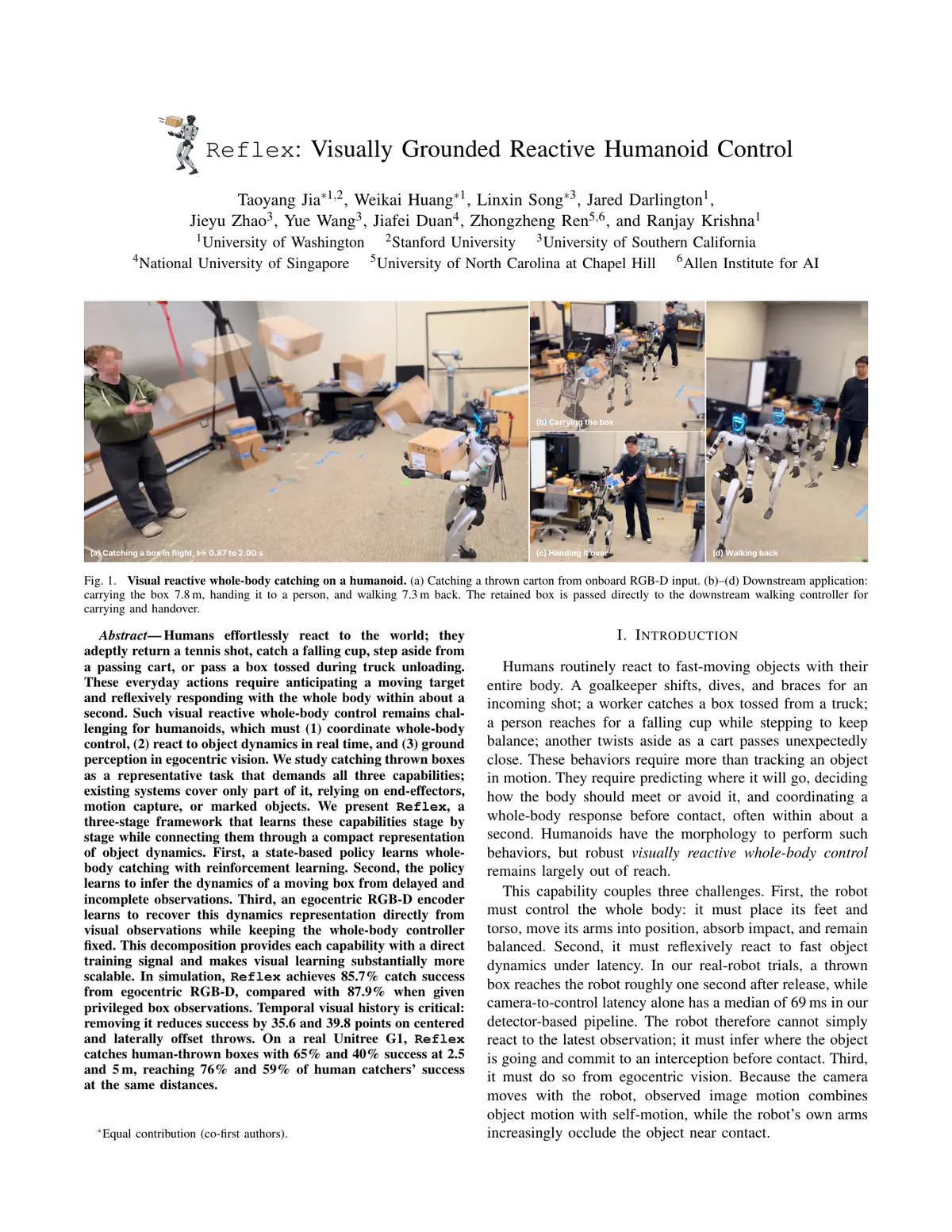
Lets a G1 see, step toward, catch, and retain boxes thrown by a person using onboard RGB-D.
MPC, impedance, safety layers, and whole-body coordination.
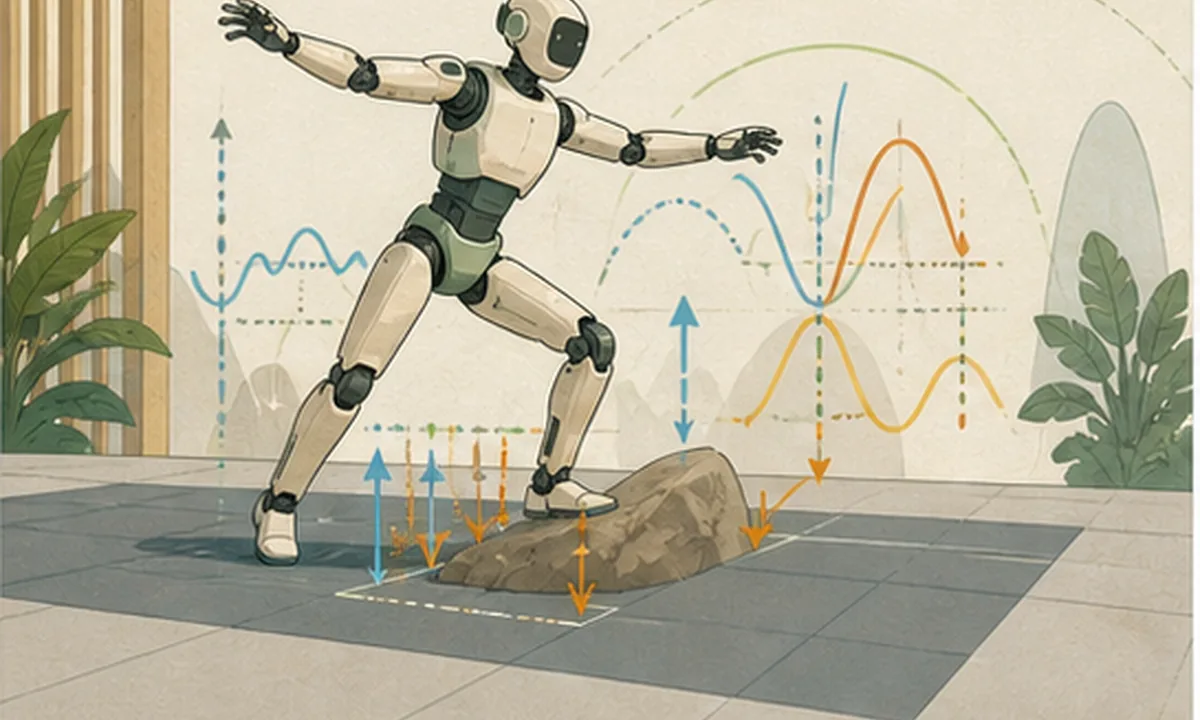
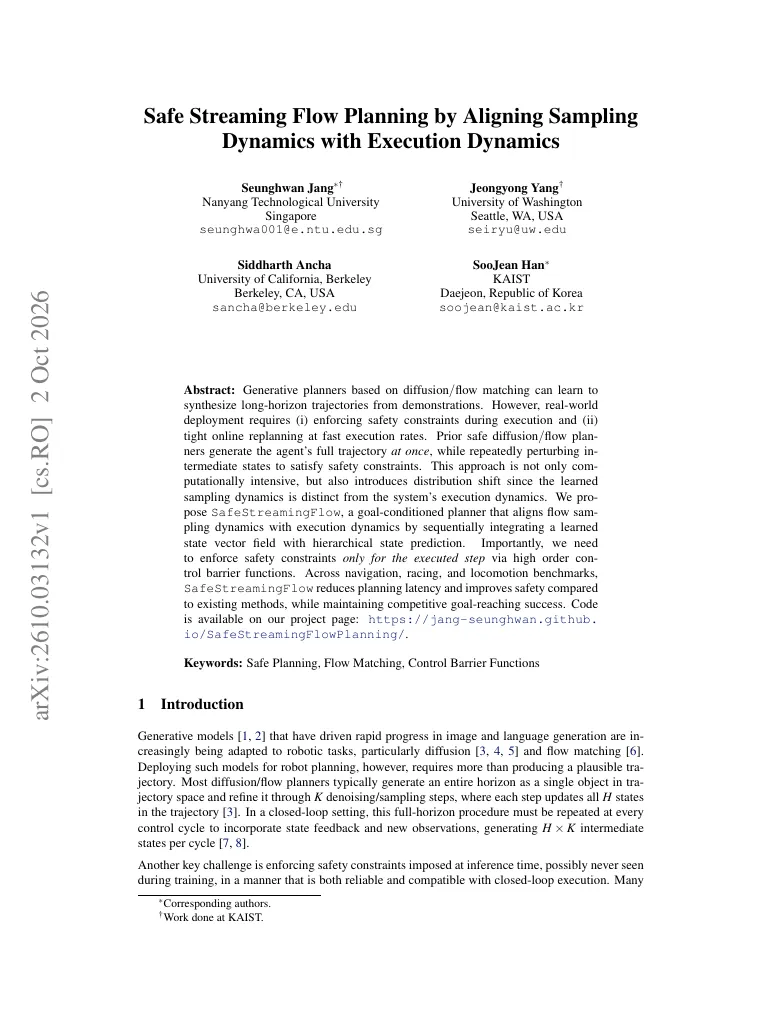
Plans safe movements continuously and filters each step before a legged robot executes it.
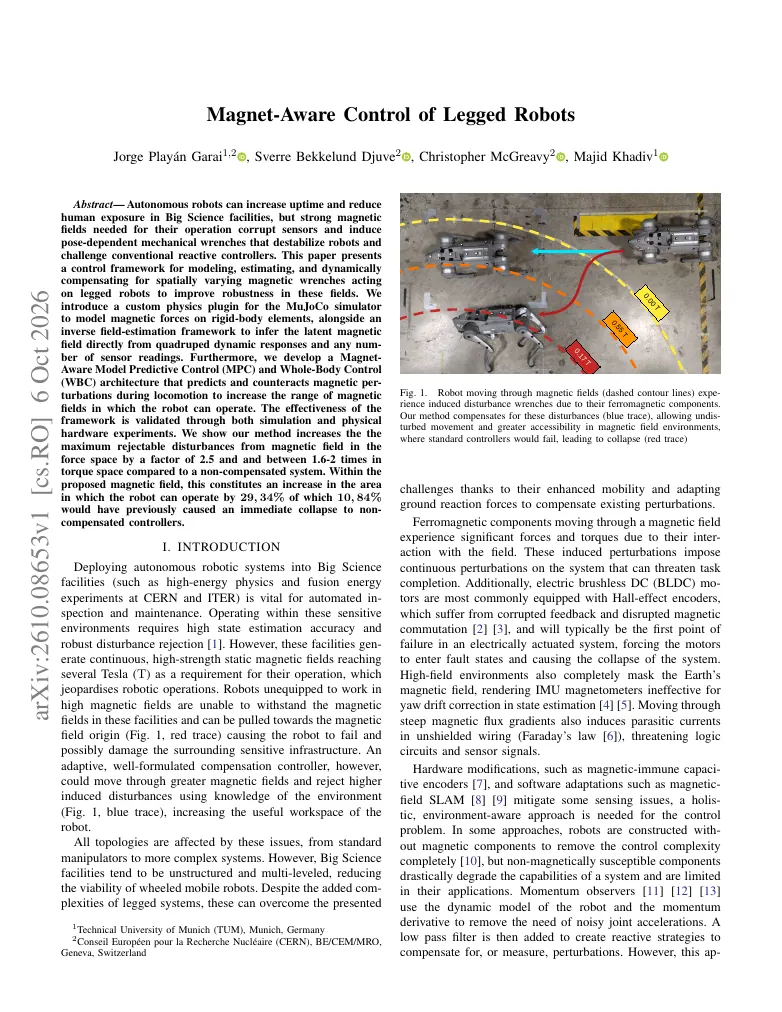
Keeps a quadruped stable near strong magnets by modeling magnetic forces inside its controller.
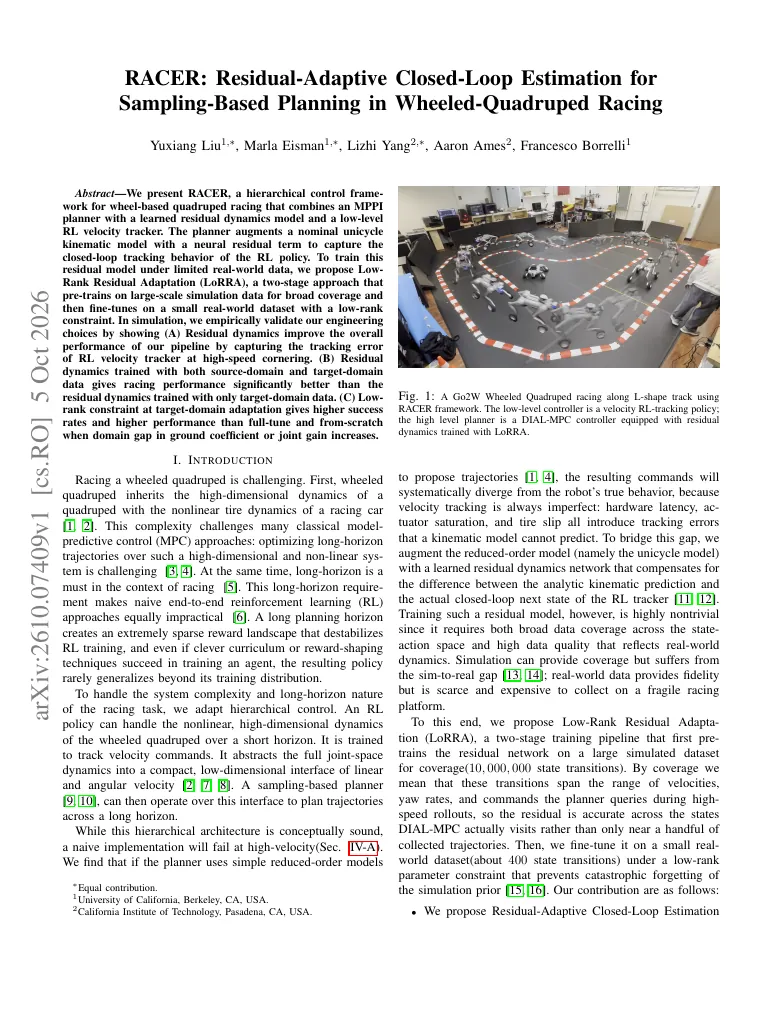
Adapts a wheeled quadruped's racing controller online when real motion differs from simulation.
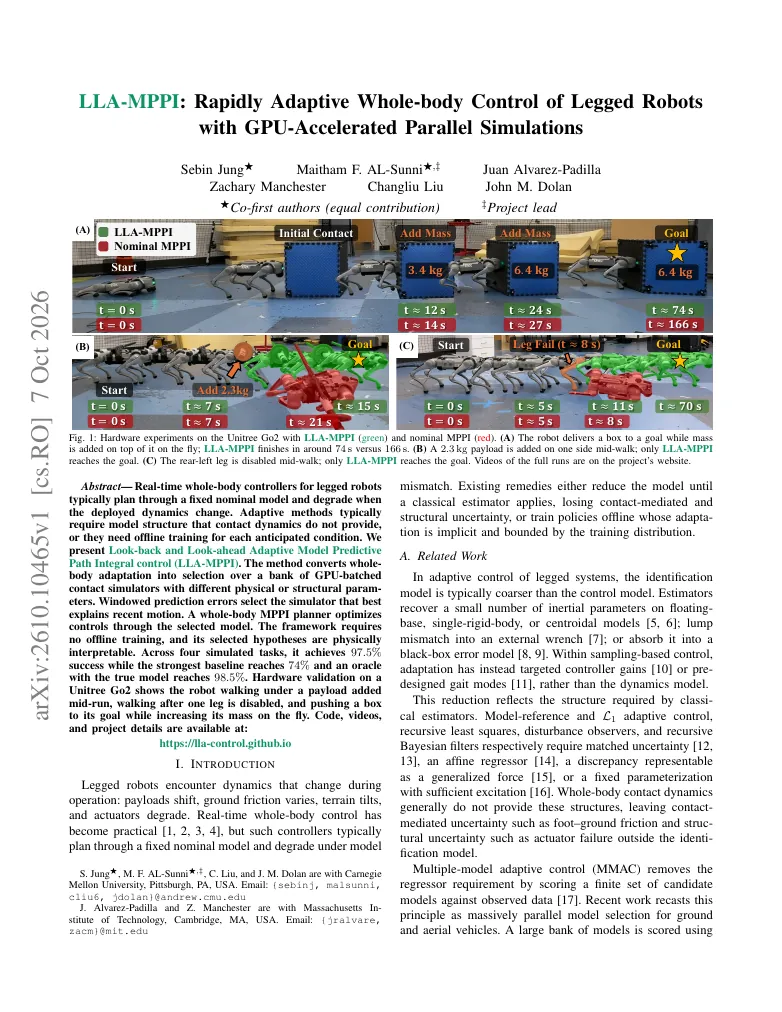
Adapts whole-body quadruped control online to payloads, slippery ground, leg failures, and box pushing.
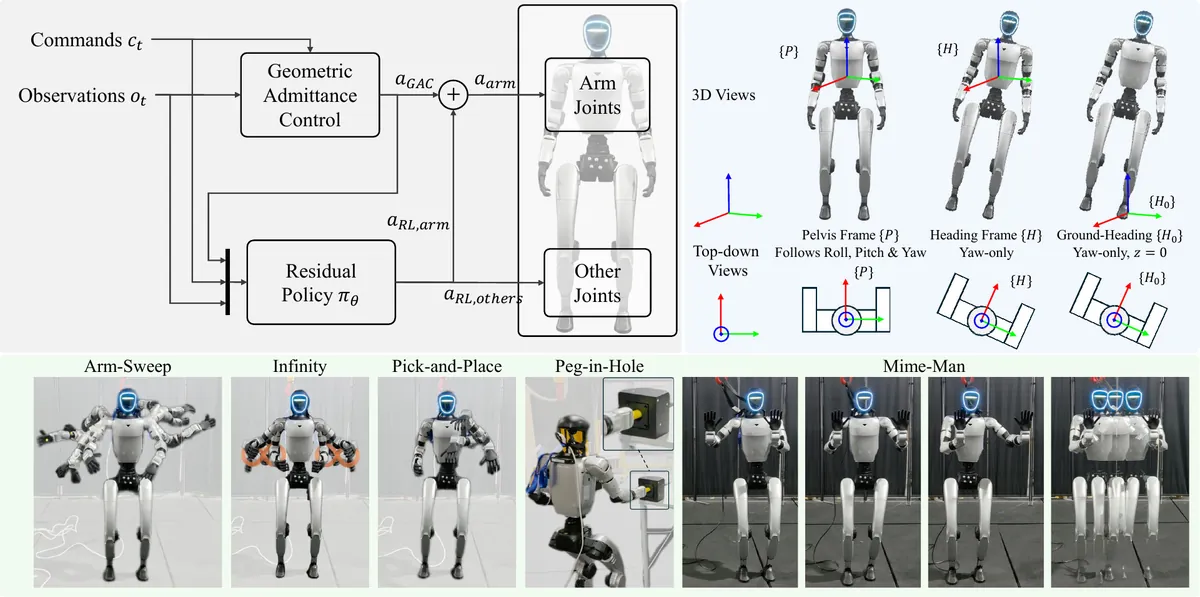
Tracks precise hand positions and orientations while a humanoid balances and walks.
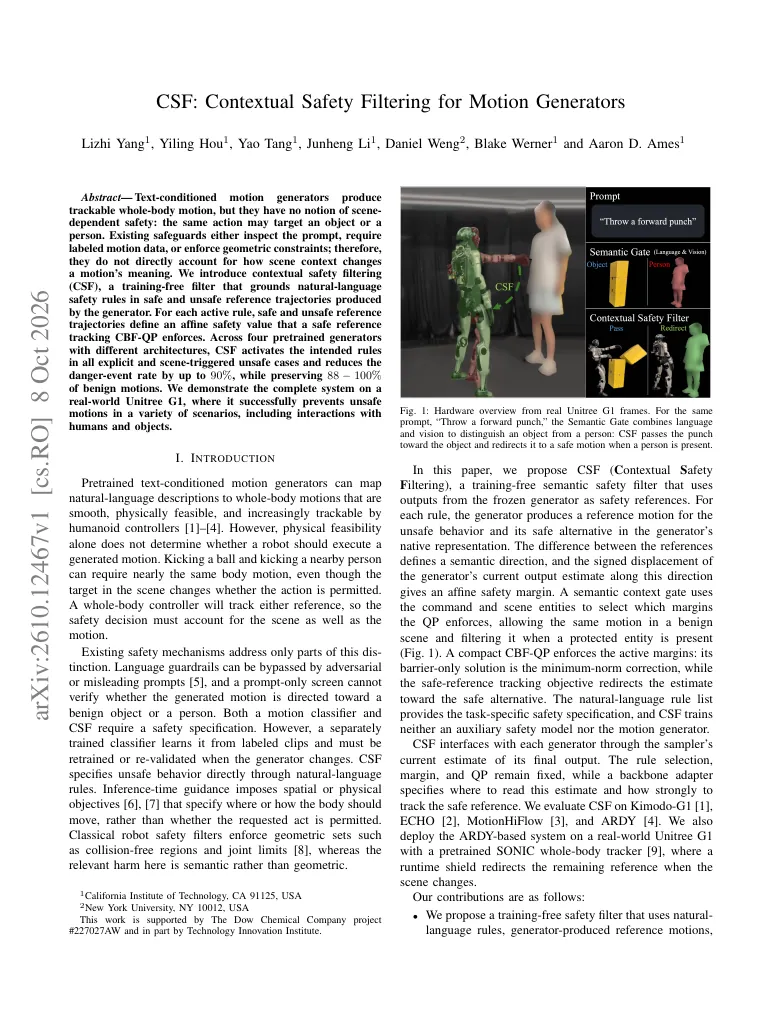
Filters generated humanoid motions against the current scene before a G1 tries to execute them.
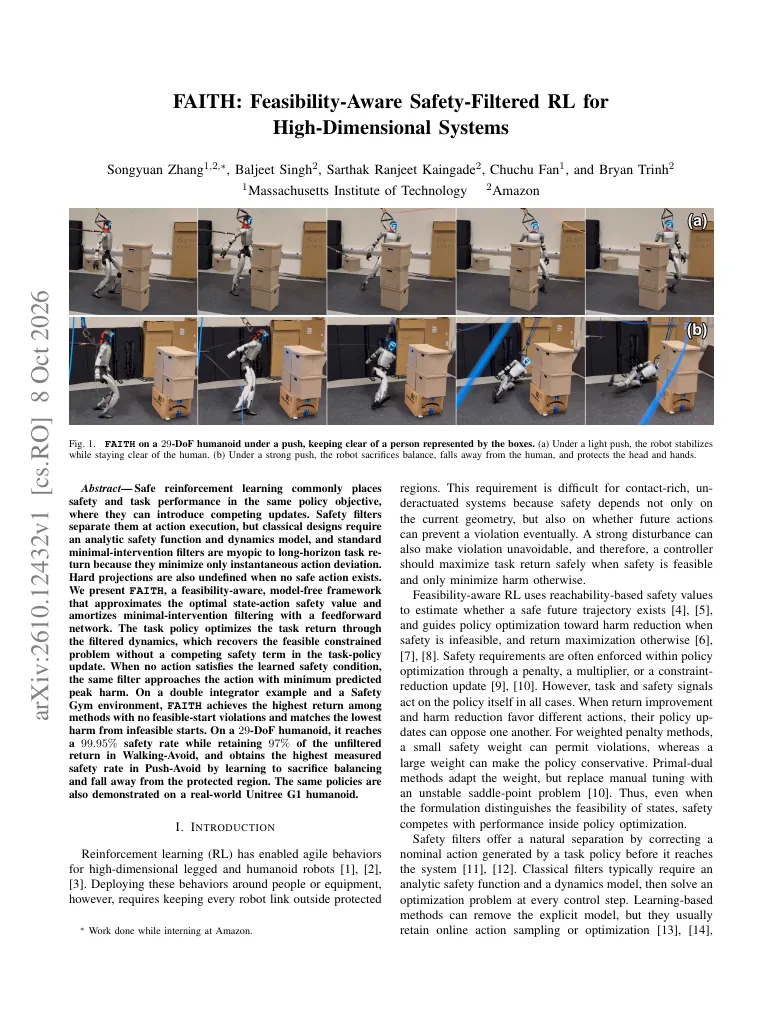
Lets a G1 walk and avoid pushes with a learned safety filter that transfers to hardware.
Benchmarks, datasets, rewards, simulators, and tooling.
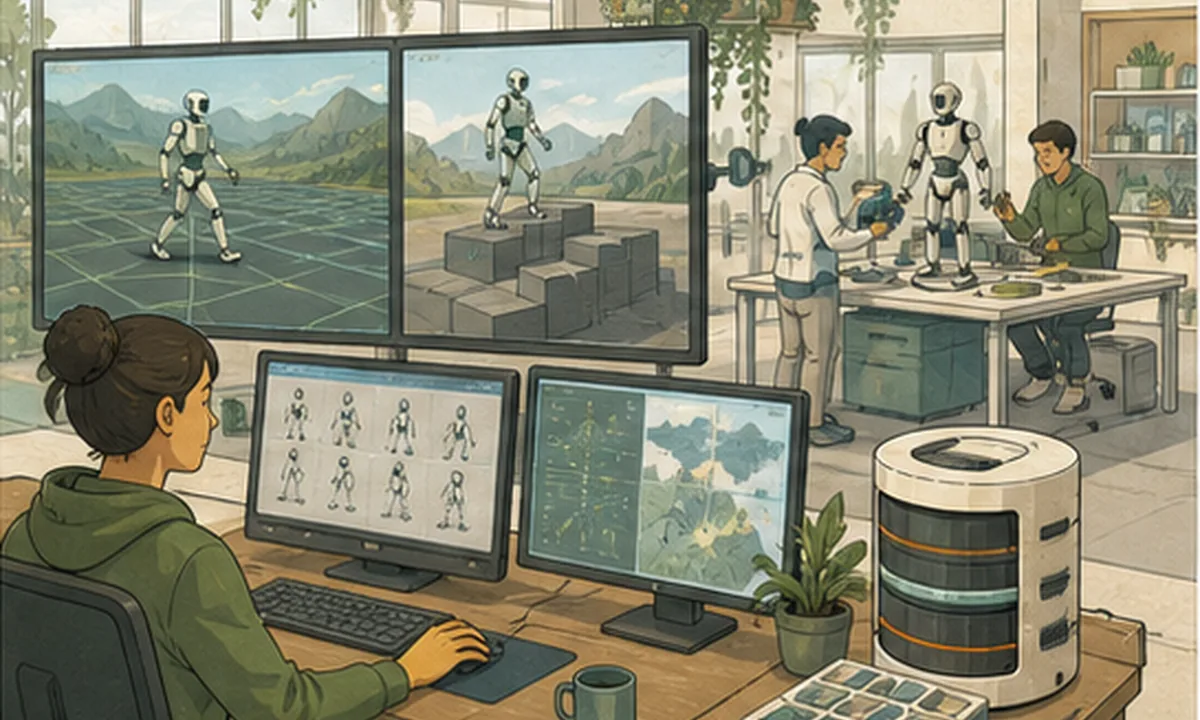
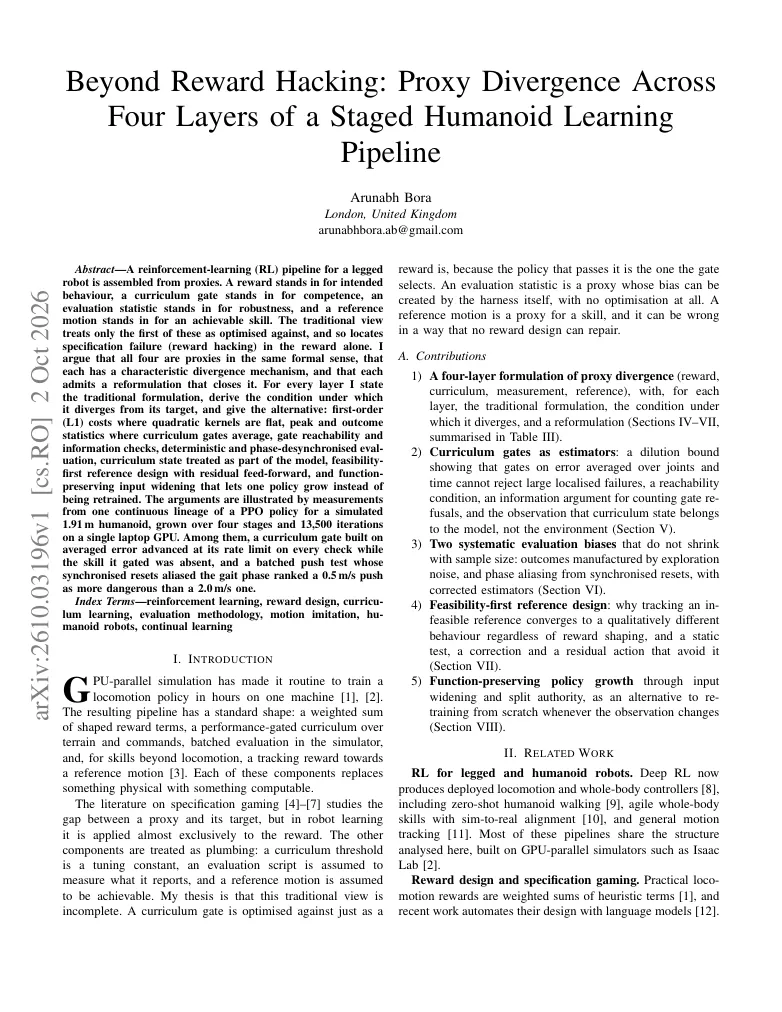
Shows where humanoid training rewards and tests can accidentally reward the wrong behavior.
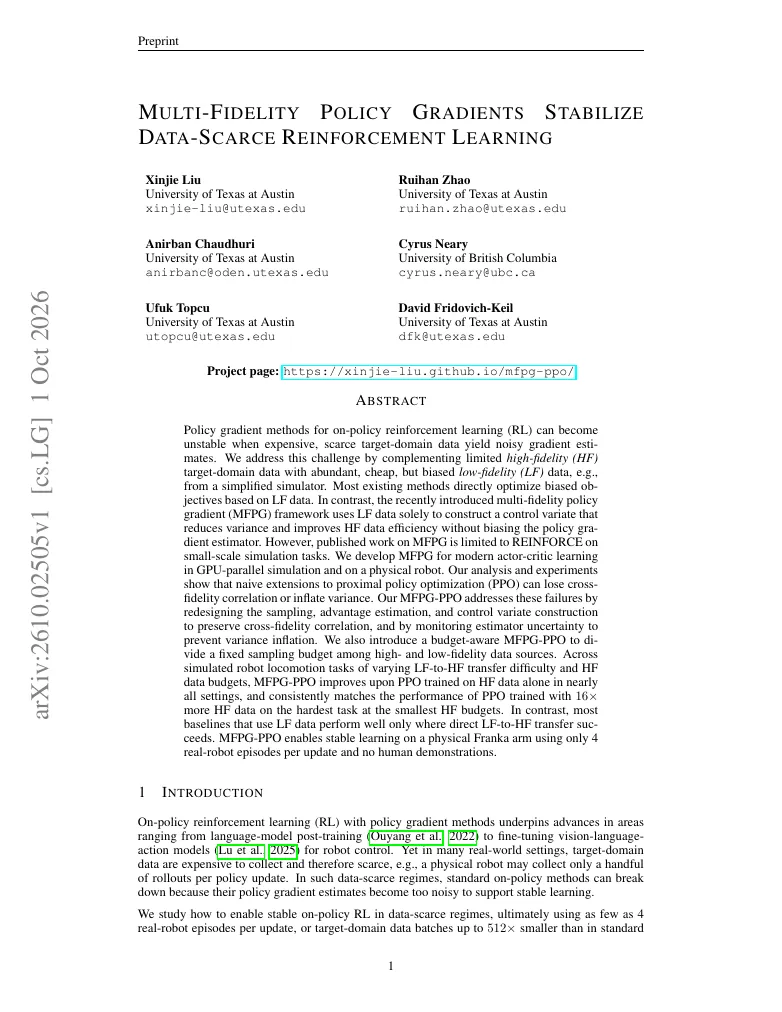
Uses cheap practice runs to train H1 and ANYmal walking policies with less high-quality data.
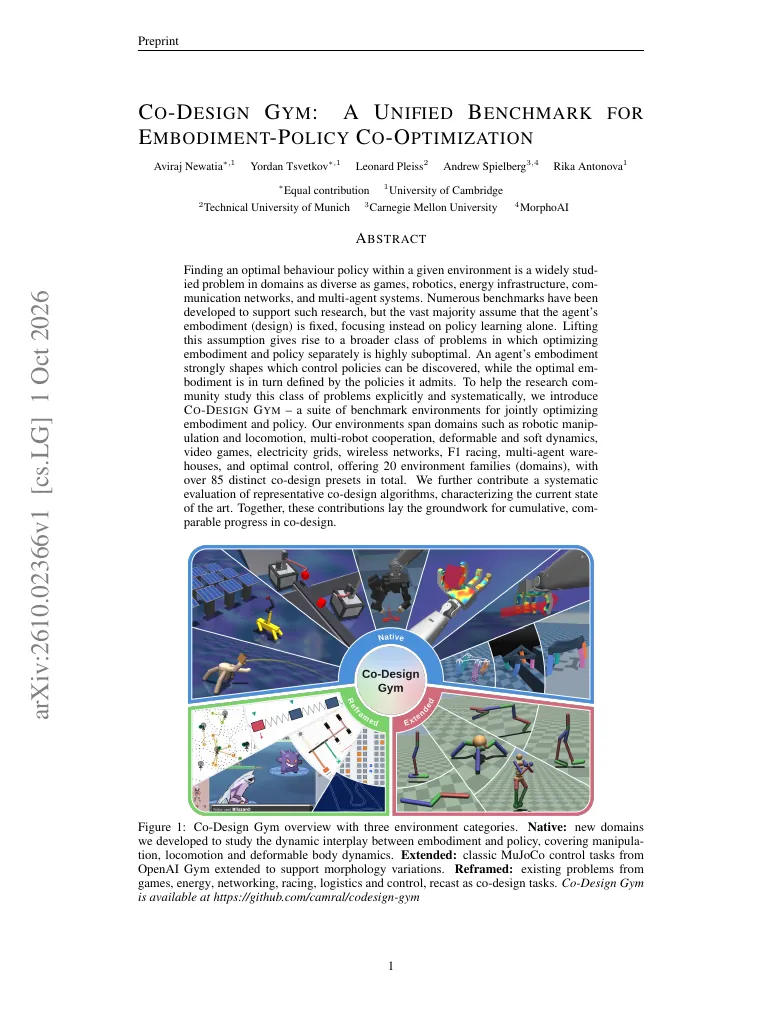
Benchmarks how robot body shape and control policies can be designed together across several legged tasks.
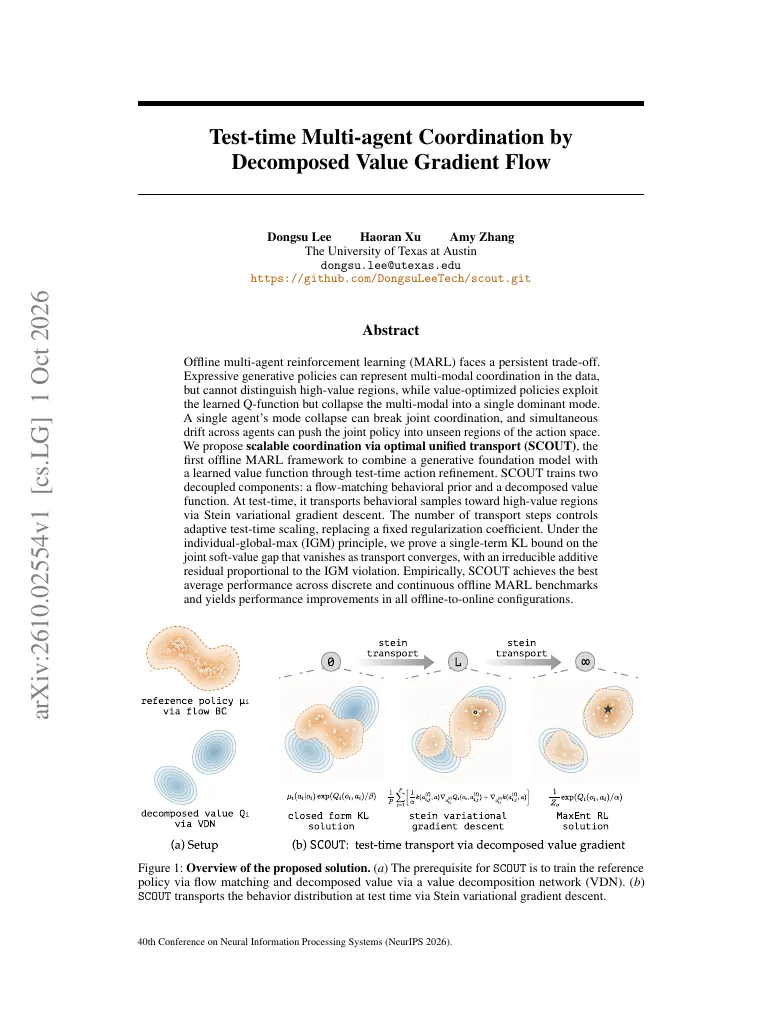
Lets several robot controllers improve their coordination together at test time without retraining.
Compares ways to iteratively design robot rewards under the same training budget.
Keeps useful candidate plans between control updates so a legged robot can replan faster under constraints.
Trains safer walking policies by predicting when a future action may first become dangerous.
Guides joint-level robot control using the direction and distance to a goal.
Preserves unstable but controllable motions in learned world models for biped balance and planning.
Produces smoother legged-robot actions without sacrificing as much task performance.
Tests whether locomotion policies still work when the same robot body is described in a different coordinate convention.
Runs flow-based walking policies much faster on robot hardware while preserving performance.
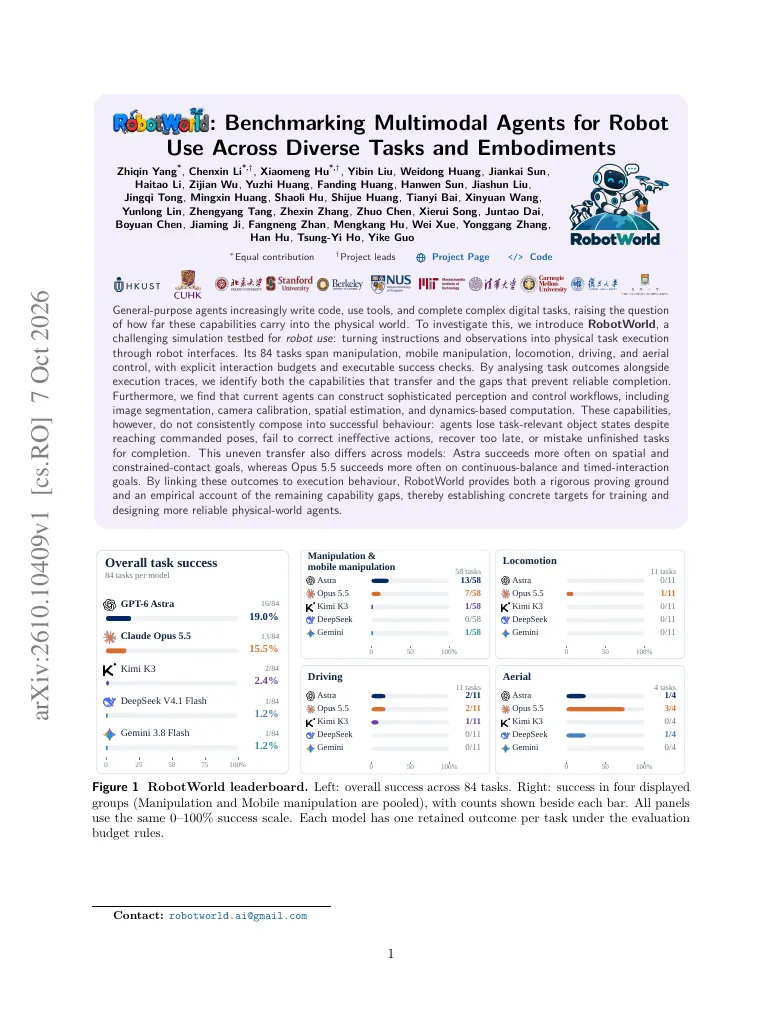
Benchmarks whether multimodal agents can directly operate robots across locomotion, balance, recovery, and manipulation tasks.
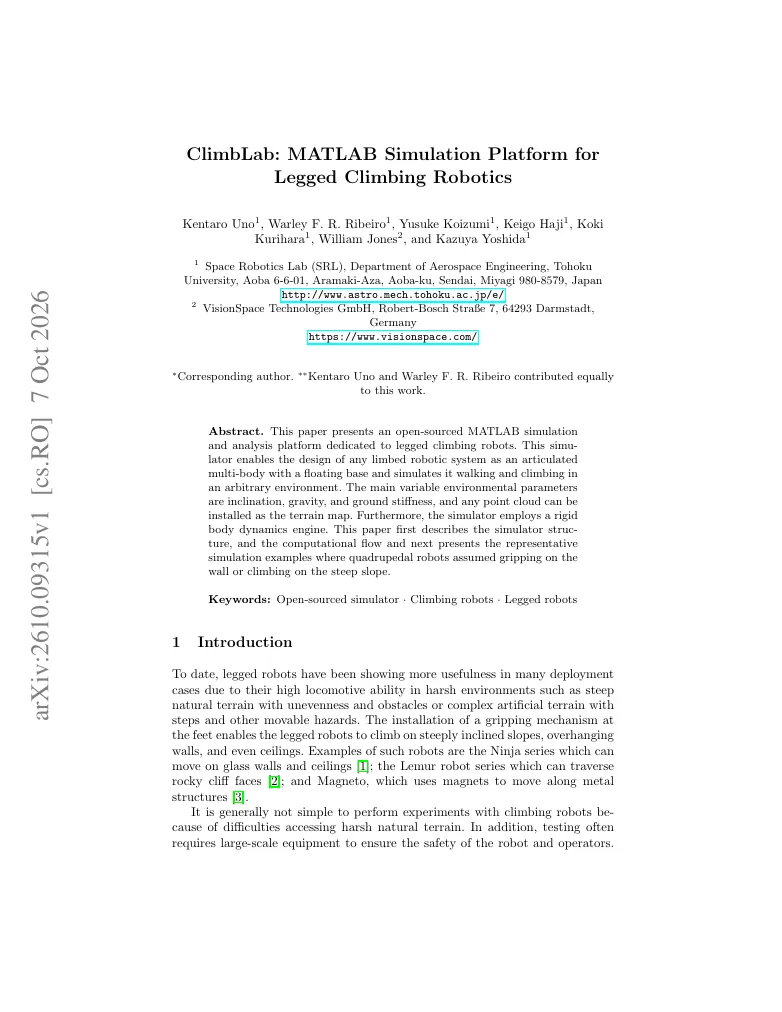
Provides an open simulator for designing and testing legged climbing, gripping, footholds, and stability.
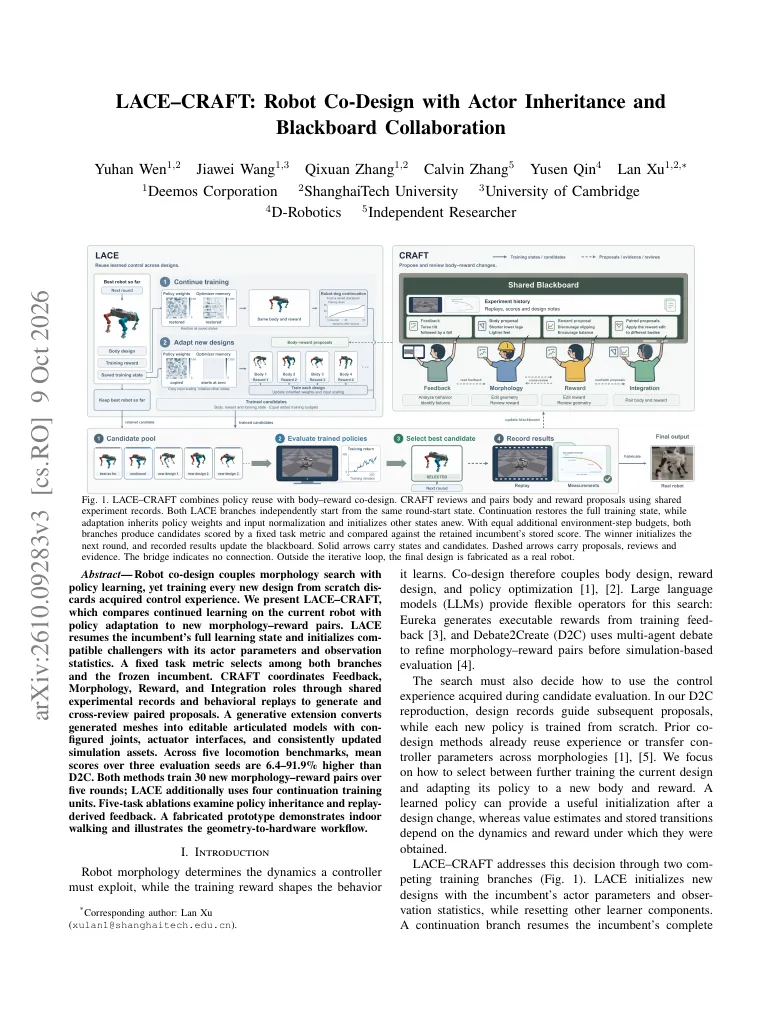
Co-designs robot bodies and locomotion policies by proposing and testing new body and reward variations.
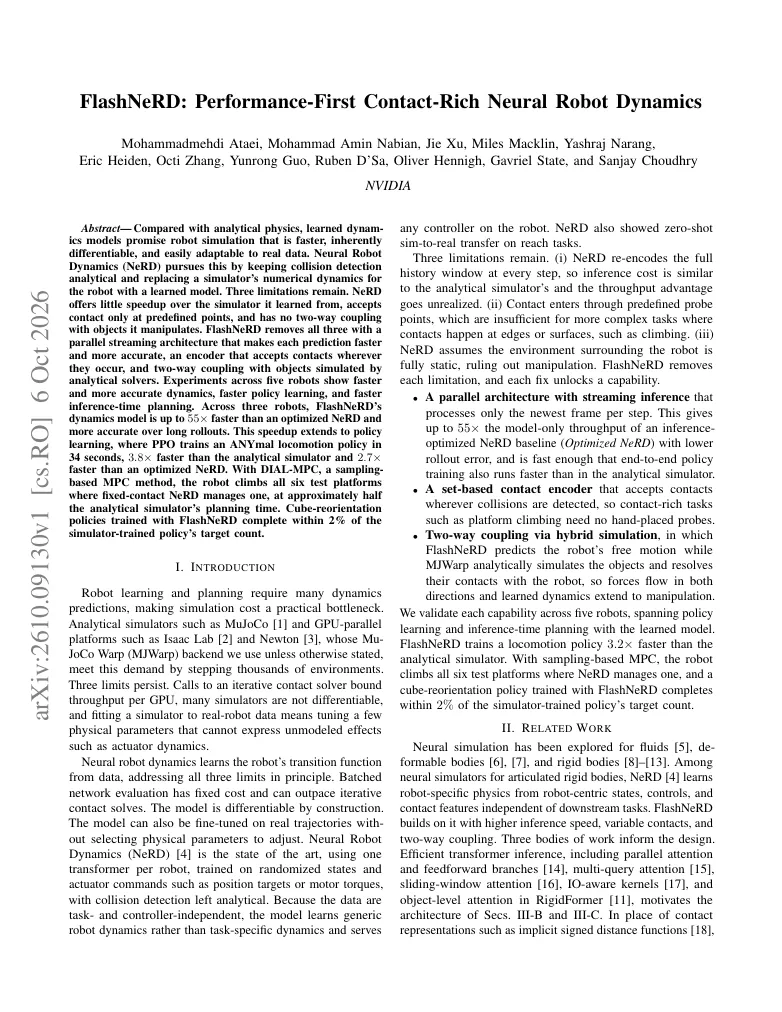
Speeds up learned robot dynamics for contact-heavy training and planning with quadrupeds and objects.
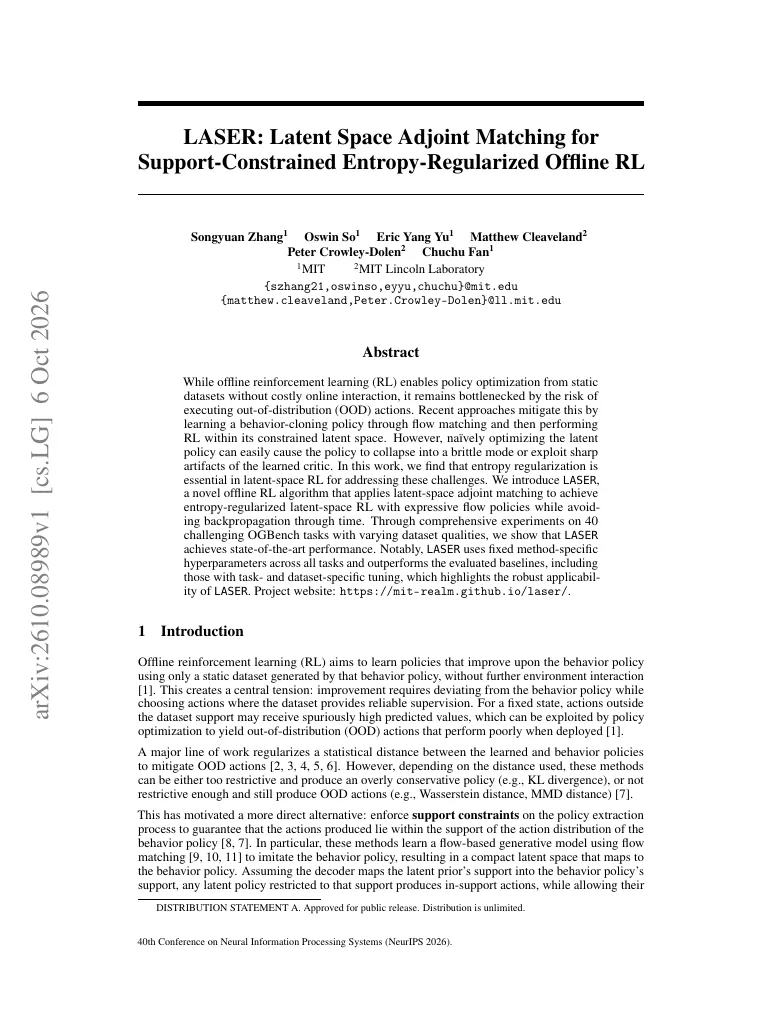
Improves offline locomotion and manipulation policies while keeping them close to actions supported by the data.
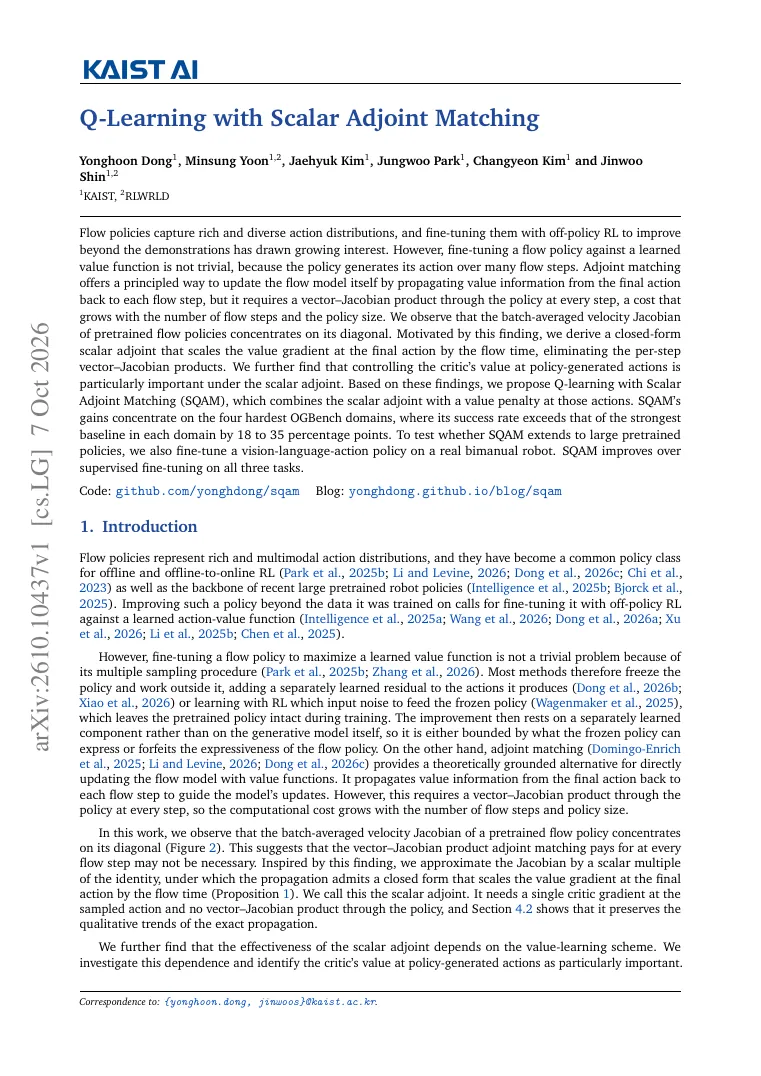
Fine-tunes flow-based robot policies efficiently across legged locomotion and bimanual manipulation.
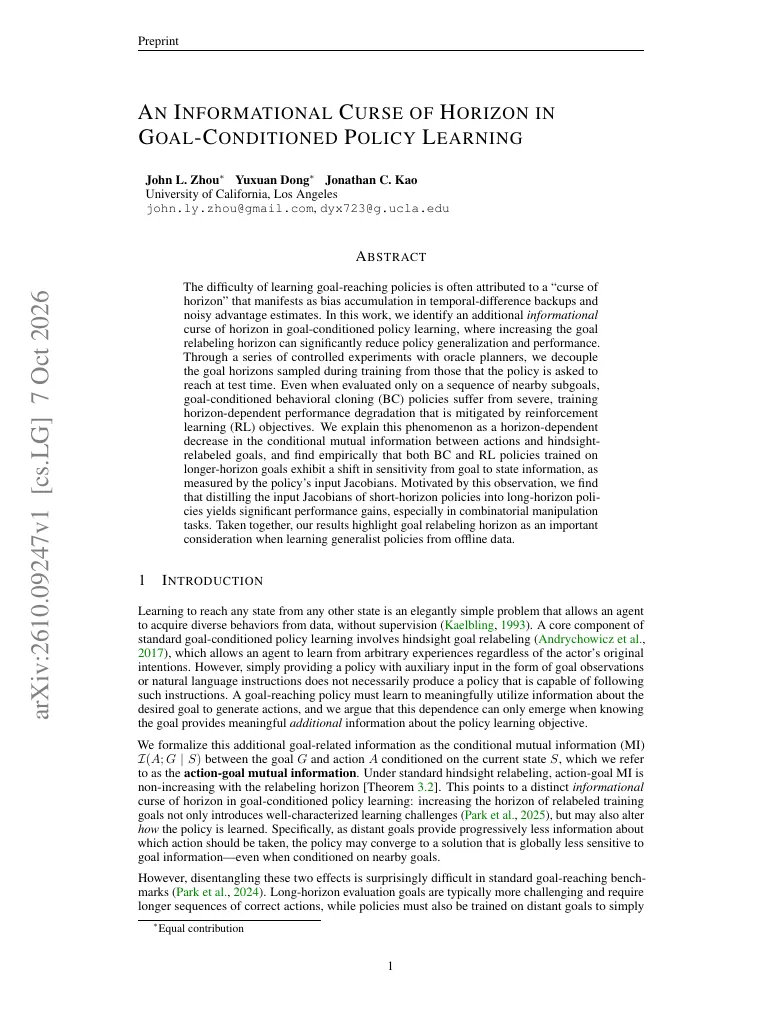
Explains why distant goals can become hard for policies to distinguish and proposes a better training method.
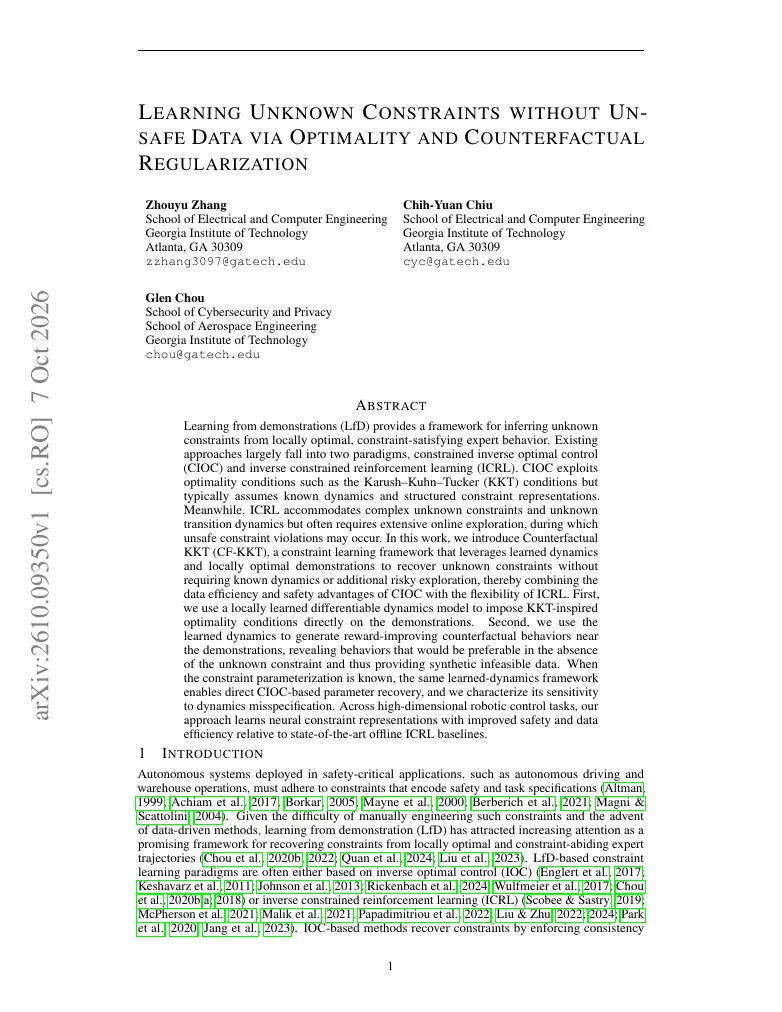
Learns hidden safety constraints from safe demonstrations without requiring examples of dangerous behavior.
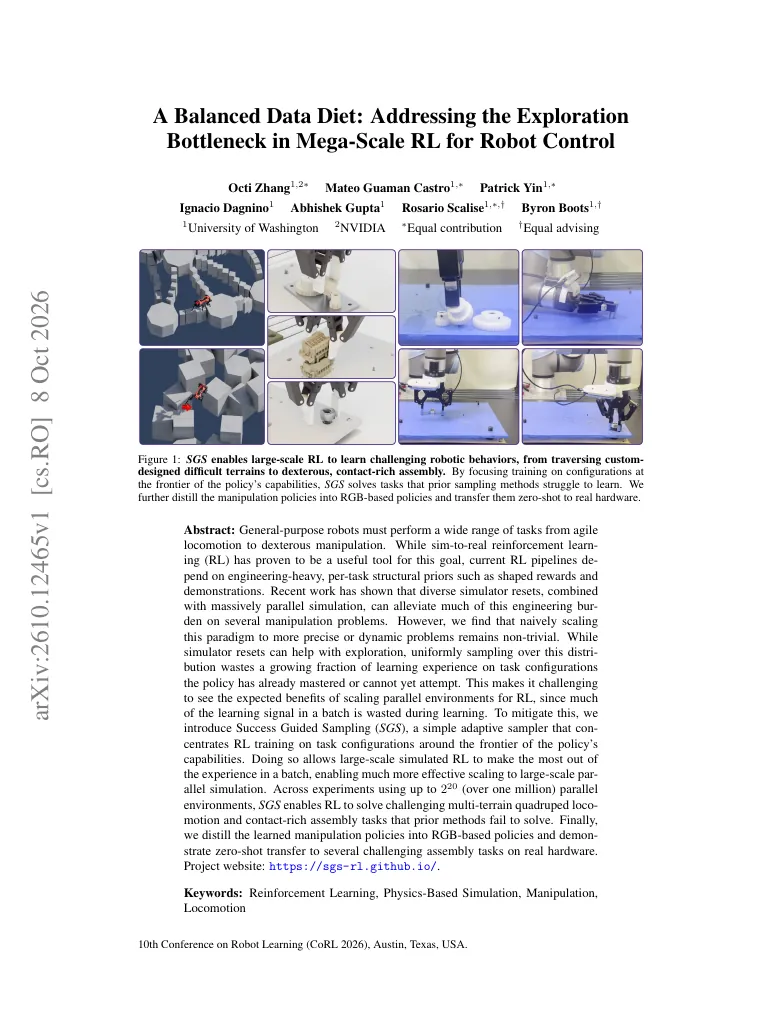
Focuses massive training runs near a quadruped's current skill level so one policy learns 13 terrain families.
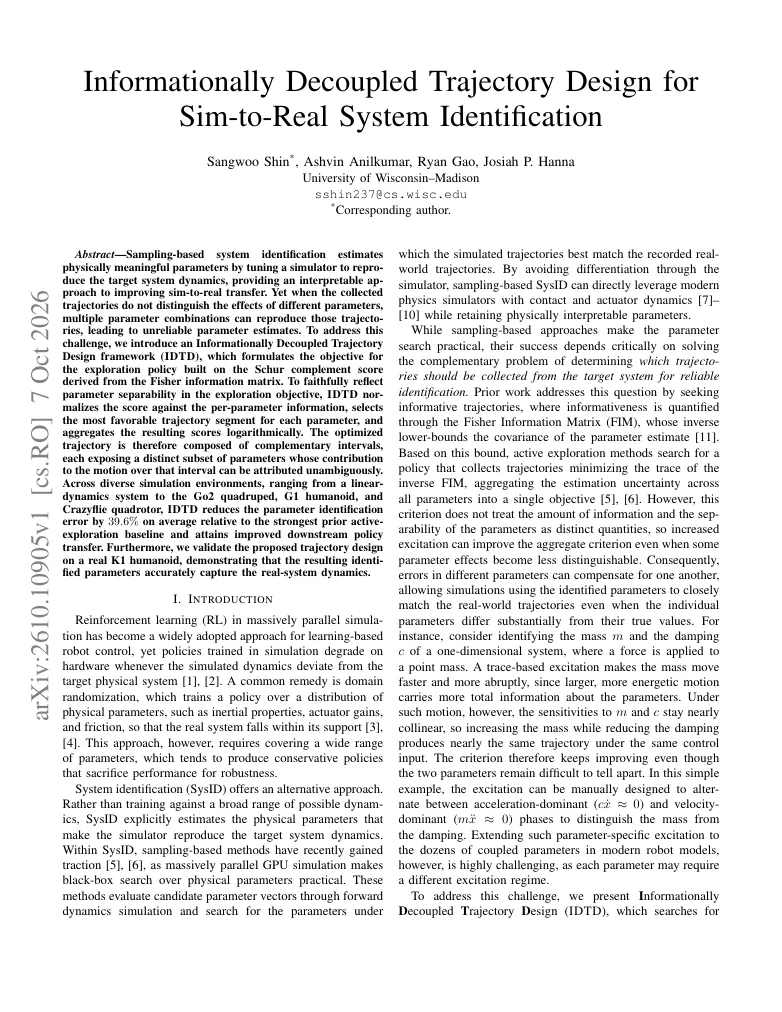
Designs complementary test motions that identify a Go2's physical parameters for better simulation transfer.
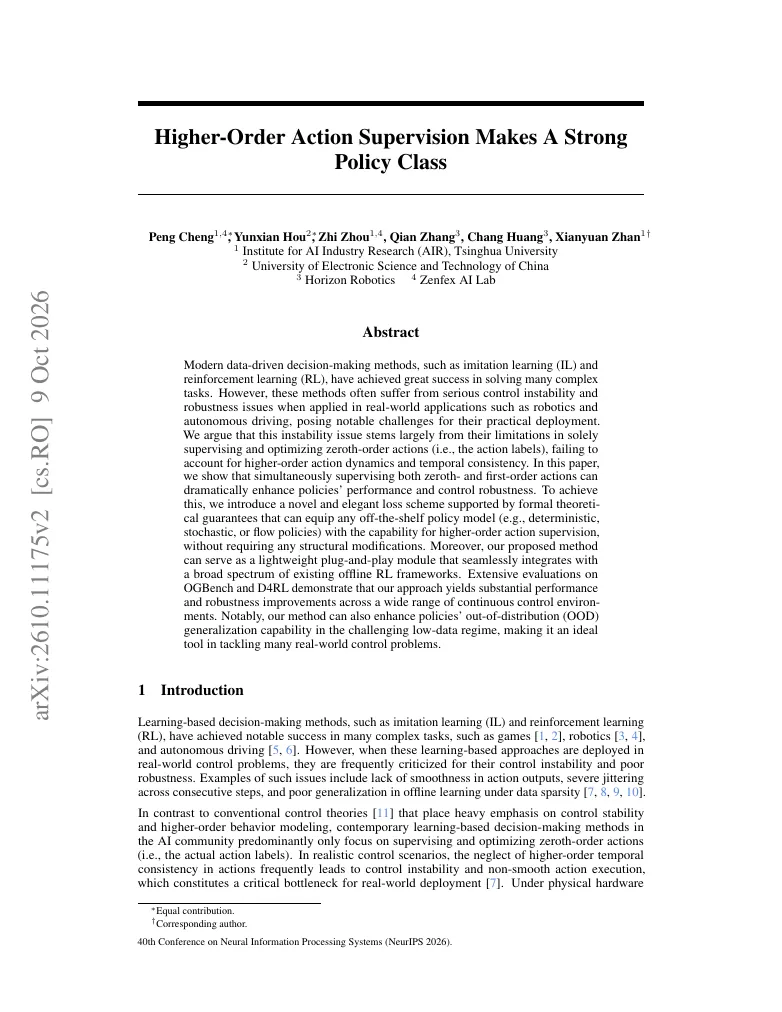
Improves low-data robot policies by supervising how their actions should change over time.
Terrain, state, slip, sensors, and local context.
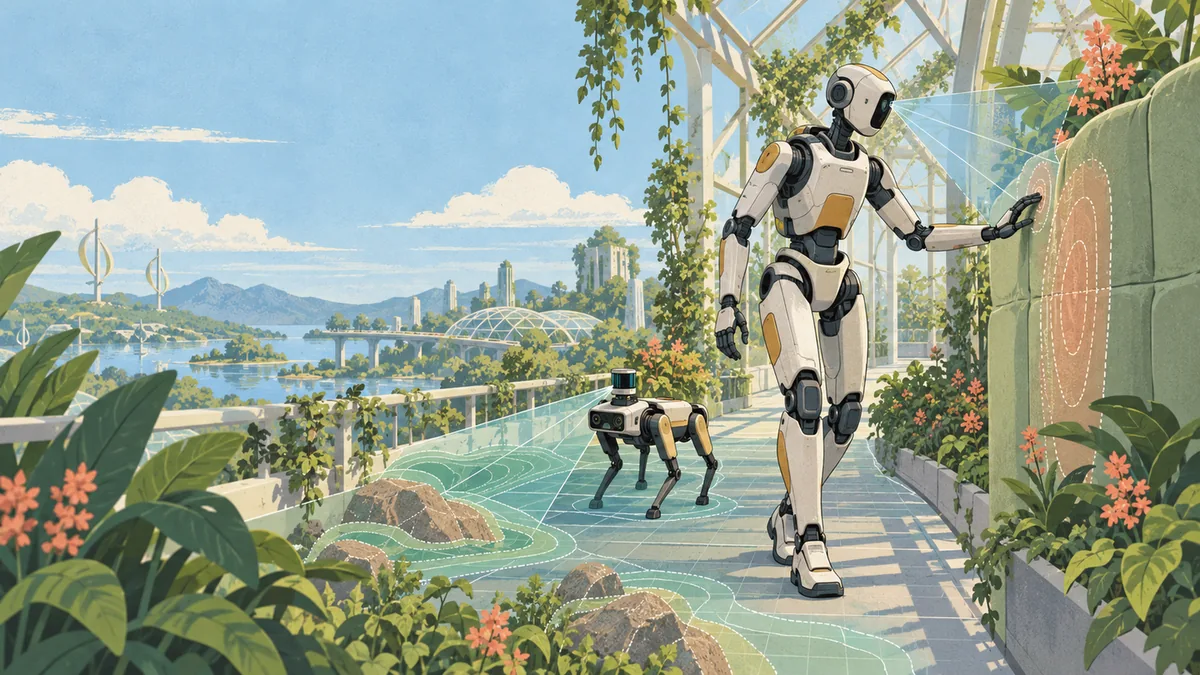
Helps vision-based robot policies keep working when colors, textures, and camera views change.
Lets walking policies repair themselves online after sensor readings shift or fail.
Lets a Go2 choose socially appropriate paths while also controlling how loudly its feet hit the ground.
Helps a G1 notice floor hazards that height maps miss and correct navigation errors as it walks.
Lets a Go2 take shorter routes by stepping over low obstacles and going around high ones using a camera-based height map.
Adapts autonomous-driving ideas so a Go2 can plan sidewalk-aware urban routes toward a goal.
Lets a vision-denied G1 choose where to touch its surroundings and navigate despite uncertain position.