paper preview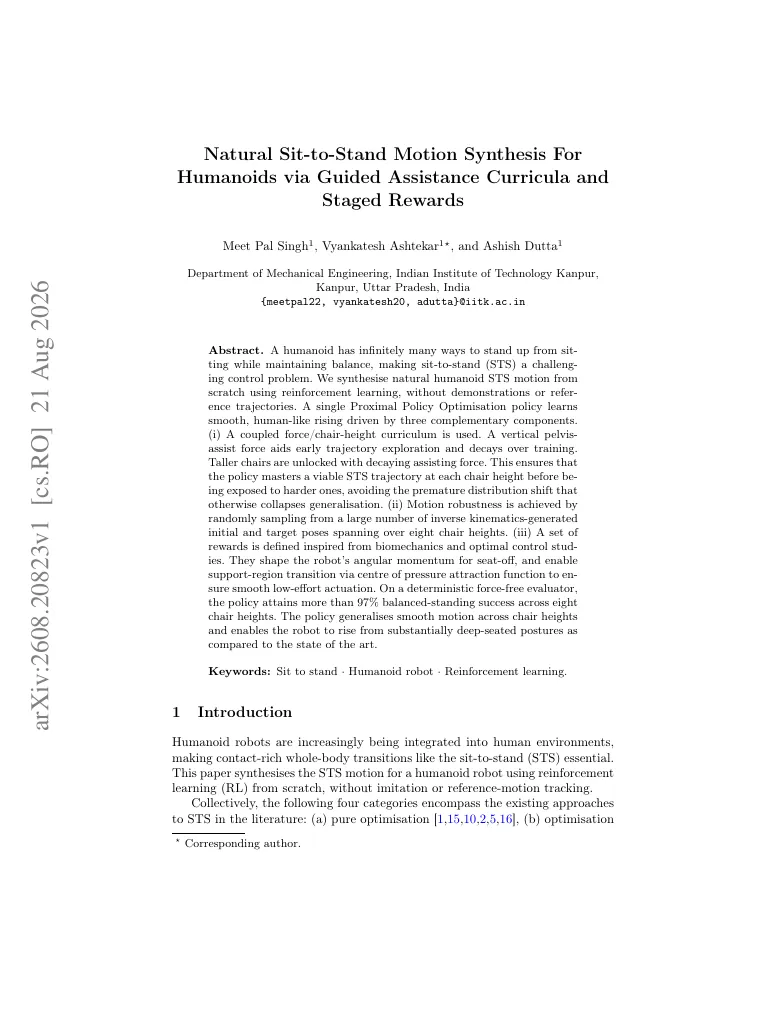
01arXiv
Natural Sit-to-Stand Motion Synthesis For Humanoids via Guided Assistance Curricula and Staged Rewards
Teaches a G1 humanoid to stand up from chairs of different heights by gradually reducing assistance.
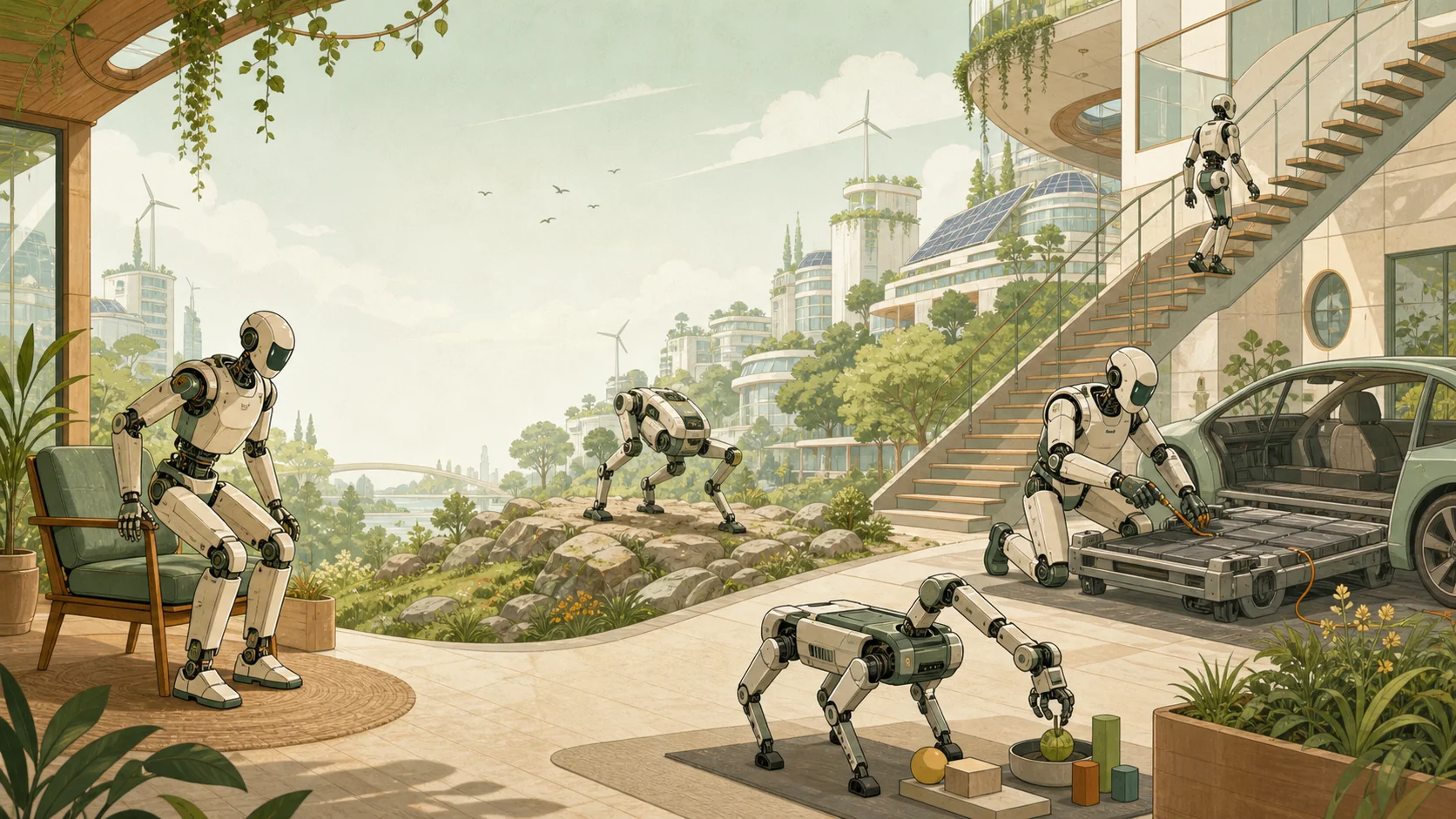
Terrain, gait, robustness, and agile movement.
Teaches a G1 humanoid to stand up from chairs of different heights by gradually reducing assistance.
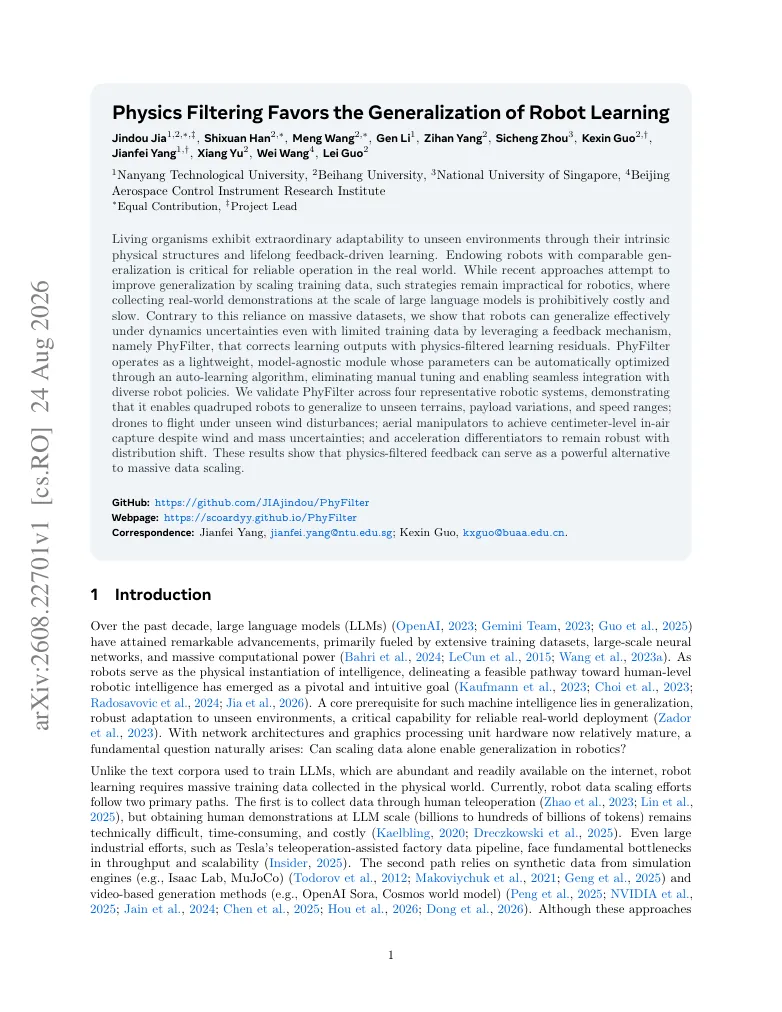
Filters a learned controller through simple physics so legged robots keep working on new terrain and payloads.
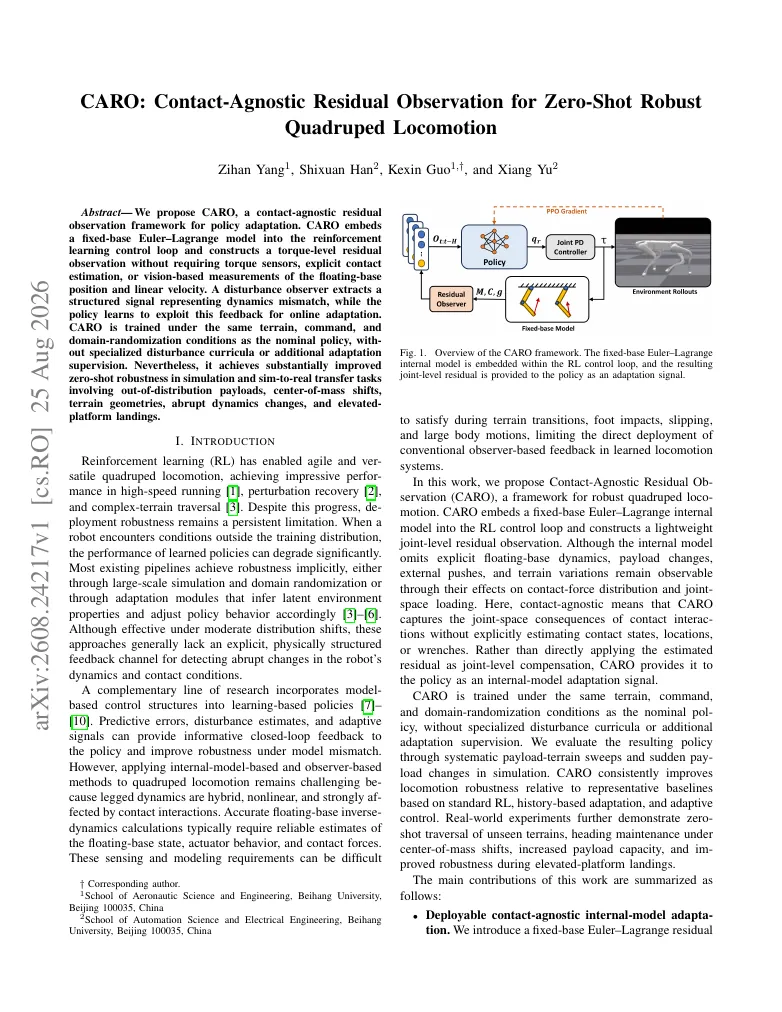
Adds a torque-residual body cue so a quadruped keeps walking through payload, terrain, and impact changes.
Reference motion, imitation, retargeting, and behavior priors.
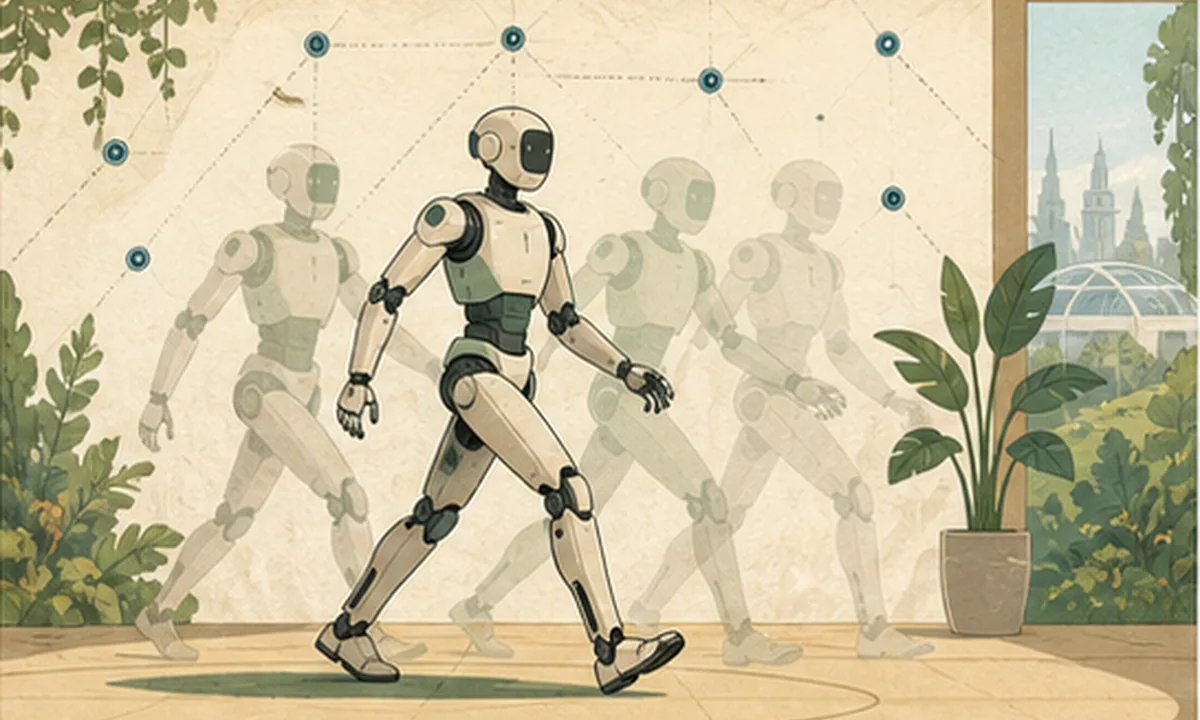
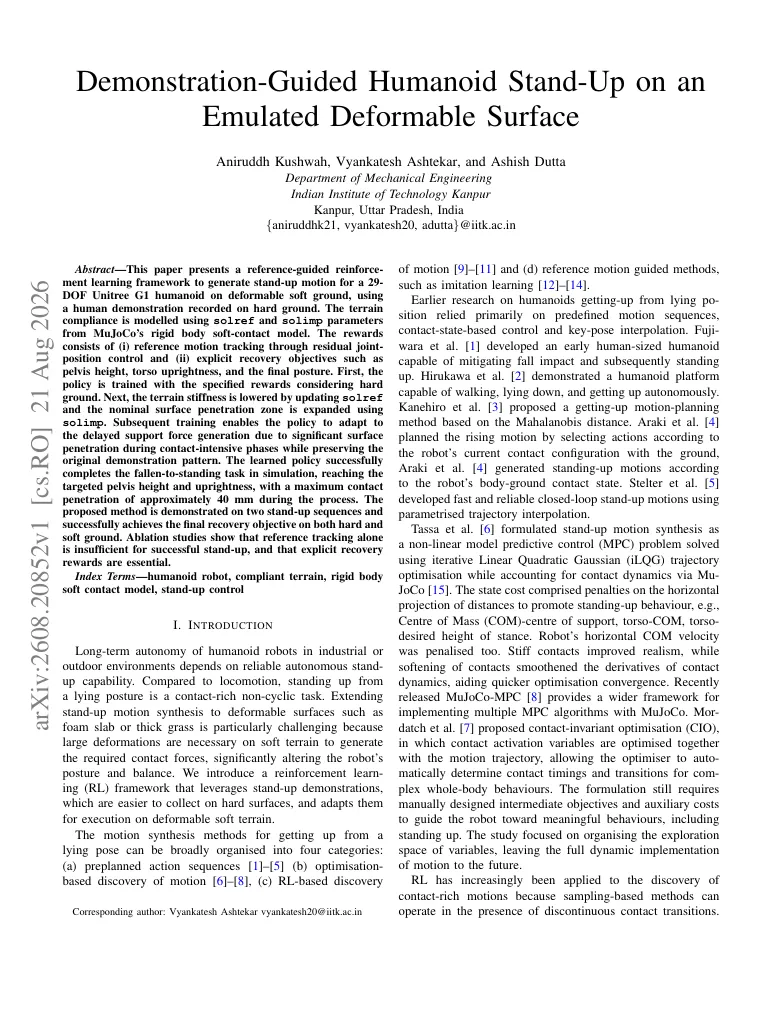
Adapts stand-up demonstrations so a G1 humanoid can get up on soft, compliant ground.
Whole-body task contact: feet, torso, hands, and objects.
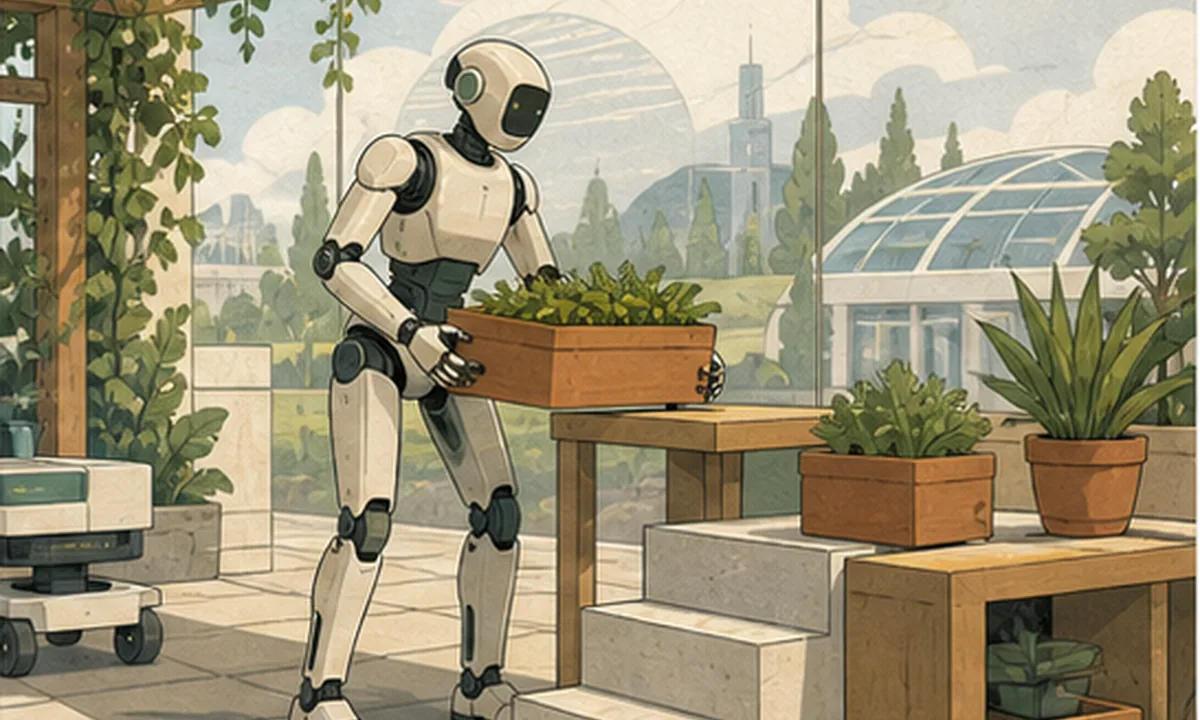
Trains a humanoid to walk and manipulate objects from vision by distilling stronger simulated teachers.
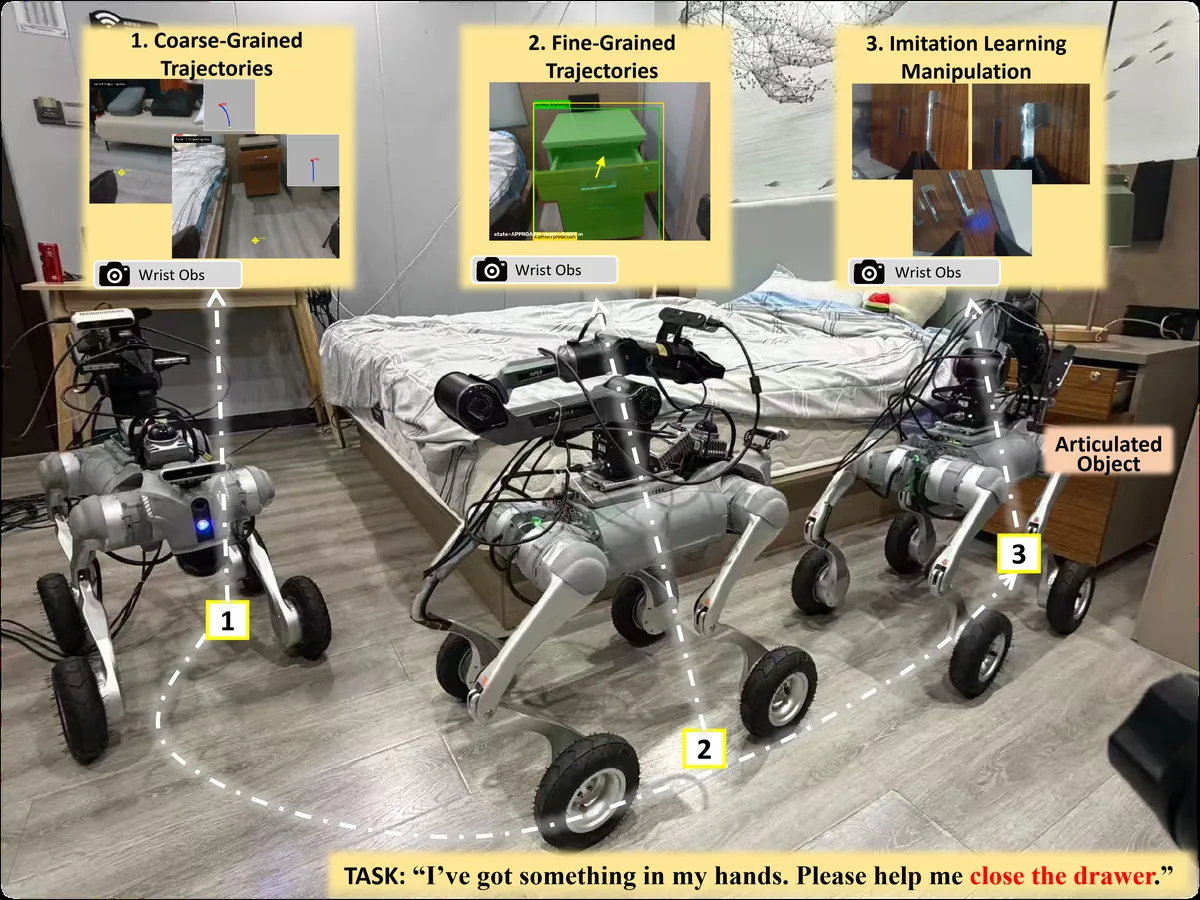
Moves a quadruped with an arm into the right pose, then controls contact-heavy object manipulation.
MPC, impedance, safety layers, and whole-body coordination.
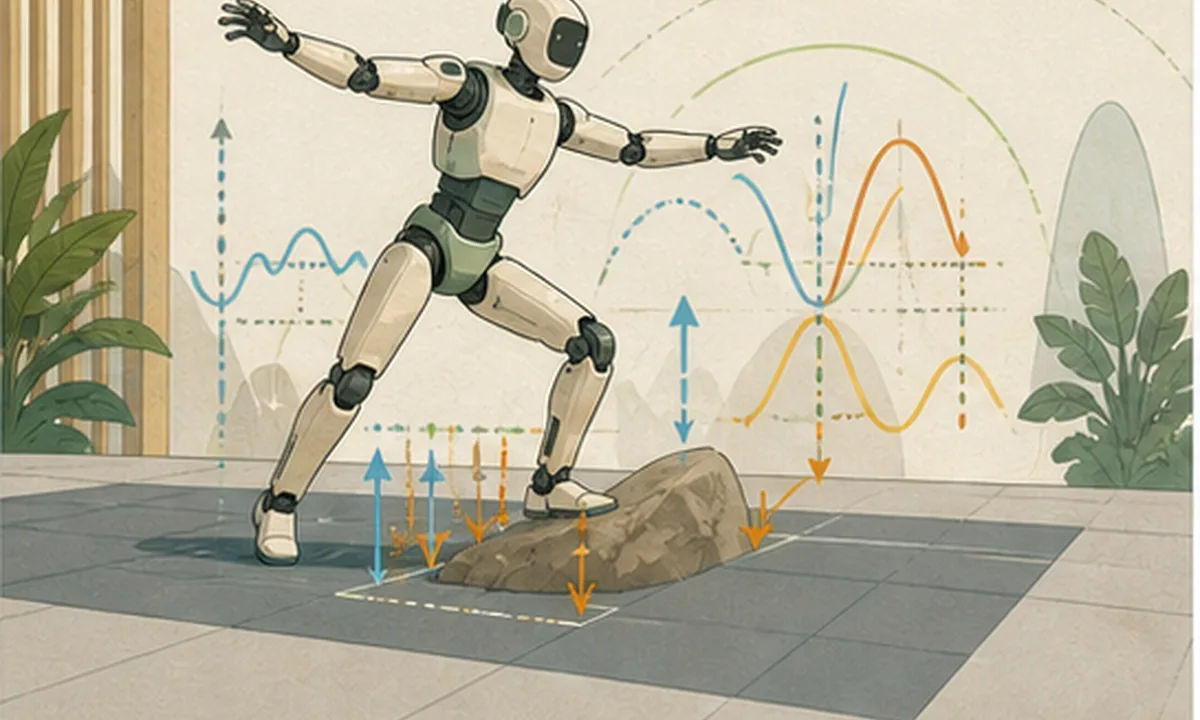
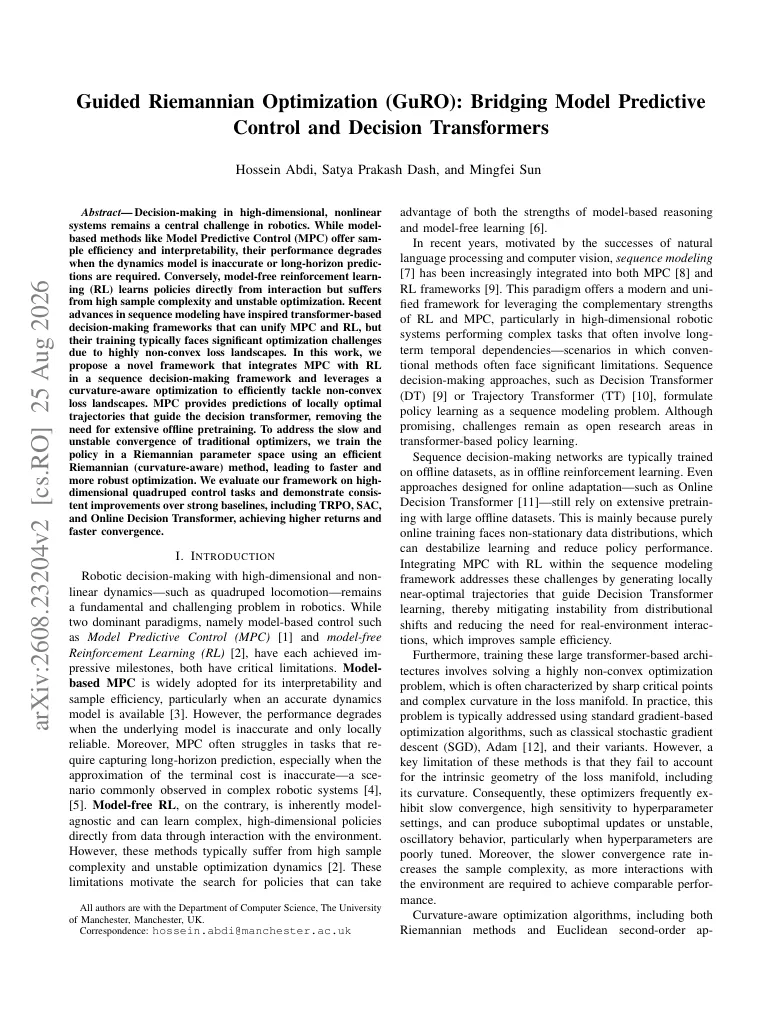
Guides a quadruped’s walking decisions with online planning so it can cross rough terrain more reliably.
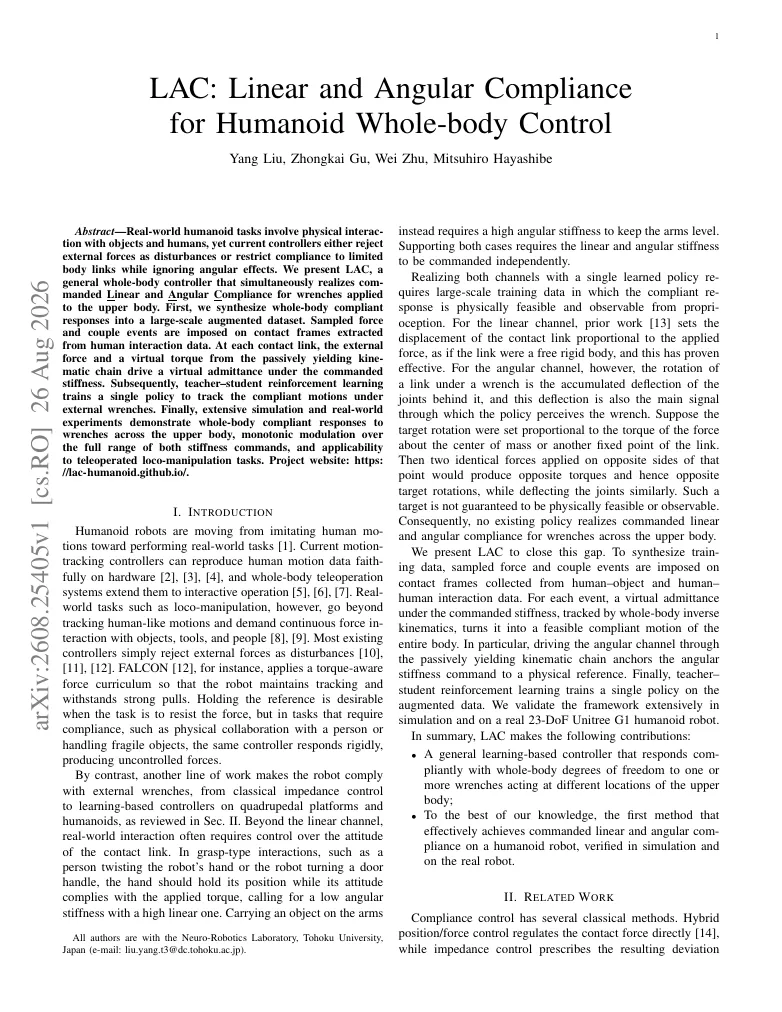
Gives a G1 humanoid tunable body compliance so it can stay controlled when the upper body makes contact.
Benchmarks, datasets, rewards, simulators, and tooling.
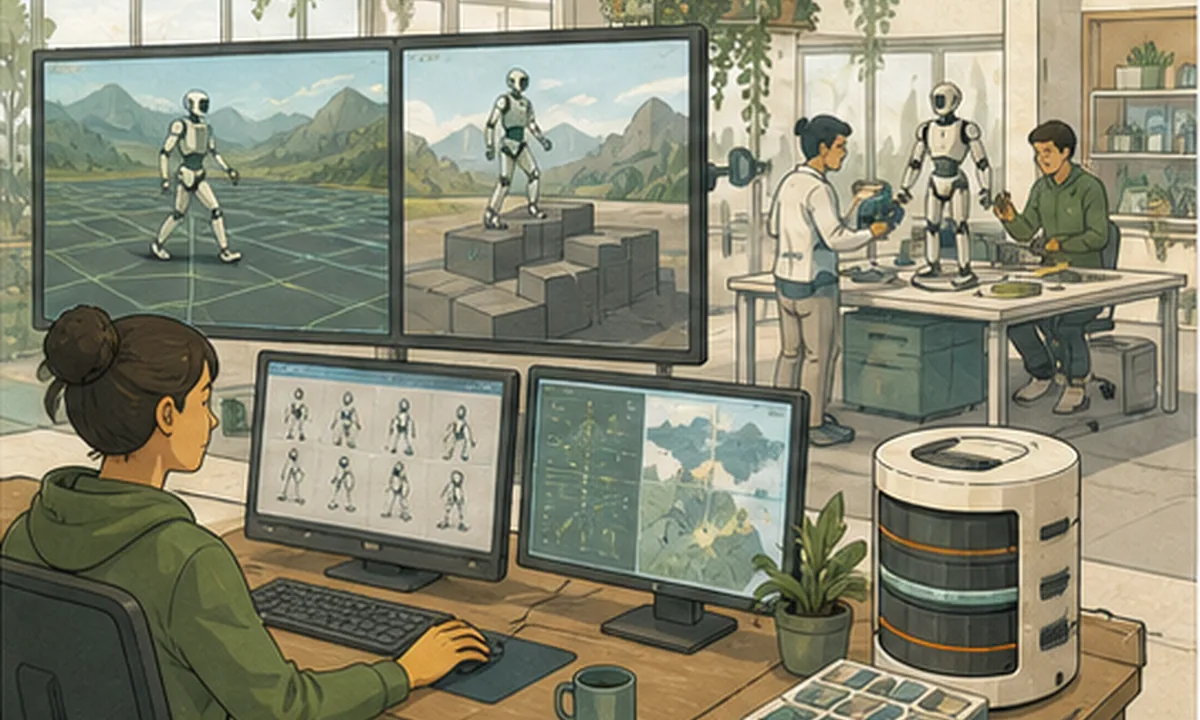
Builds a modular autonomy stack so a humanoid can navigate, stay stable, and help disassemble EV batteries.
Speeds up G1 walking training by changing when the learner explores and when it exploits what already works.
Terrain, state, slip, sensors, and local context.
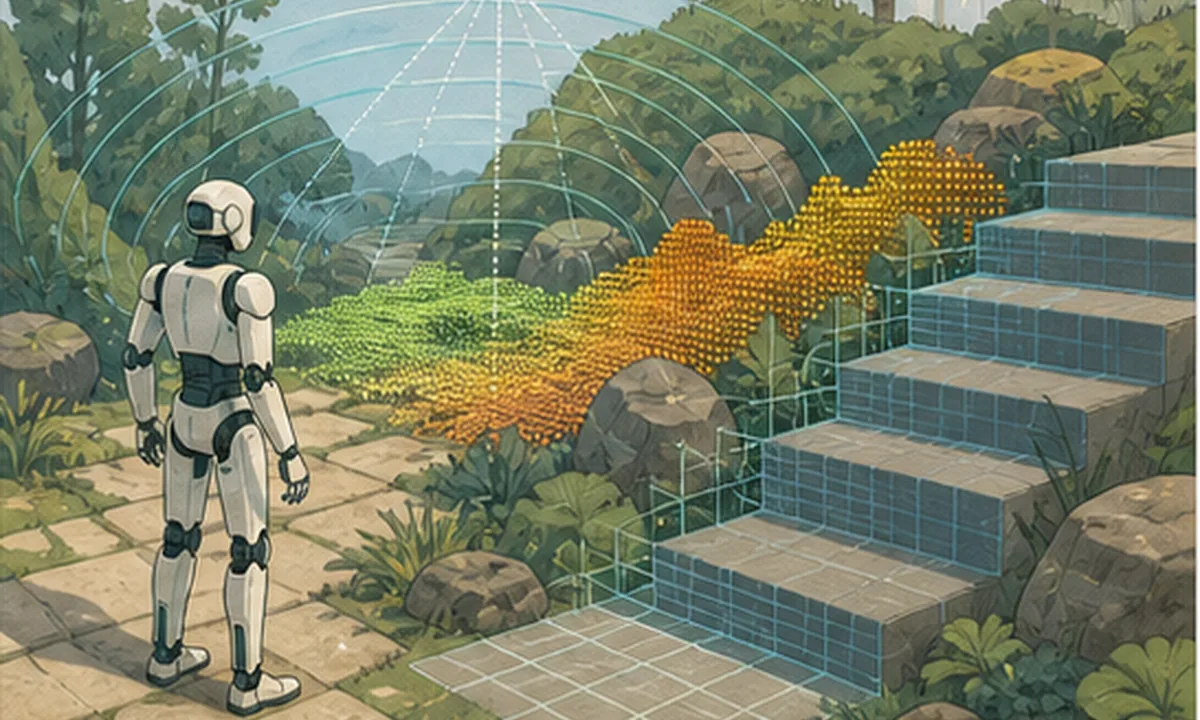
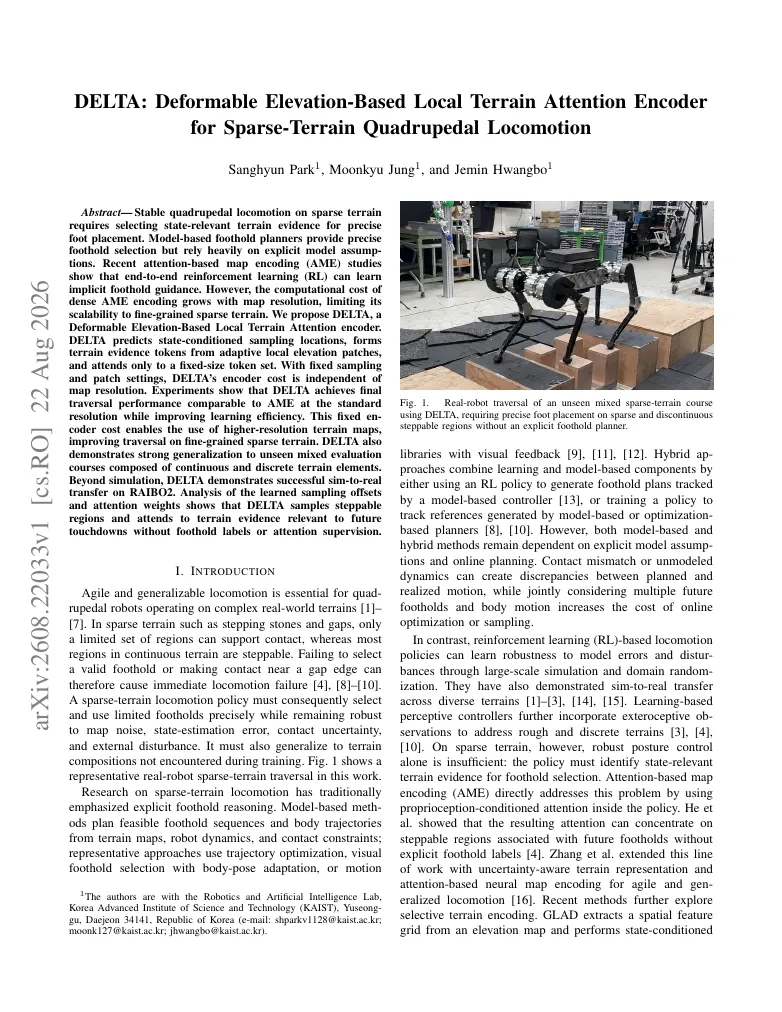
Helps a quadruped read sparse terrain maps so it can keep walking over rough ground without extra policy cost.
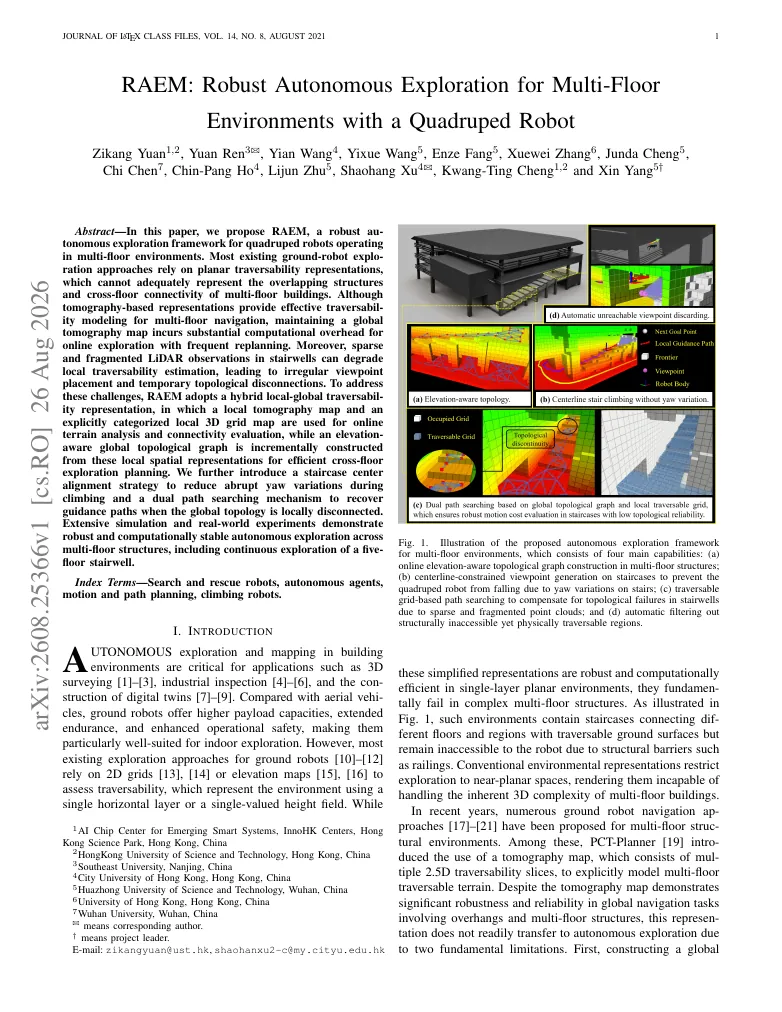
Lets a quadruped explore multi-floor buildings, climb stairs, and recover when local planning gets stuck.