paper preview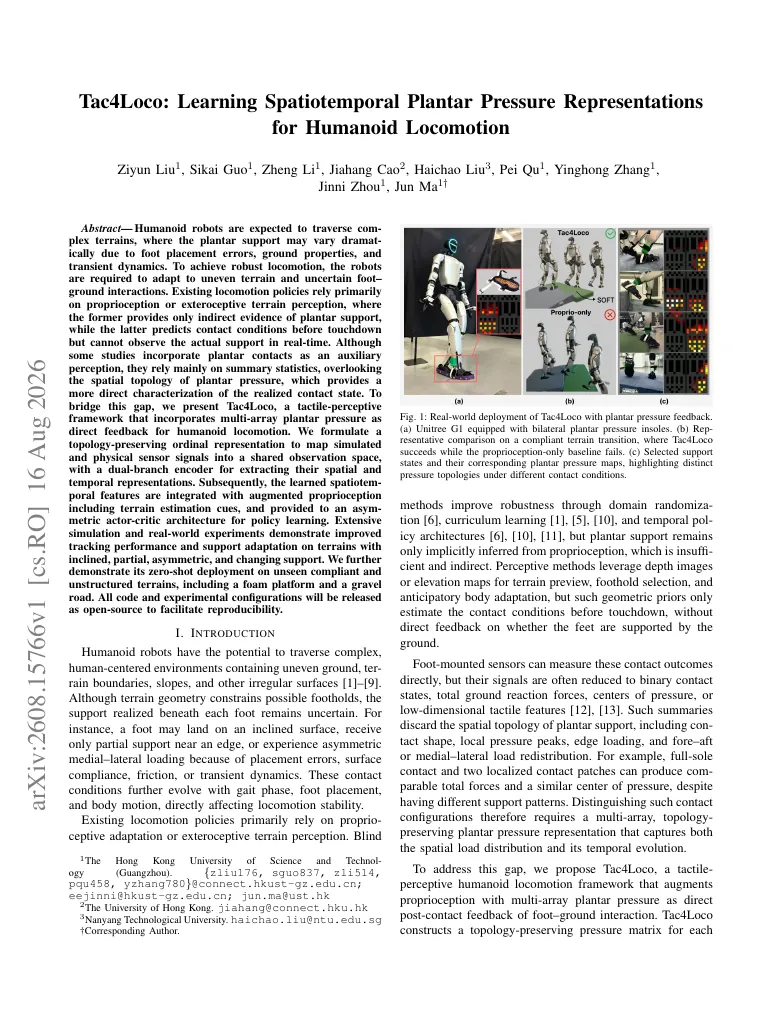
01arXiv
Tac4Loco: Learning Spatiotemporal Plantar Pressure Representations for Humanoid Locomotion
Uses pressure under a G1 humanoid's feet so it can balance and track commands on slopes, gravel, foam, and narrow supports.
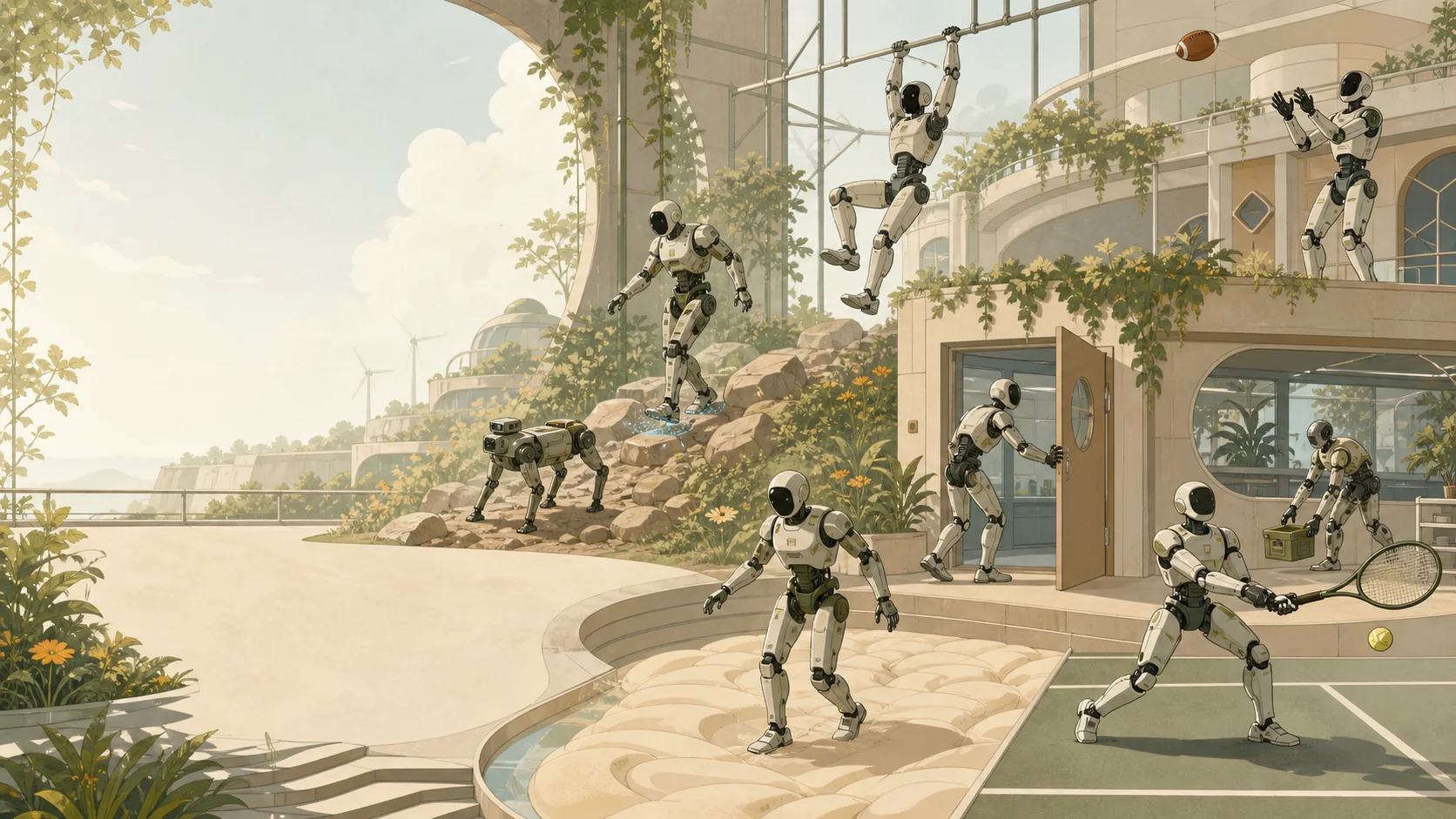
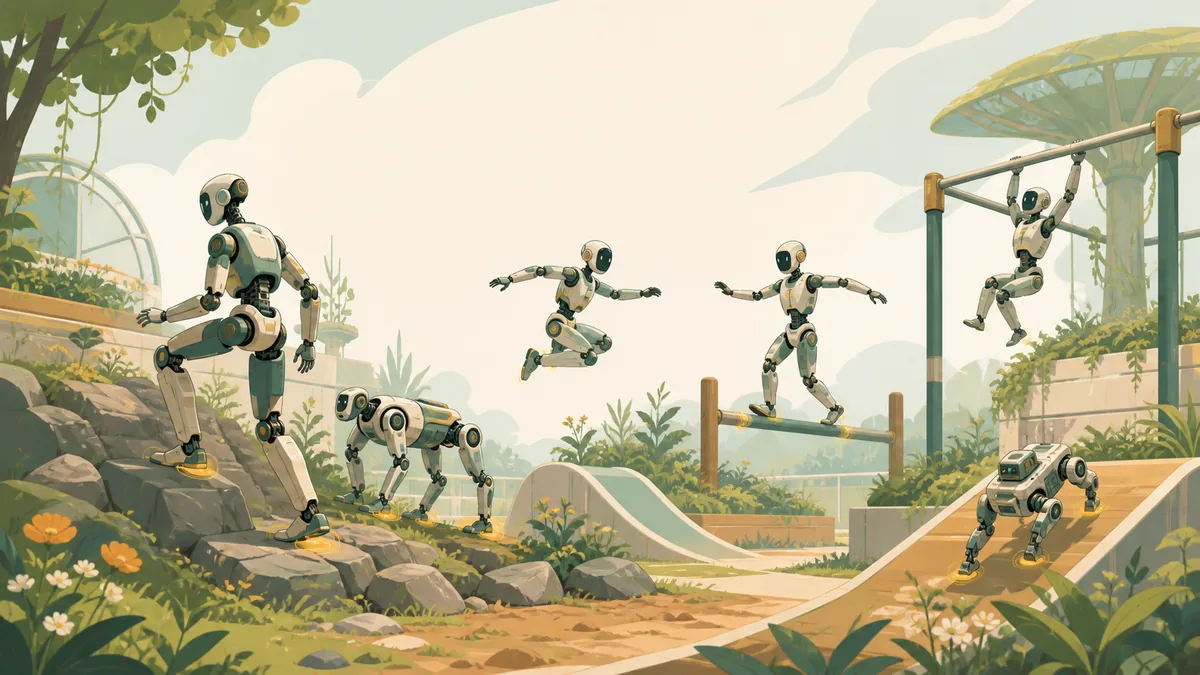
Terrain, gait, robustness, and agile movement.
Uses pressure under a G1 humanoid's feet so it can balance and track commands on slopes, gravel, foam, and narrow supports.
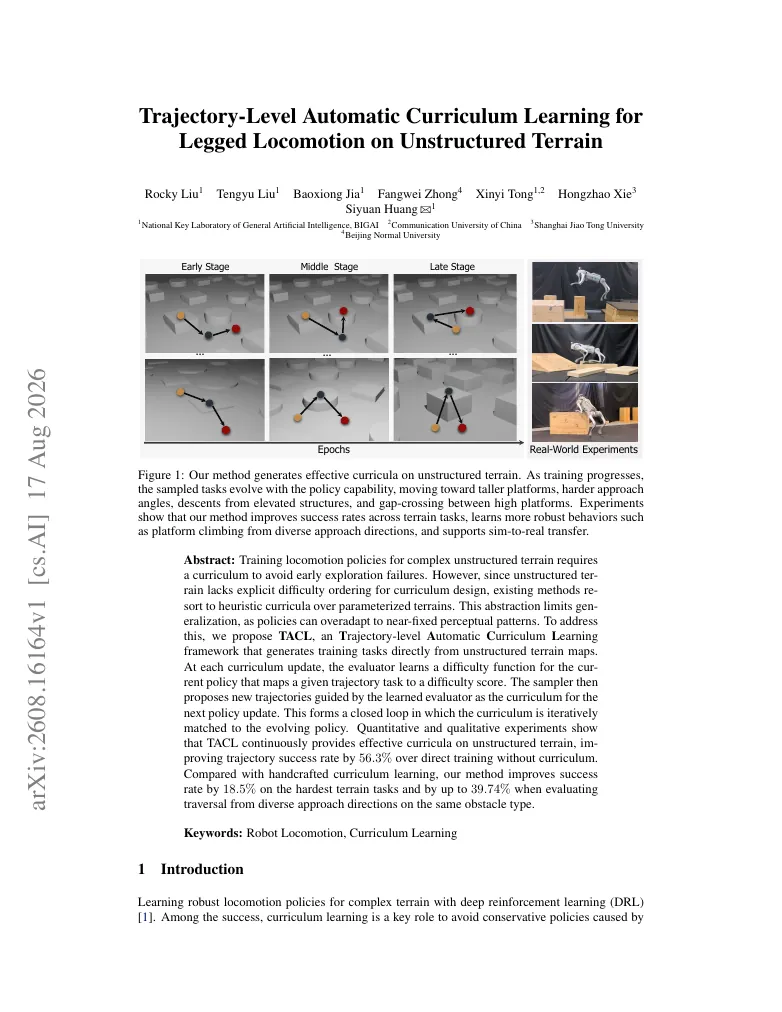
Builds terrain lessons for a Go2 automatically so the robot practices jumps and rough paths at the right difficulty.
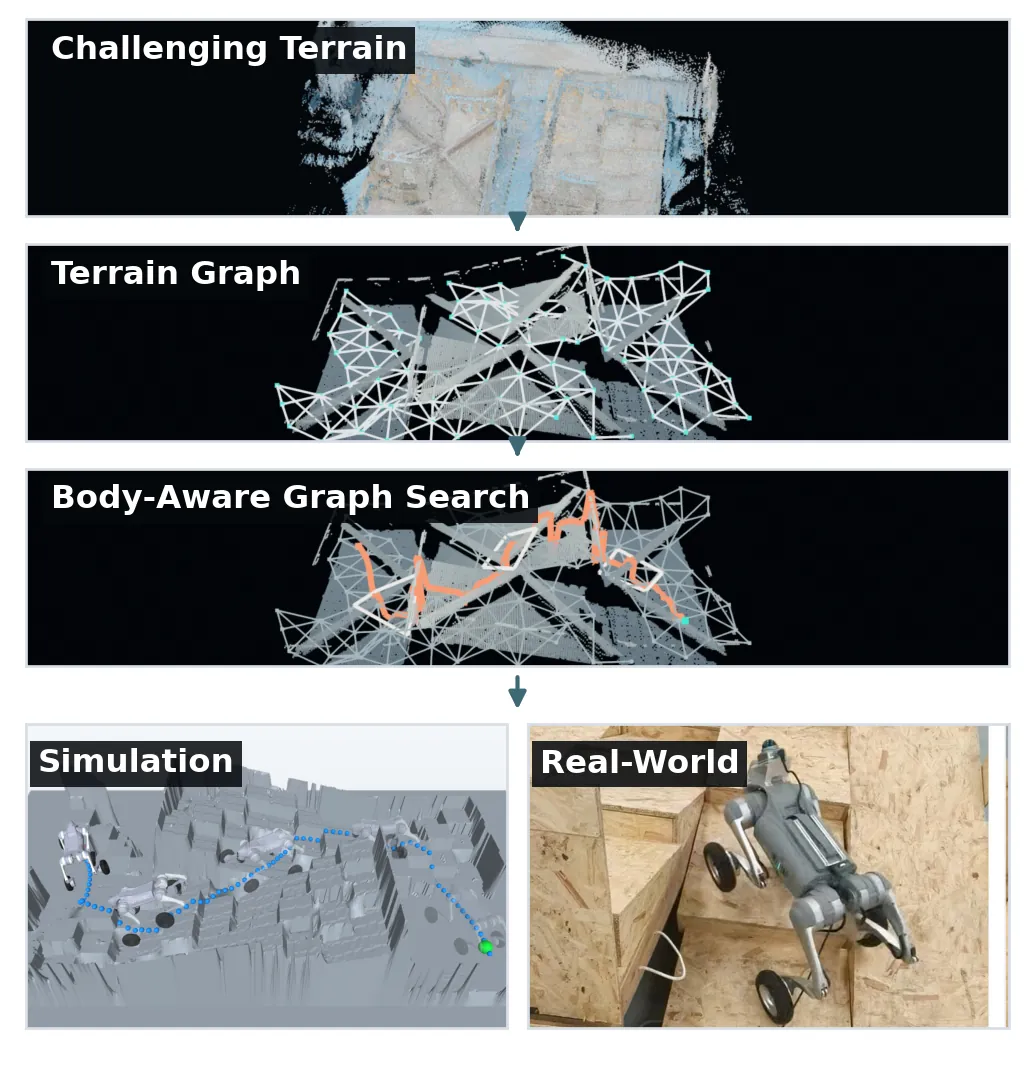
Plans safer routes for a wheeled-legged robot by checking how its full body fits through rough terrain.
Teaches a life-sized dual-arm robot to swing between bars using waypoint-guided practice and recovery retries.
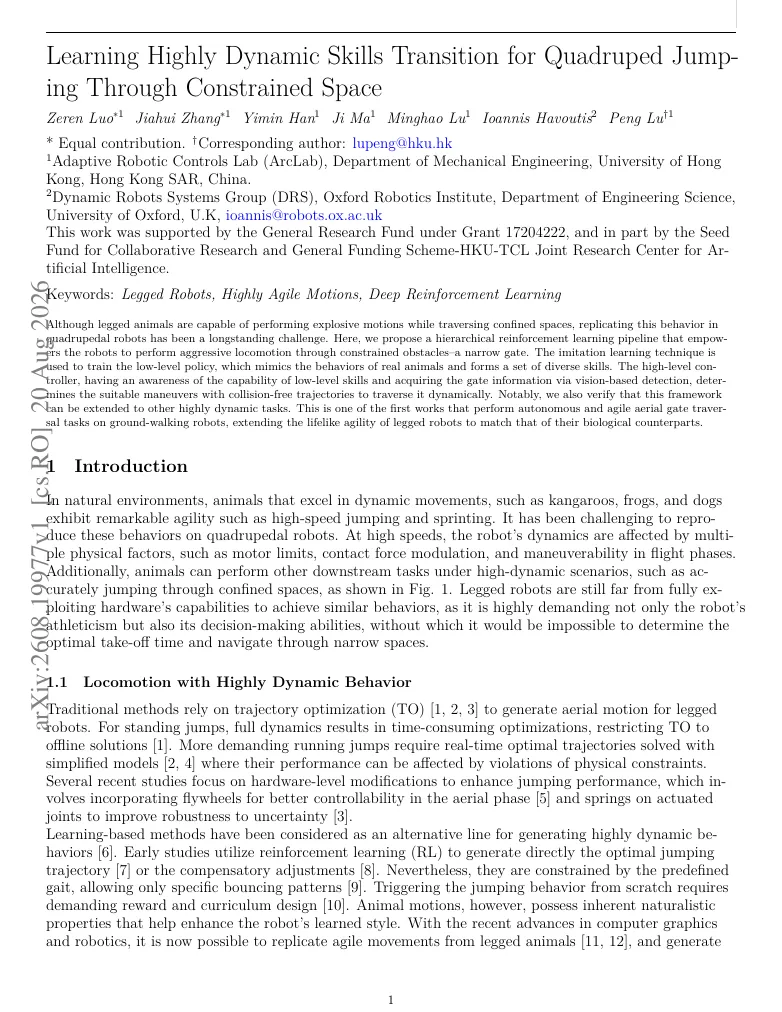
Teaches a quadruped to pick and switch jumping skills so it can pass through narrow openings.
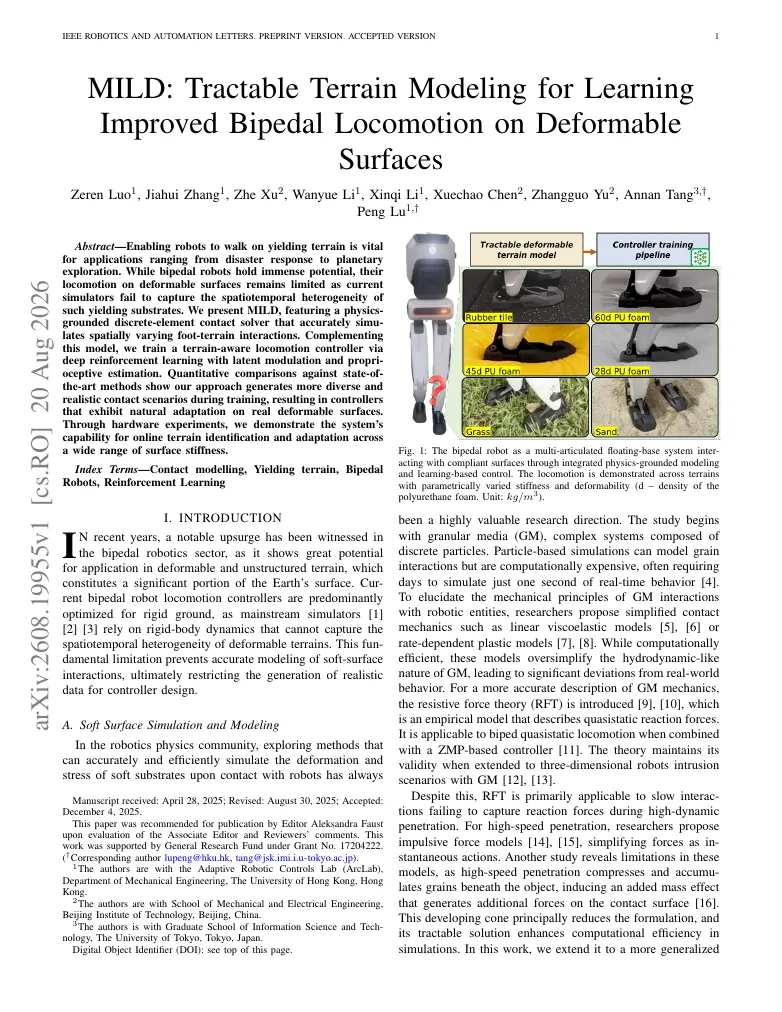
Models deformable ground so a physical biped can adjust its walking across soft and stiff surfaces.
Reference motion, imitation, retargeting, and behavior priors.
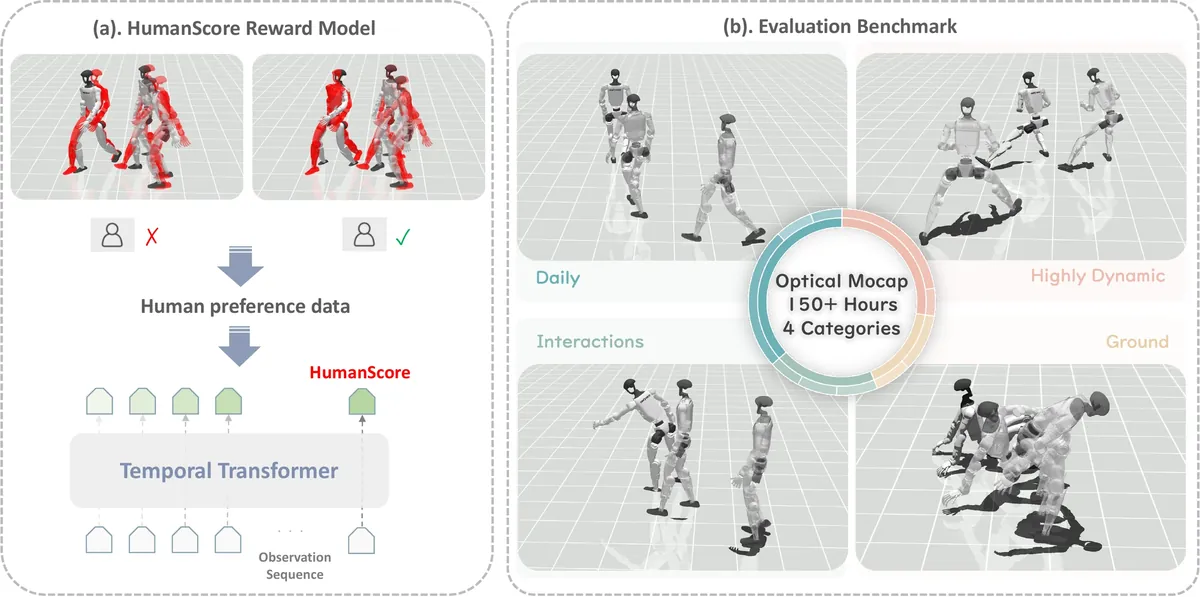
Measures how well humanoids track motions with a large benchmark and a score that better matches human judgment.
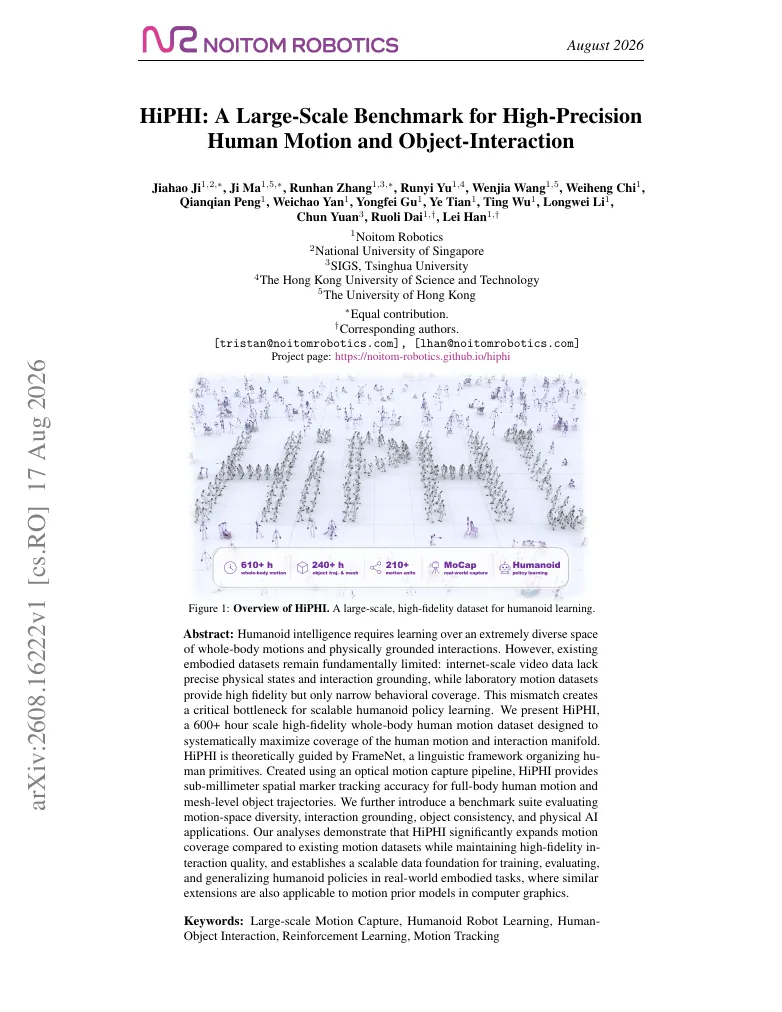
Collects high-precision human motion and object-interaction data so G1 tracking policies can scale to richer skills.
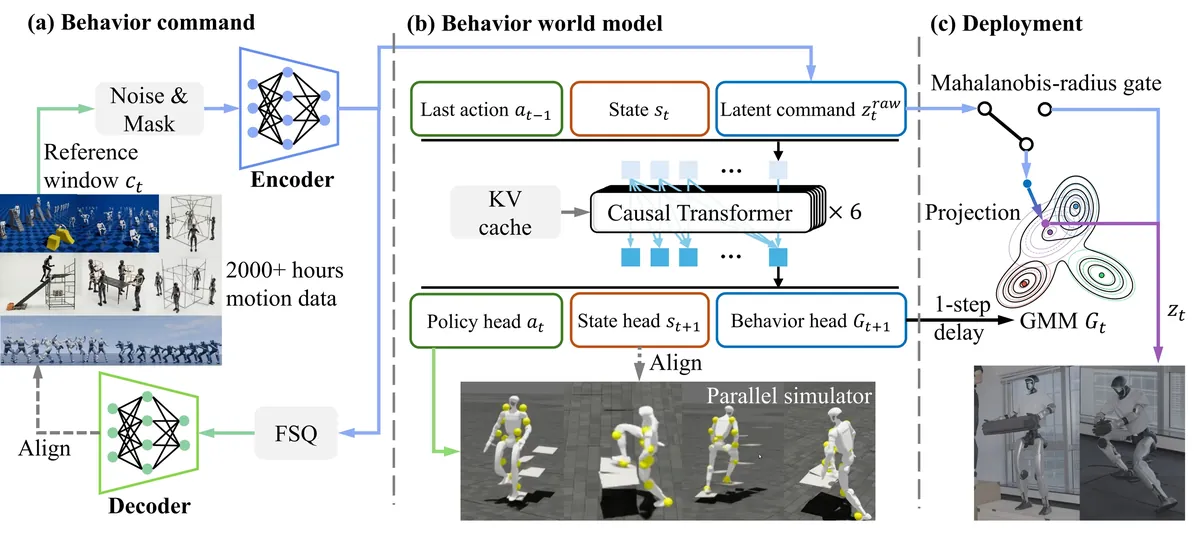
Uses a behavior world model so humanoids can track motions, interact with terrain, and recover from falls.
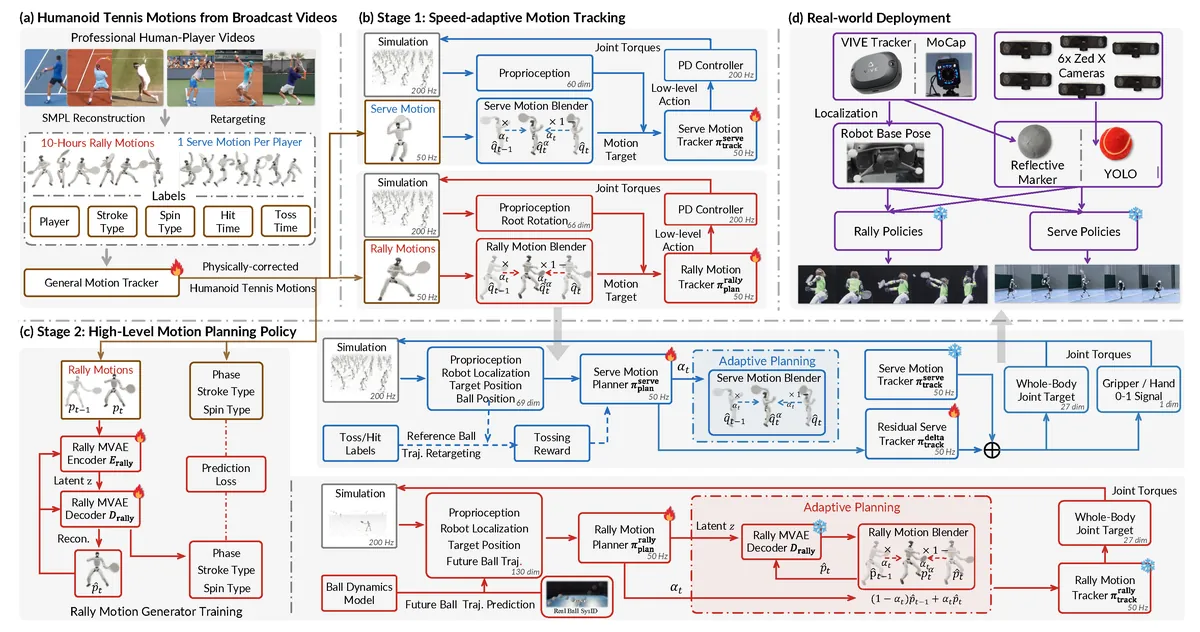
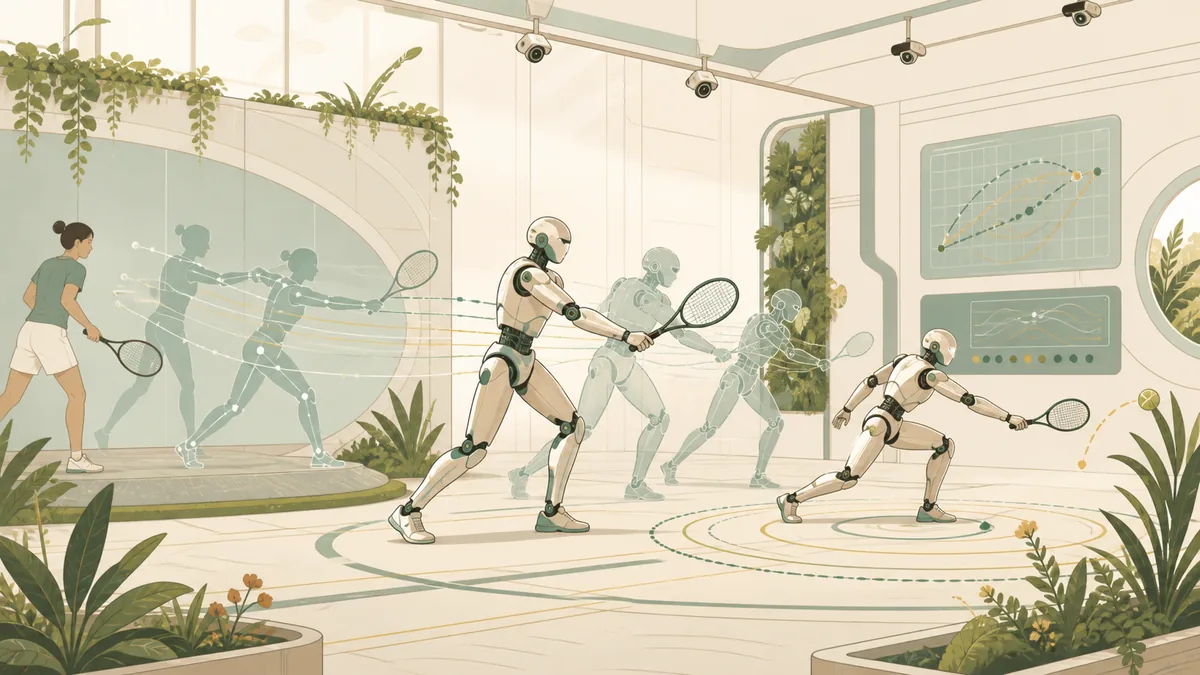
Turns broadcast tennis motion into humanoid rally and serve skills with adaptive planning and tracking.
Whole-body task contact: feet, torso, hands, and objects.
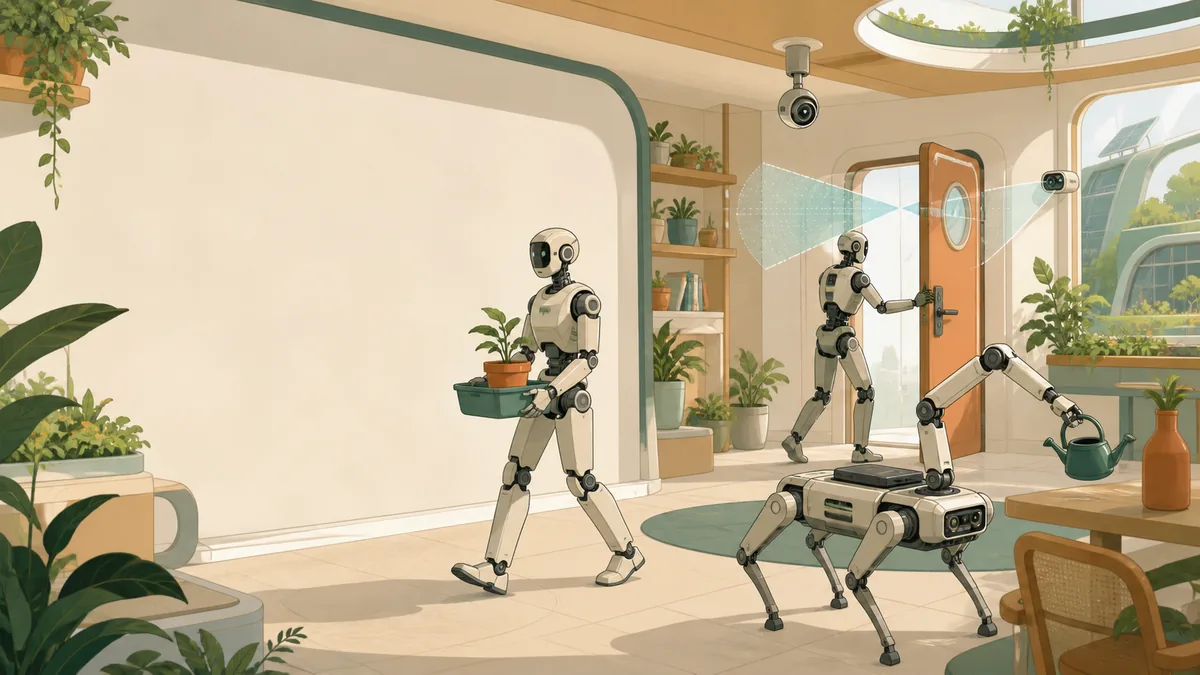
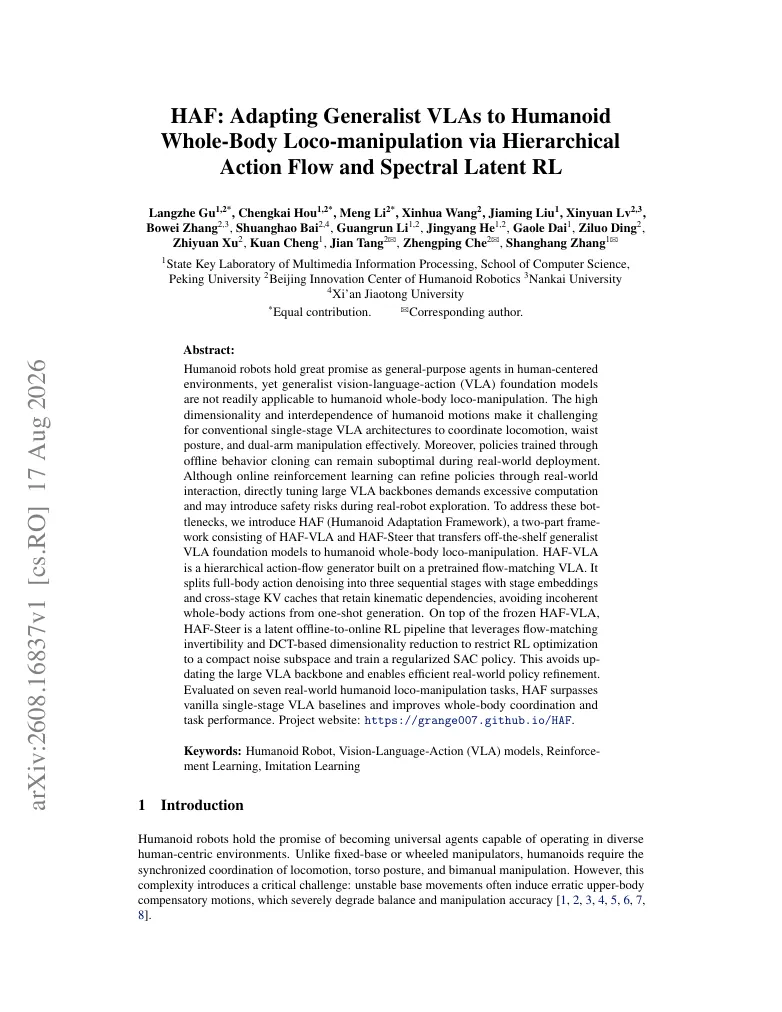
Adapts a general robot VLA into a humanoid controller that coordinates walking, posture, and manipulation actions.
Trains a G1 humanoid in simulation to see an object, move to it, pick it up, and bring it back.
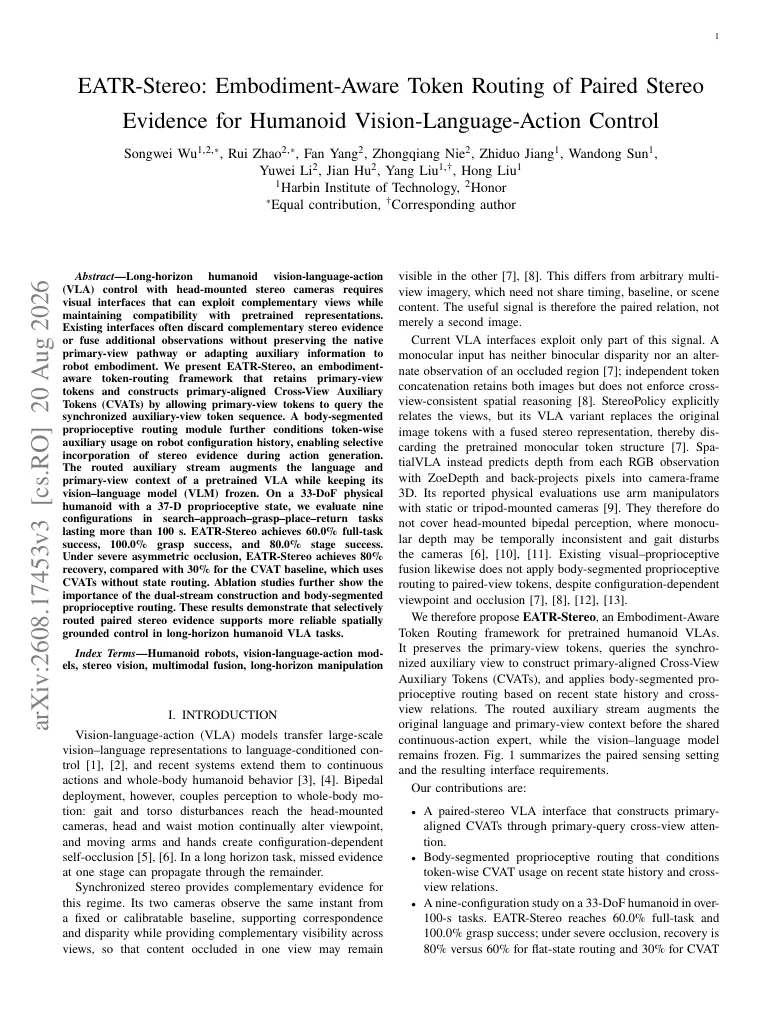
Routes stereo camera evidence using humanoid body state so a VLA can keep acting when views are occluded.
Turns a single real door video into a simulated door twin, then trains a wheel-legged robot to push through it.
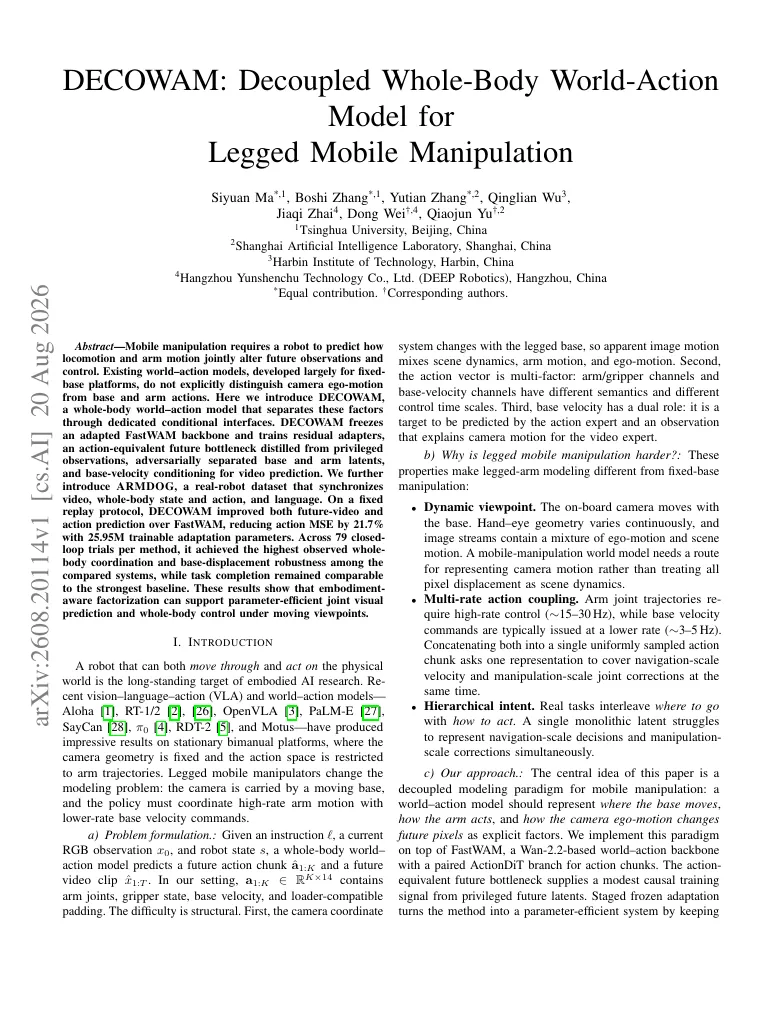
Separates base motion, arm motion, and camera motion so a legged mobile manipulator can learn world-action dynamics.
MPC, impedance, safety layers, and whole-body coordination.
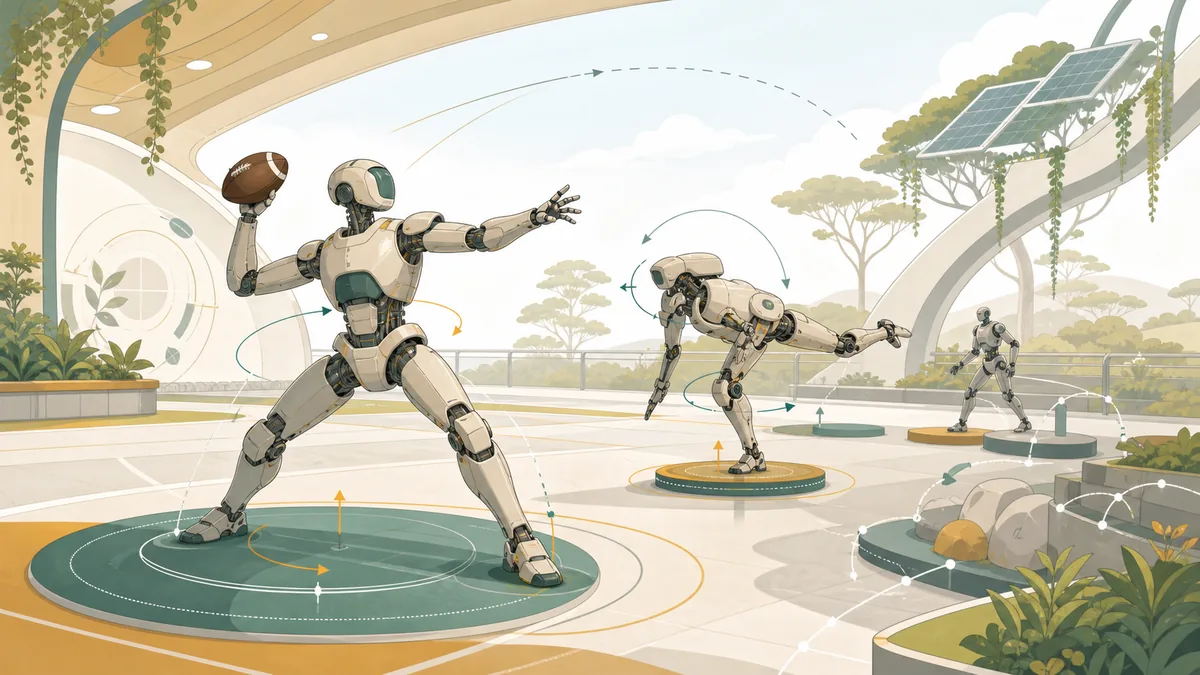
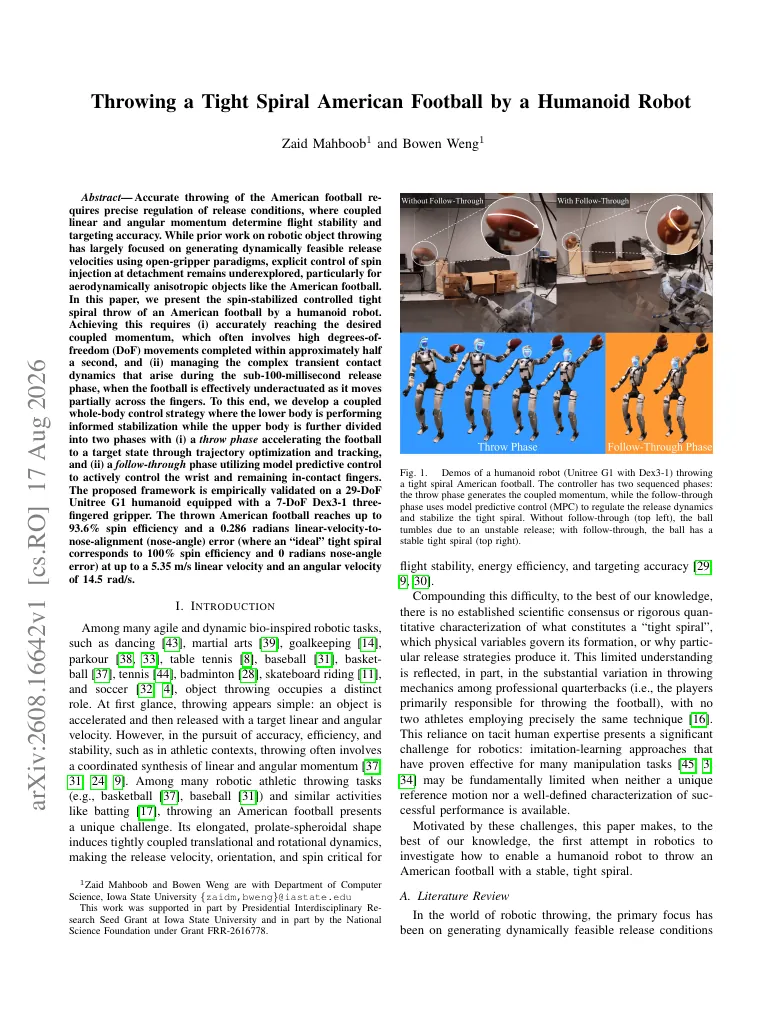
Coordinates a G1 humanoid's body, wrist, and fingers so it can throw a tight spiral football.
Runs constrained online planning fast enough to balance and move underactuated legged robots in real time.
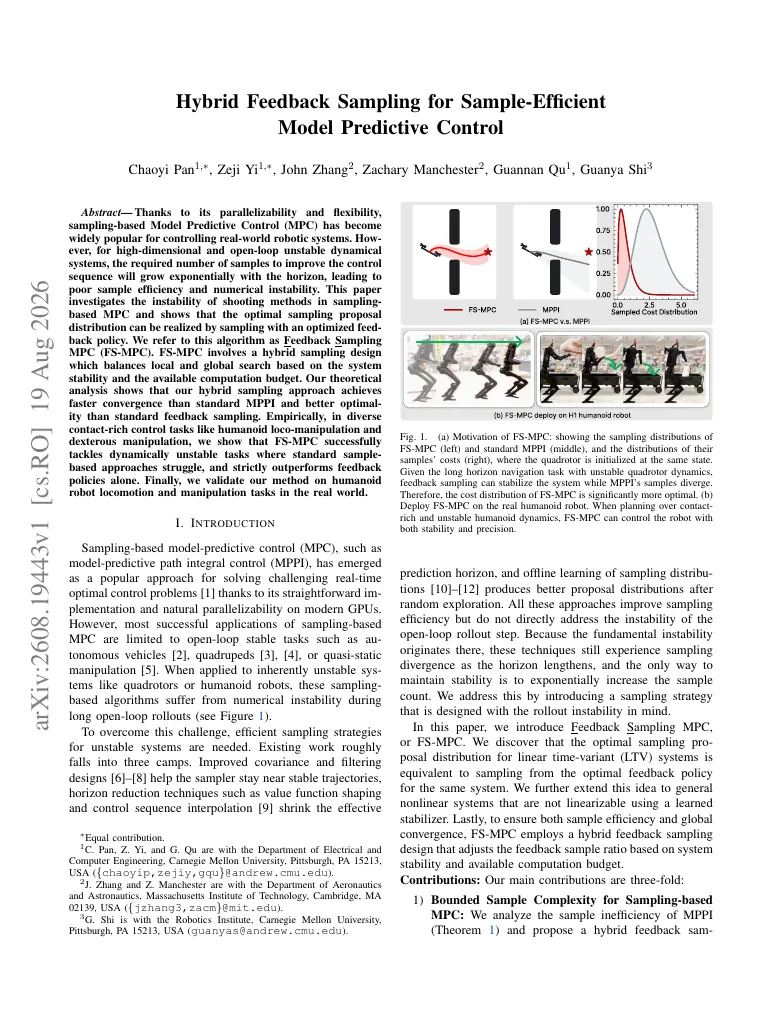
Makes sampling-based MPC more stable and sample-efficient for contact-rich robot control.
Benchmarks, datasets, rewards, simulators, and tooling.
Benchmarks humanoid navigation by testing how different robot bodies actually walk, turn, and fail in a physics simulator.
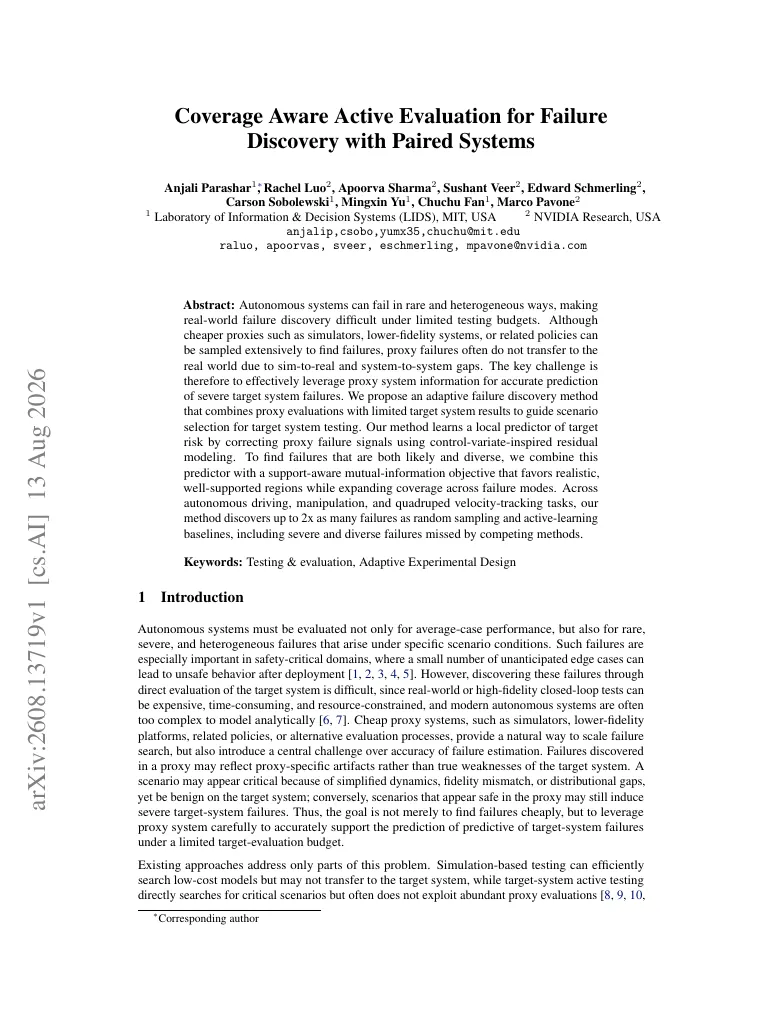
Finds robot failures faster by choosing the most useful real-system tests instead of testing every scenario.
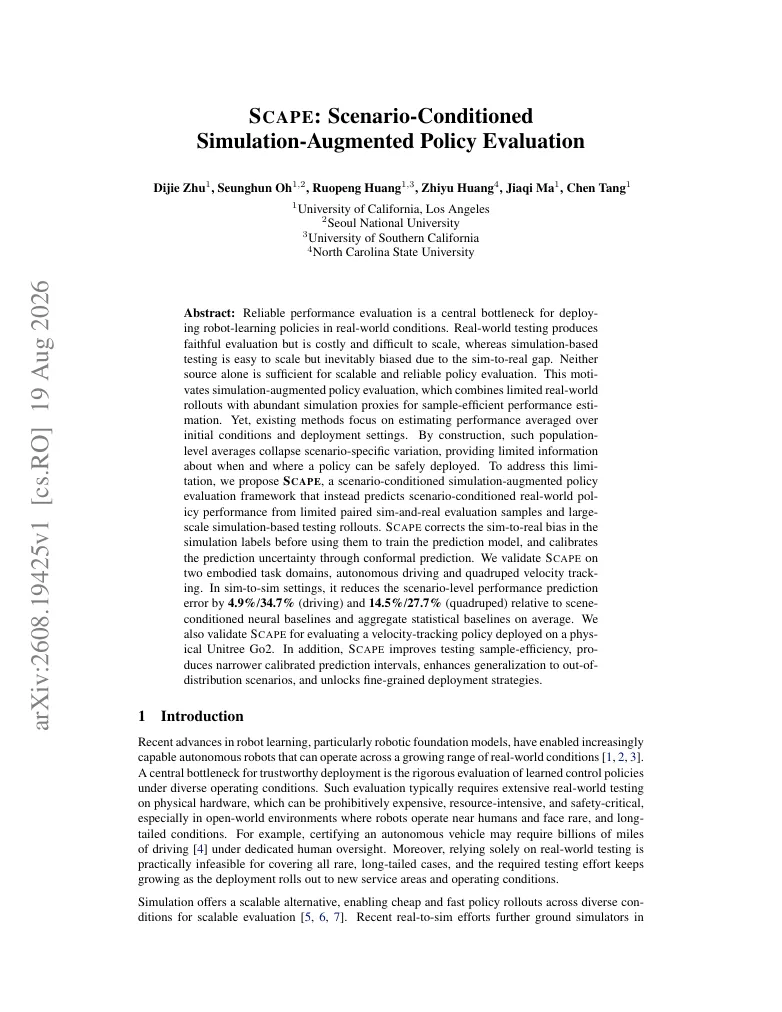
Evaluates robot policies with corrected simulation predictions and uncertainty from limited real-world data.