paper preview
01arXiv
Advances, challenges, and opportunities for legged robots
Maps where legged robots are headed, from stronger hardware and robot learning to more useful walking in real-world jobs.
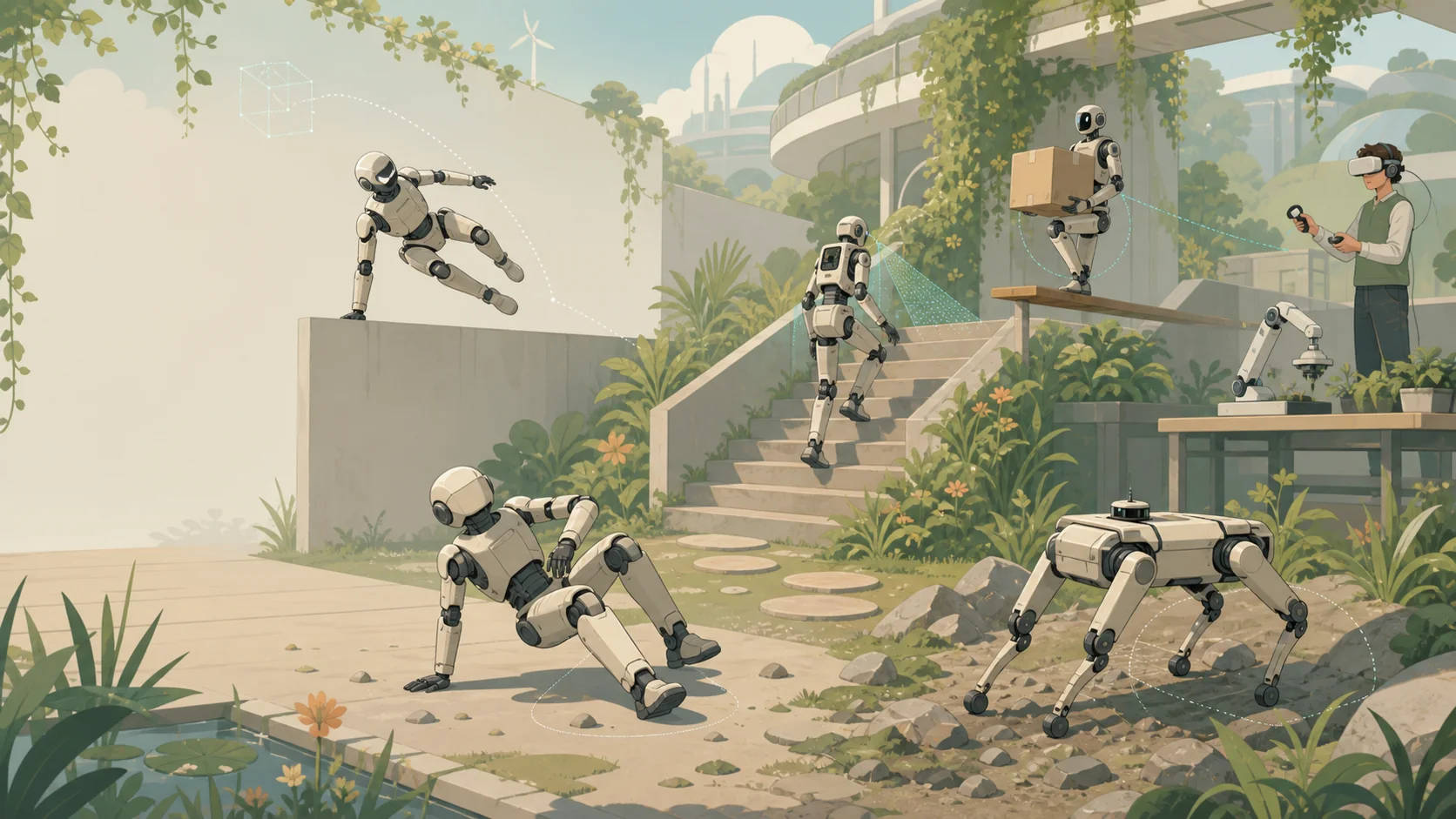
Terrain, gait, robustness, and agile movement.
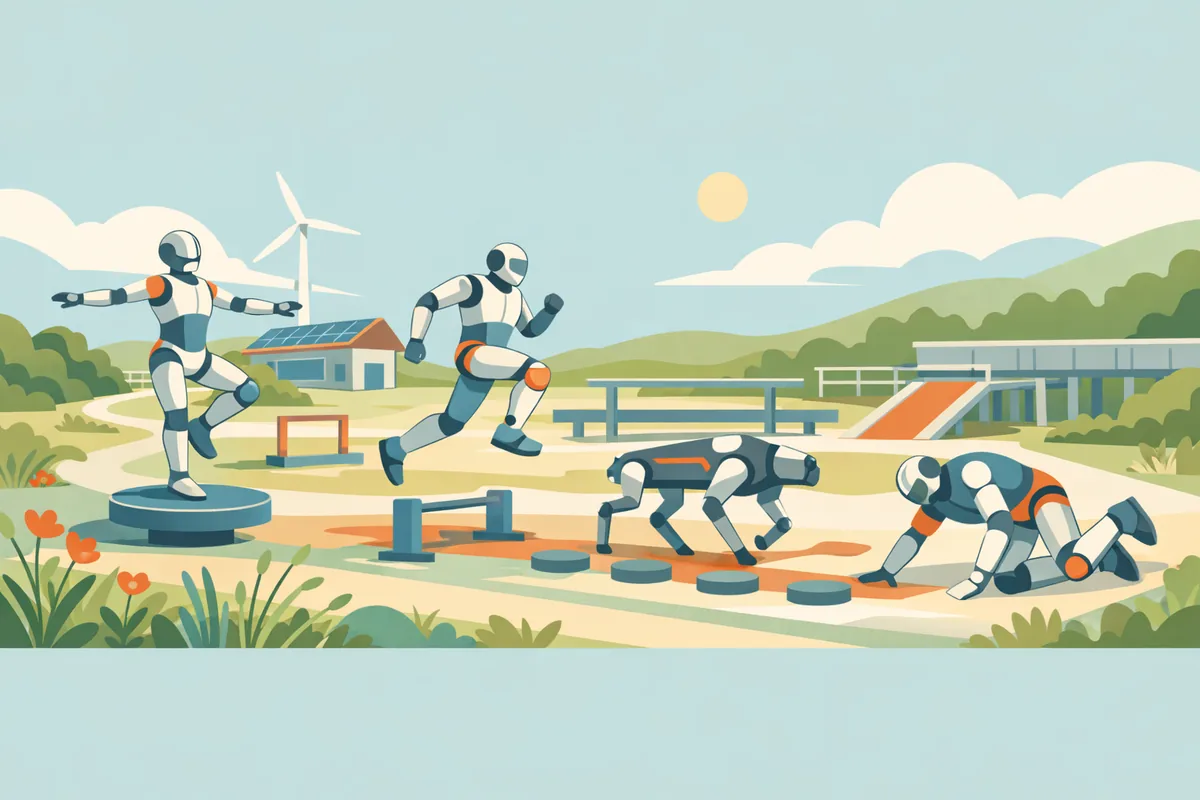
Maps where legged robots are headed, from stronger hardware and robot learning to more useful walking in real-world jobs.
Teaches a humanoid to walk, climb, cross sparse footholds, and vault over obstacles with one depth-based policy.
Trains deployable Go2 walking policies quickly in a differentiable simulator using only body sensors at runtime.
Lets a quadruped adapt its walking within a fraction of a second when joints lock or payloads change.
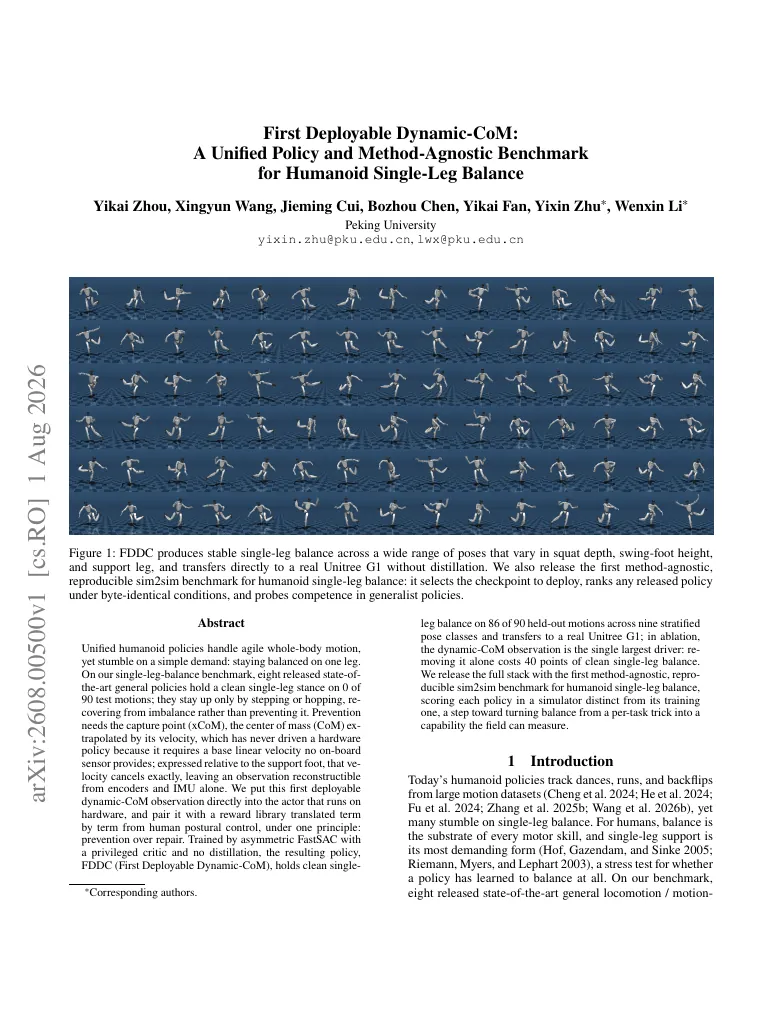
Teaches a G1 to hold single-leg balance by tracking how its support point and center of mass should line up.
Reference motion, imitation, retargeting, and behavior priors.
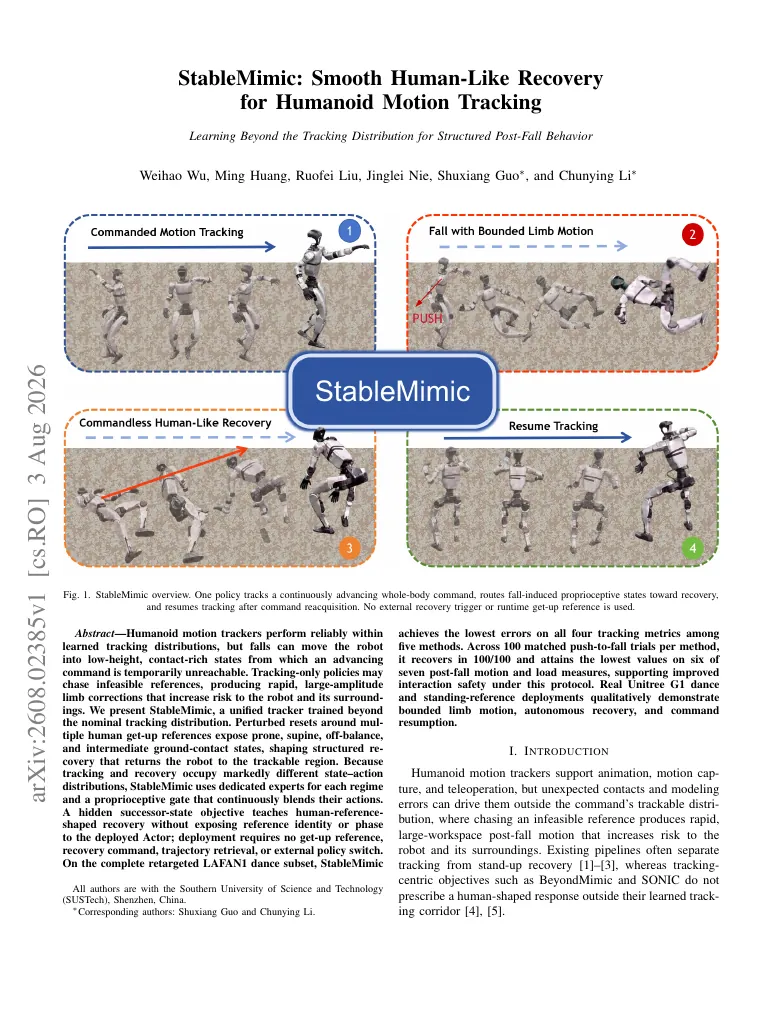
Teaches a G1 humanoid to recover from falls and return to motion tracking without switching controllers by hand.
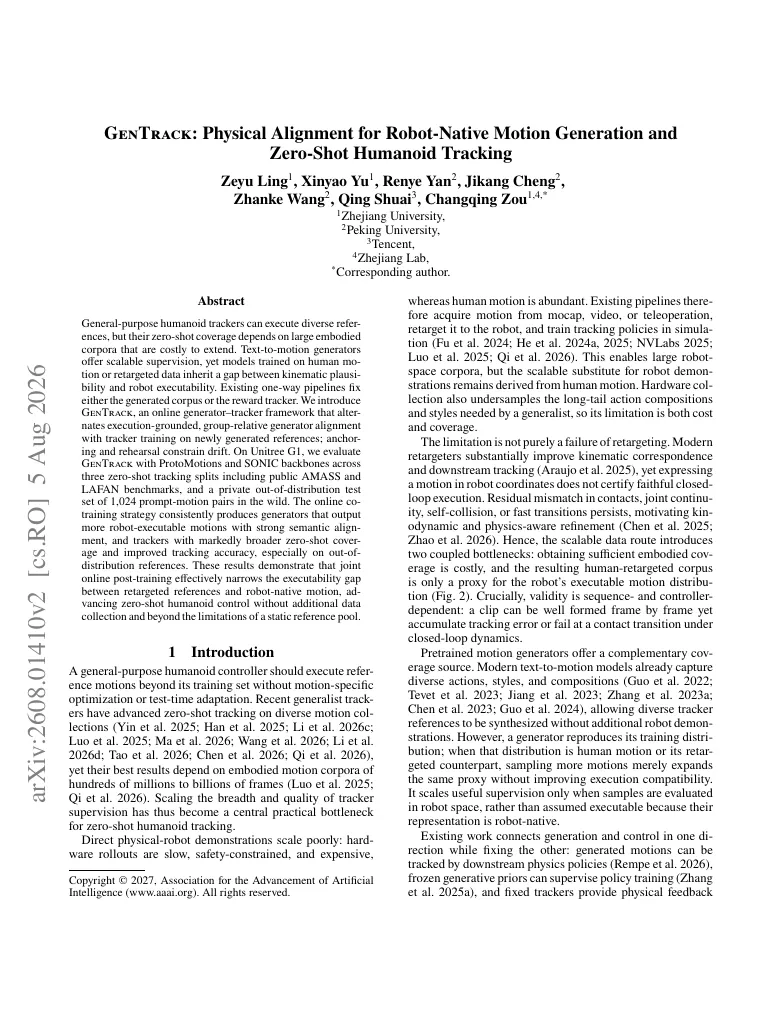
Generates humanoid motions, tests whether a G1 can track them, and uses failures to make future motions more robot-ready.
Trains a G1 whole-body motion tracker much faster by routing different parts of the behavior through expert modules.
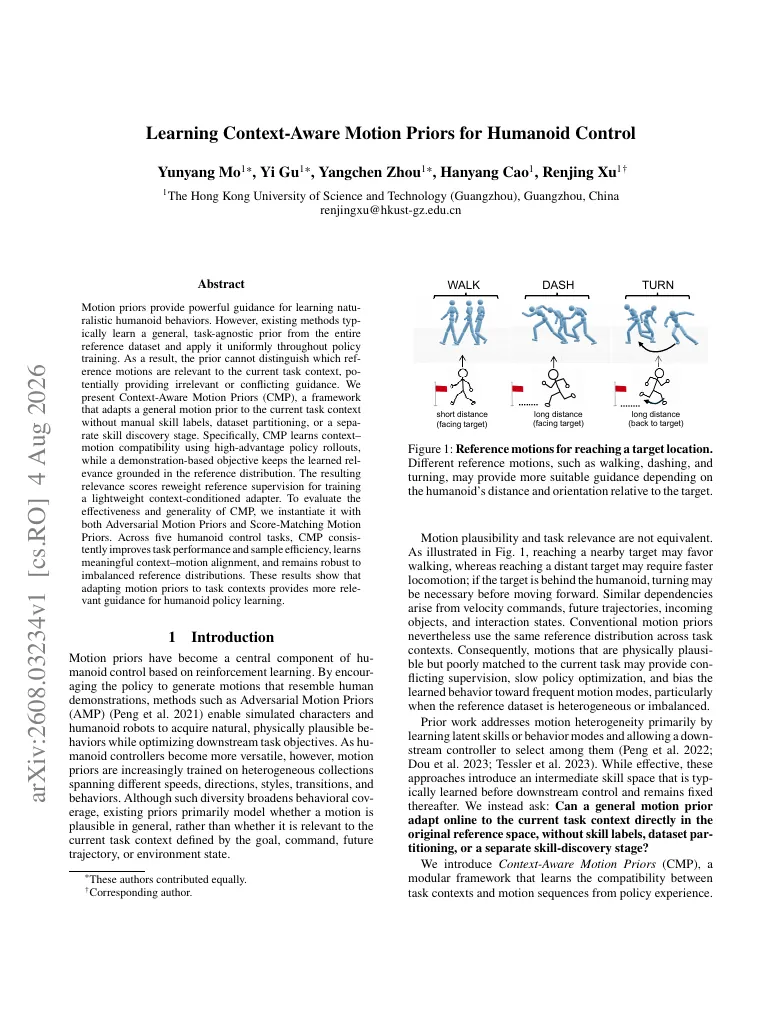
Chooses useful reference motions for each task so humanoids learn new behaviors without hand-sorting the motion set.
Turns kinematic motion clips into contact-aware G1 motions that are easier to train and transfer to hardware.
Builds a reusable pose prior so humanoids learn motion tracking from unordered poses with better contact and balance.
Whole-body task contact: feet, torso, hands, and objects.
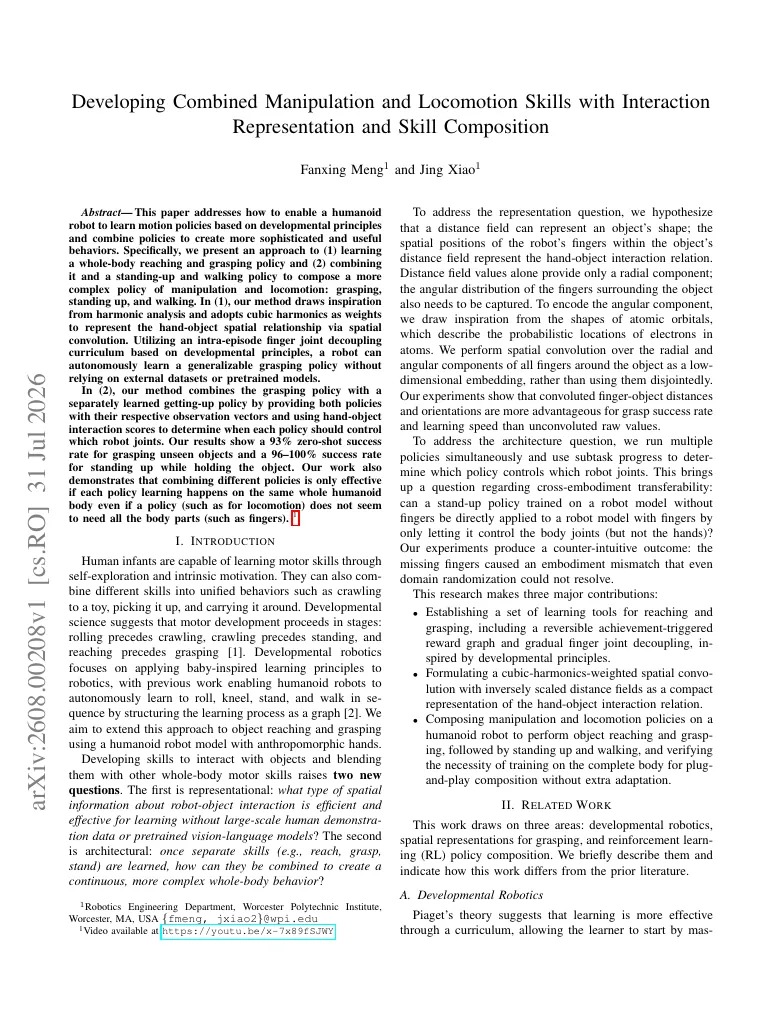
Combines walking and grasping policies so a humanoid can move toward objects and manipulate them with its whole body.
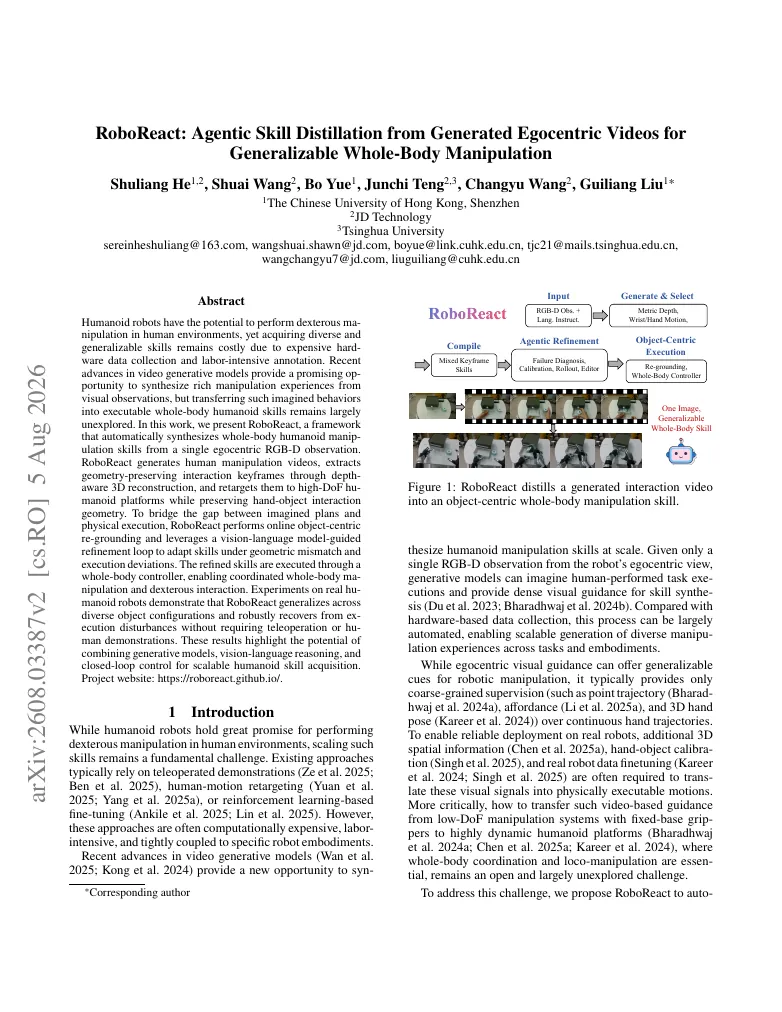
Turns generated first-person task videos into humanoid keyframe skills, then executes them on a G1 with whole-body control.
Maps language, camera views, and body sensors into short whole-body action chunks for a G1 doing household loco-manipulation.
MPC, impedance, safety layers, and whole-body coordination.
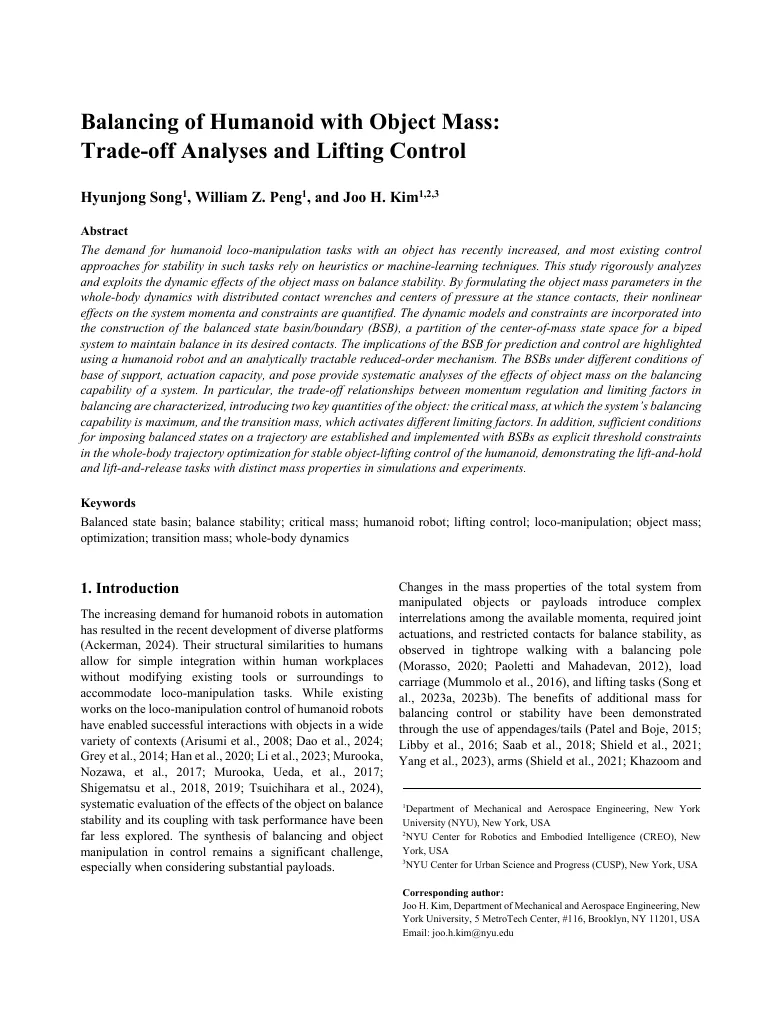
Helps a humanoid lift and hold objects by planning how the carried mass changes its balance.
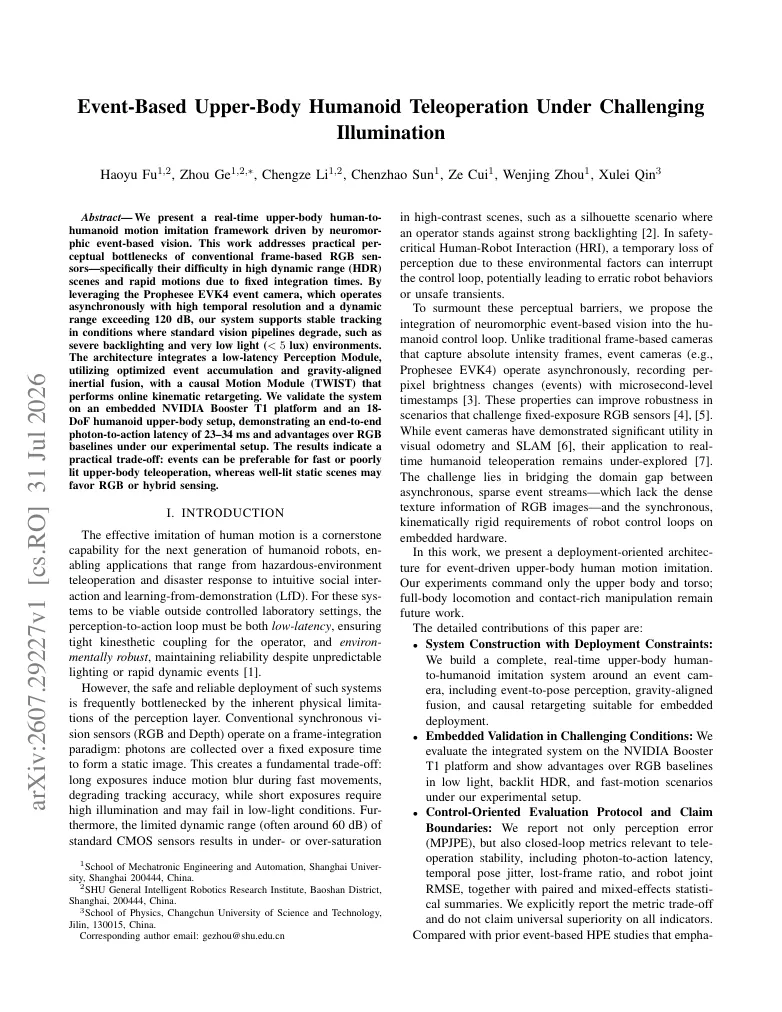
Lets a humanoid copy upper-body motion in fast or dim scenes using low-latency event-camera tracking.
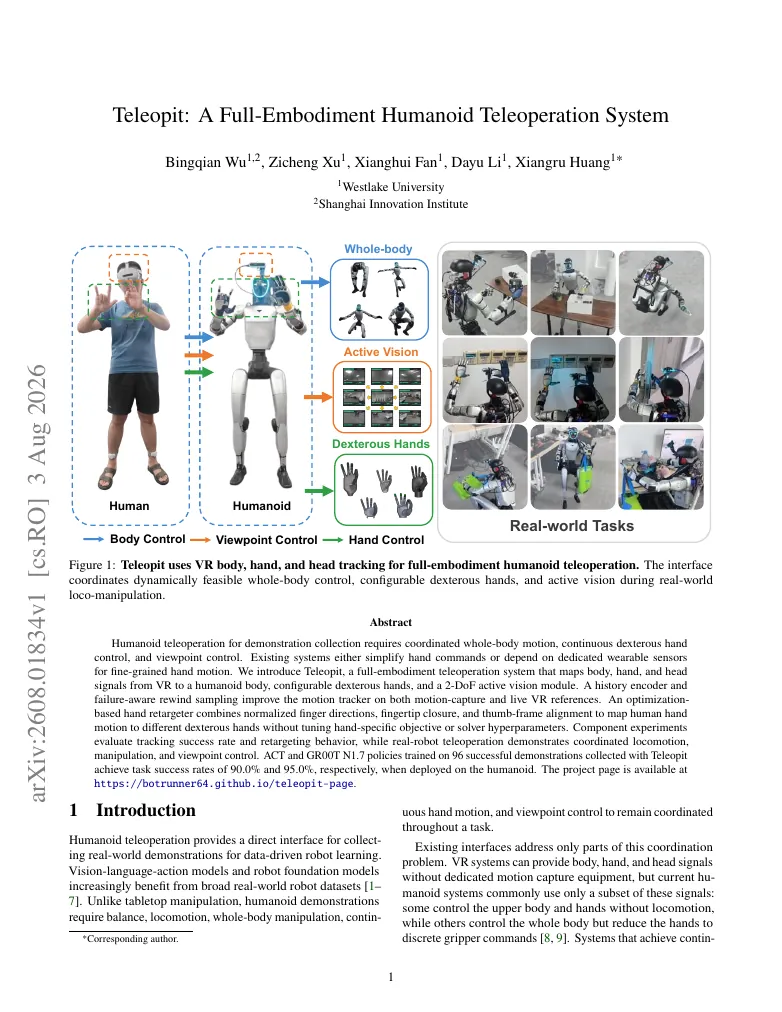
Lets a person control a humanoid body, hands, and head through VR so the demonstrations can train autonomous skills.
Terrain, state, slip, sensors, and local context.
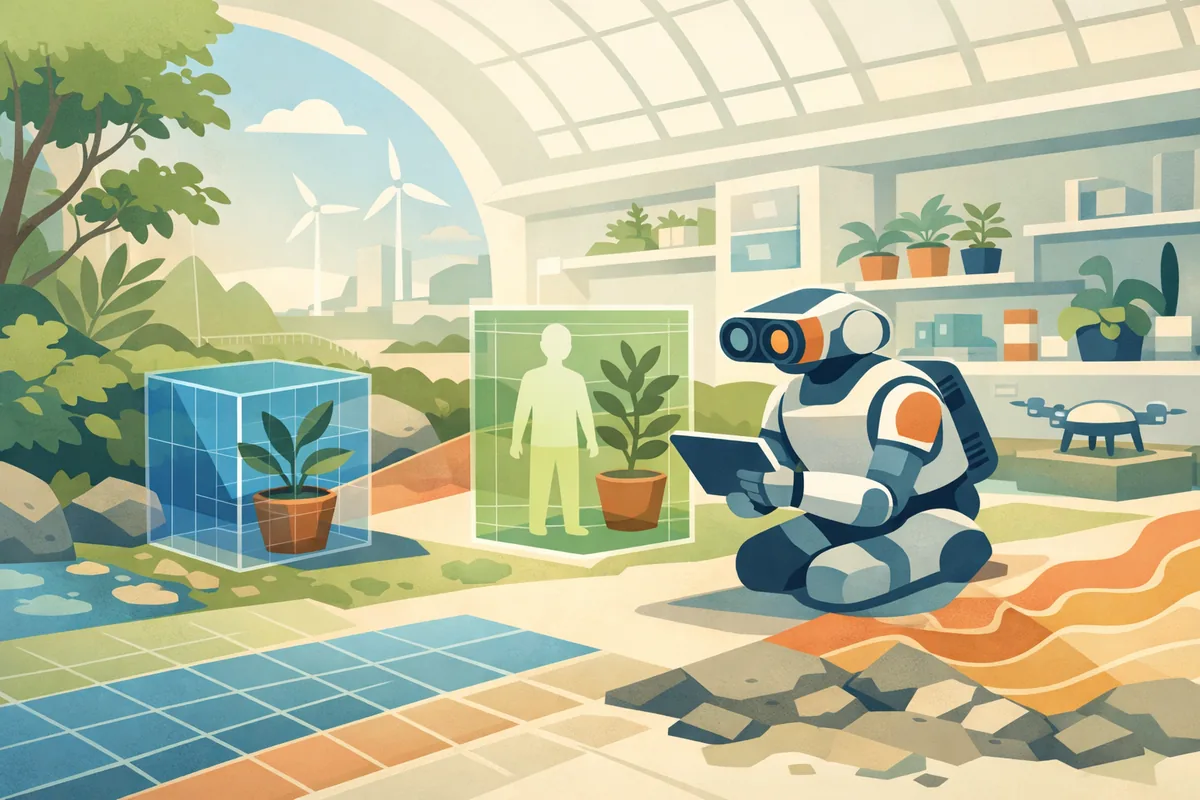
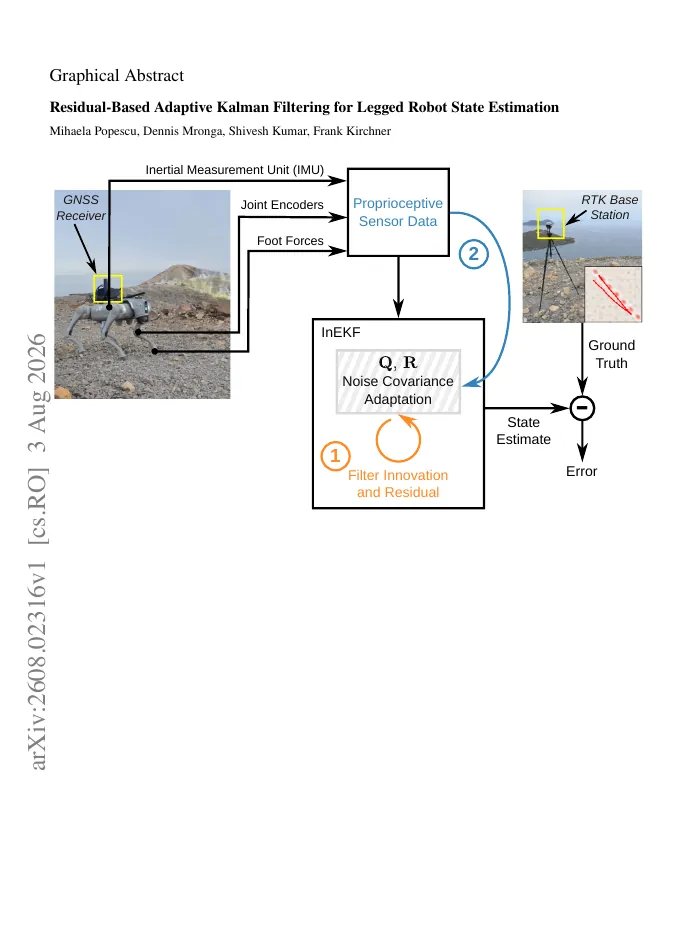
Improves legged robot body-state estimates by learning when to trust or loosen the Kalman filter while walking.