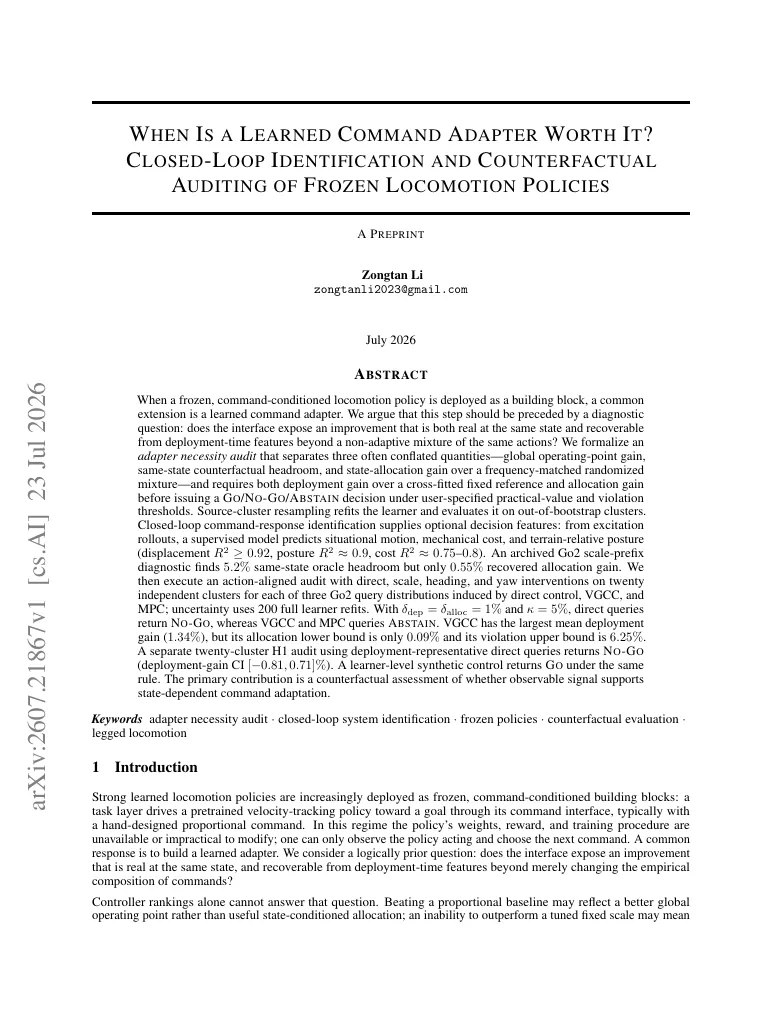
When Is a Learned Command Adapter Worth It? Closed-Loop Identification and Counterfactual Auditing of Frozen Locomotion Policies
Checks whether learned command adapters actually make frozen walking policies better before using them on robots.
Terrain, gait, robustness, and agile movement.


Checks whether learned command adapters actually make frozen walking policies better before using them on robots.
Lets legged robots practice hard motions with temporary helper forces, then removes the help so the final controller moves on its own.
Gives robot policies a better way to mix body-sensor readings so humanoids walk and handle contact more reliably.

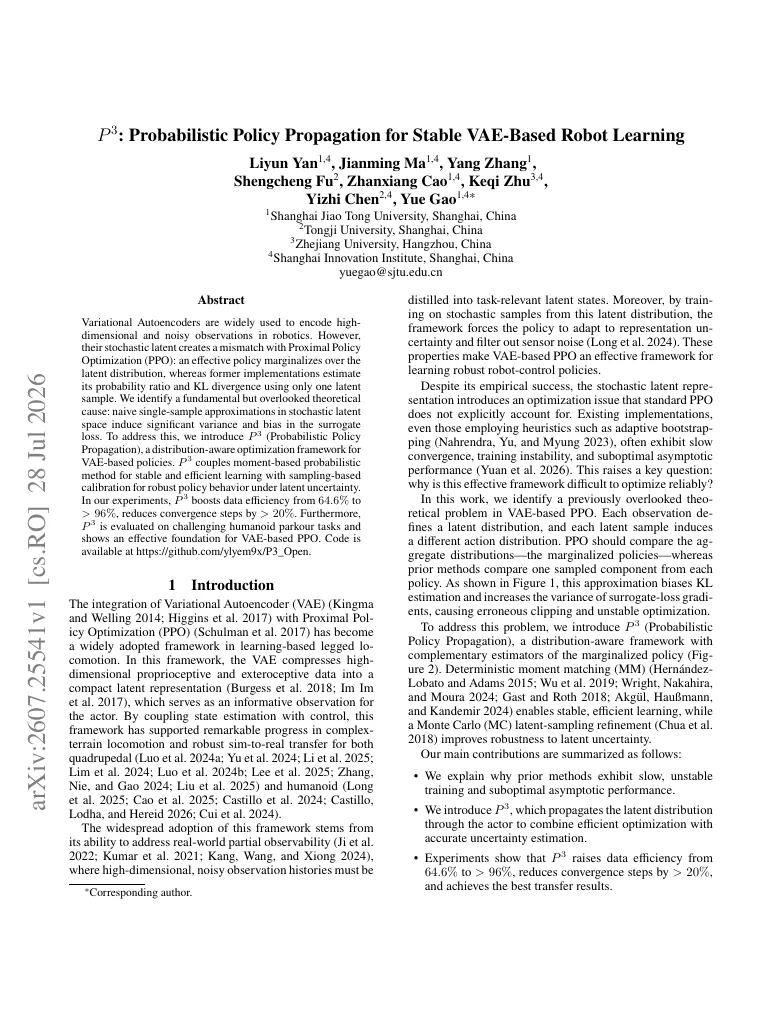
Makes G1 terrain-walking training more stable by tracking uncertainty in the robot movement plan.

Finds rare walking failures, trains on those hard cases, and switches policies to keep a Go2 from failing again.
Reference motion, imitation, retargeting, and behavior priors.

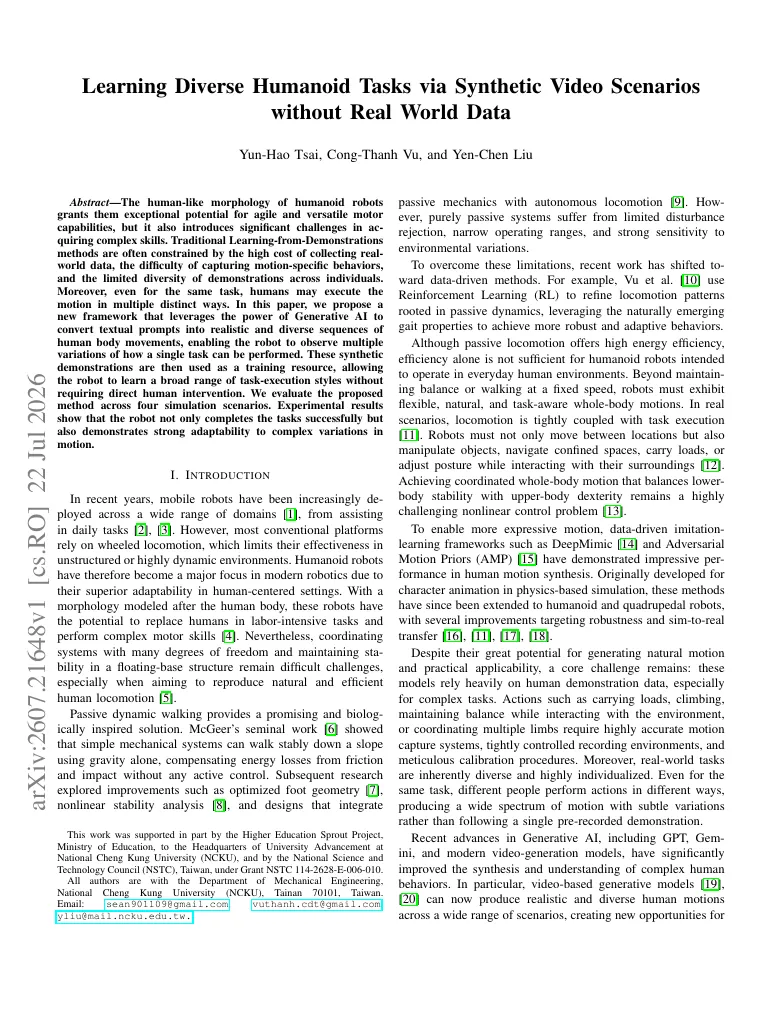
Teaches a G1 humanoid new tasks from generated human videos, then trains it to follow those motions in simulation.

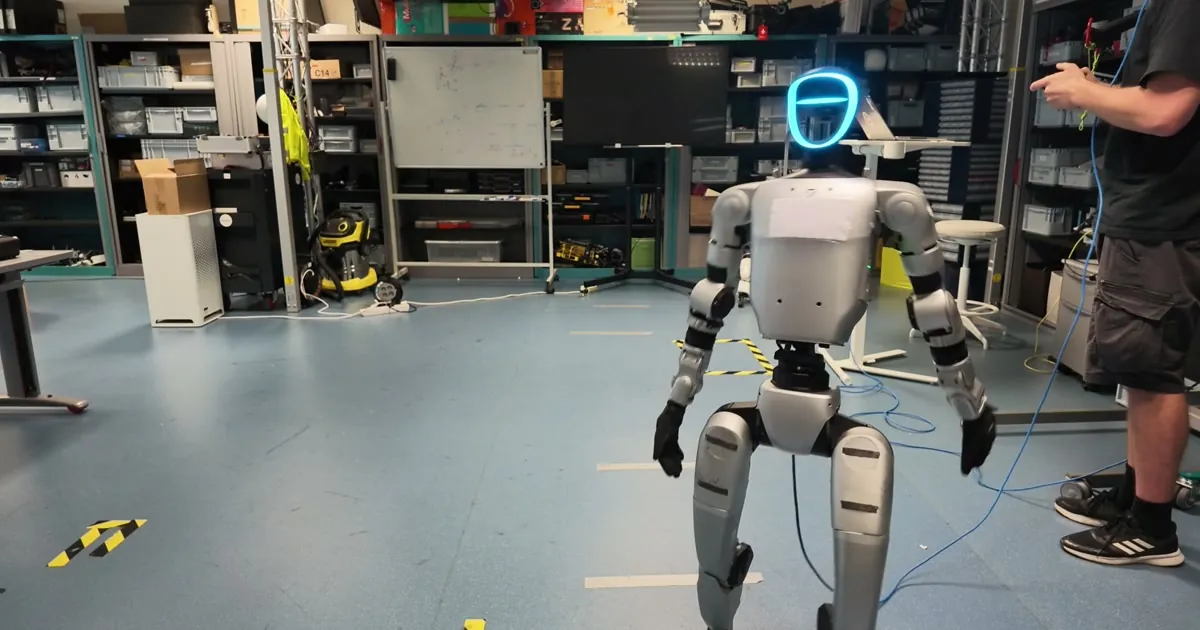
Gives a G1 humanoid a reusable motion skill library for walking, navigation, and recovery.
MPC, impedance, safety layers, and whole-body coordination.


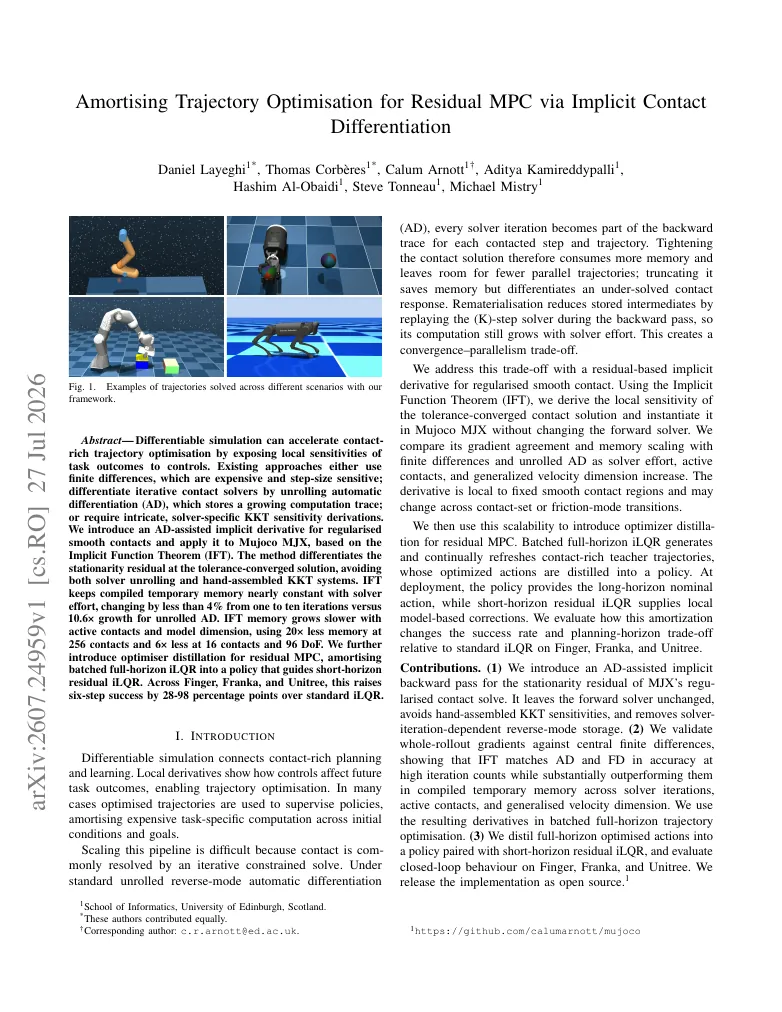
Solves contact-heavy robot motions with long-horizon planning, then turns those solutions into a faster controller.

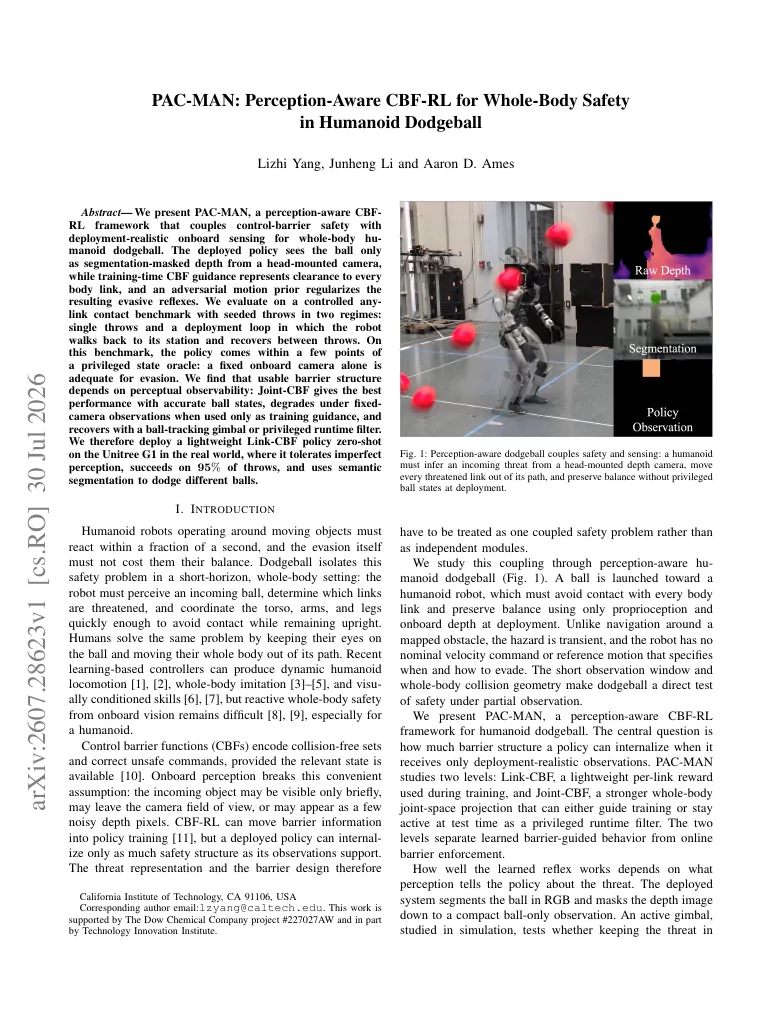
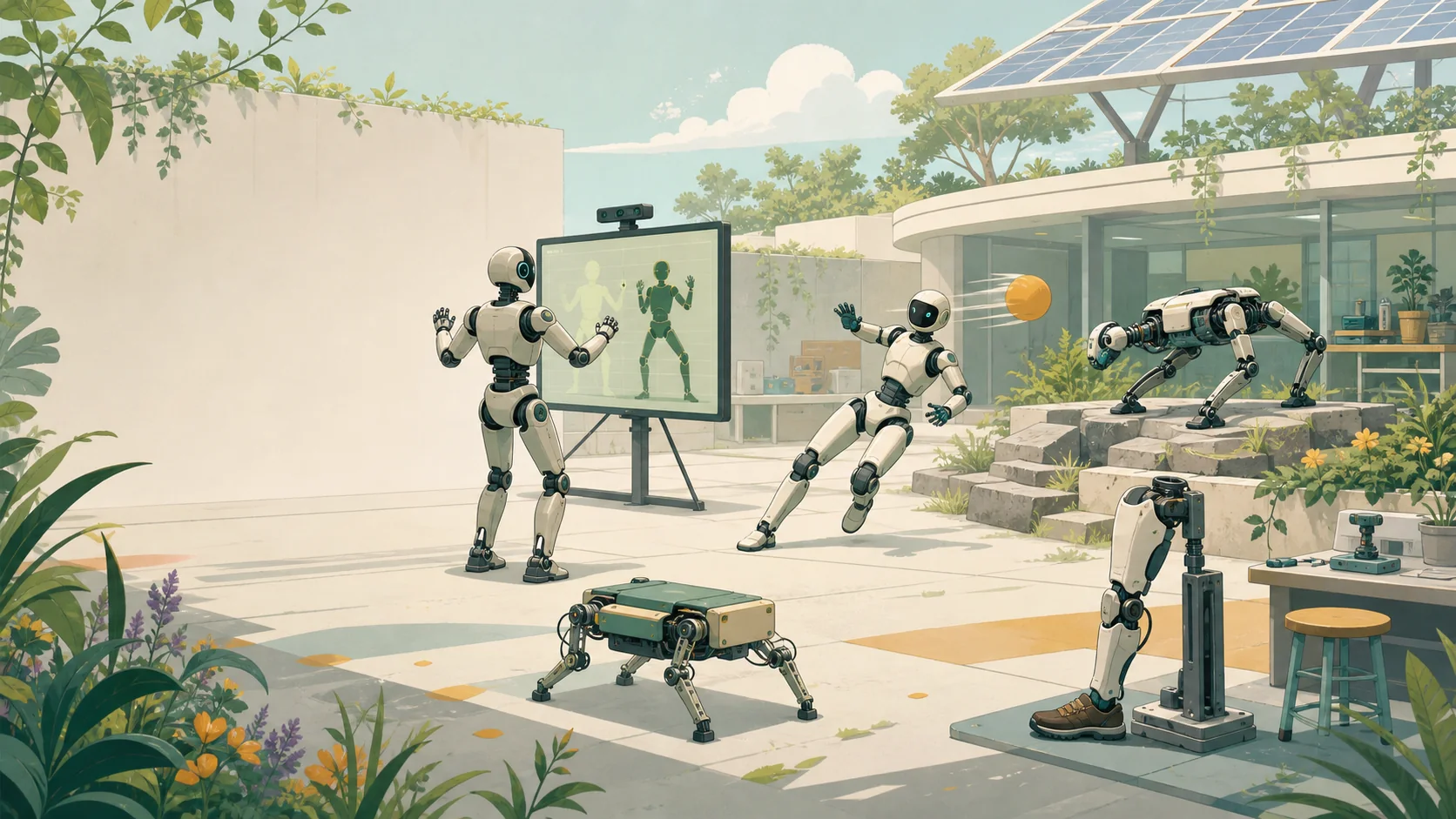
Teaches a G1 humanoid to dodge incoming balls using depth sensing while keeping its whole body balanced.
Benchmarks, datasets, rewards, simulators, and tooling.


Builds an open AMD ROCm pipeline for generating robot data, training robot policies, and testing them from simulation to real hardware.

Personalizes robotic knee-ankle prosthesis control in simulation before trying the safest settings on hardware.

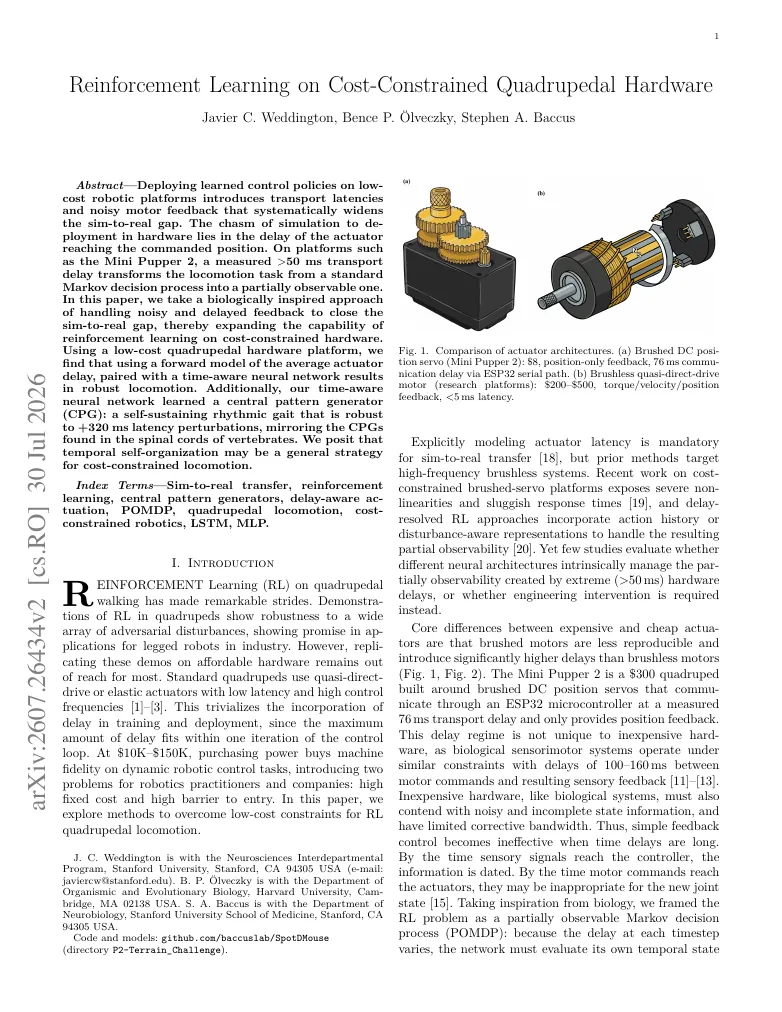
Teaches a low-cost Mini Pupper to walk despite slow motors and delayed feedback.