paper preview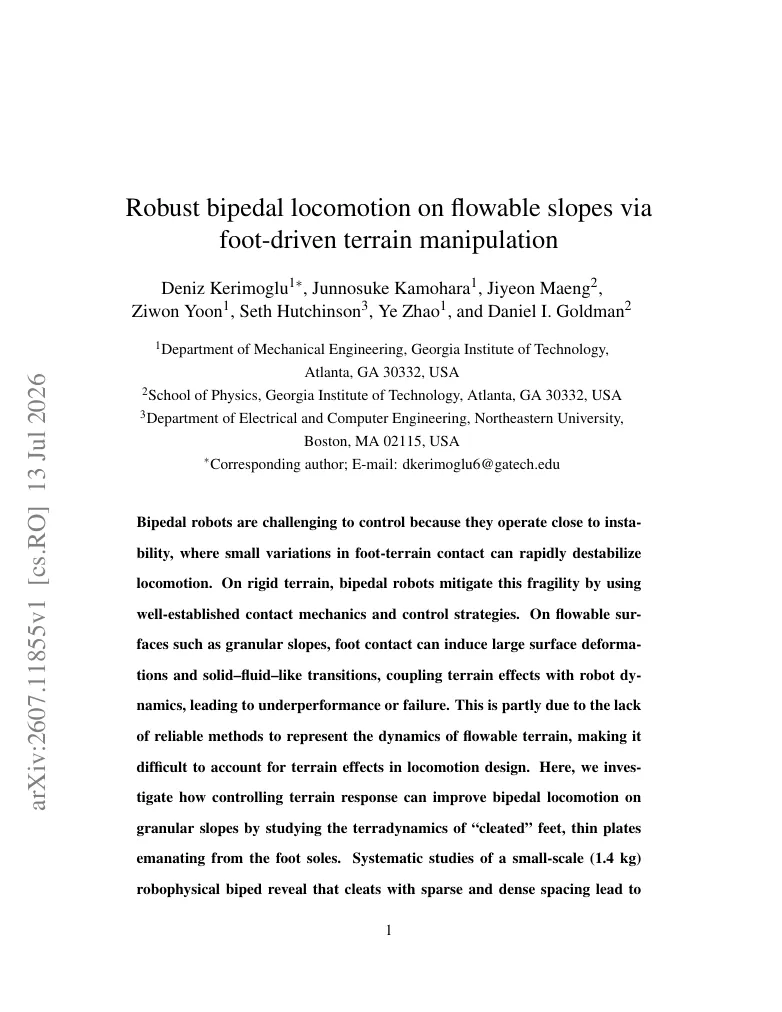
01arXiv
Robust bipedal locomotion on flowable slopes via foot-driven terrain manipulation
Keeps bipedal robots walking on loose slopes by using the feet to shape and push the ground.
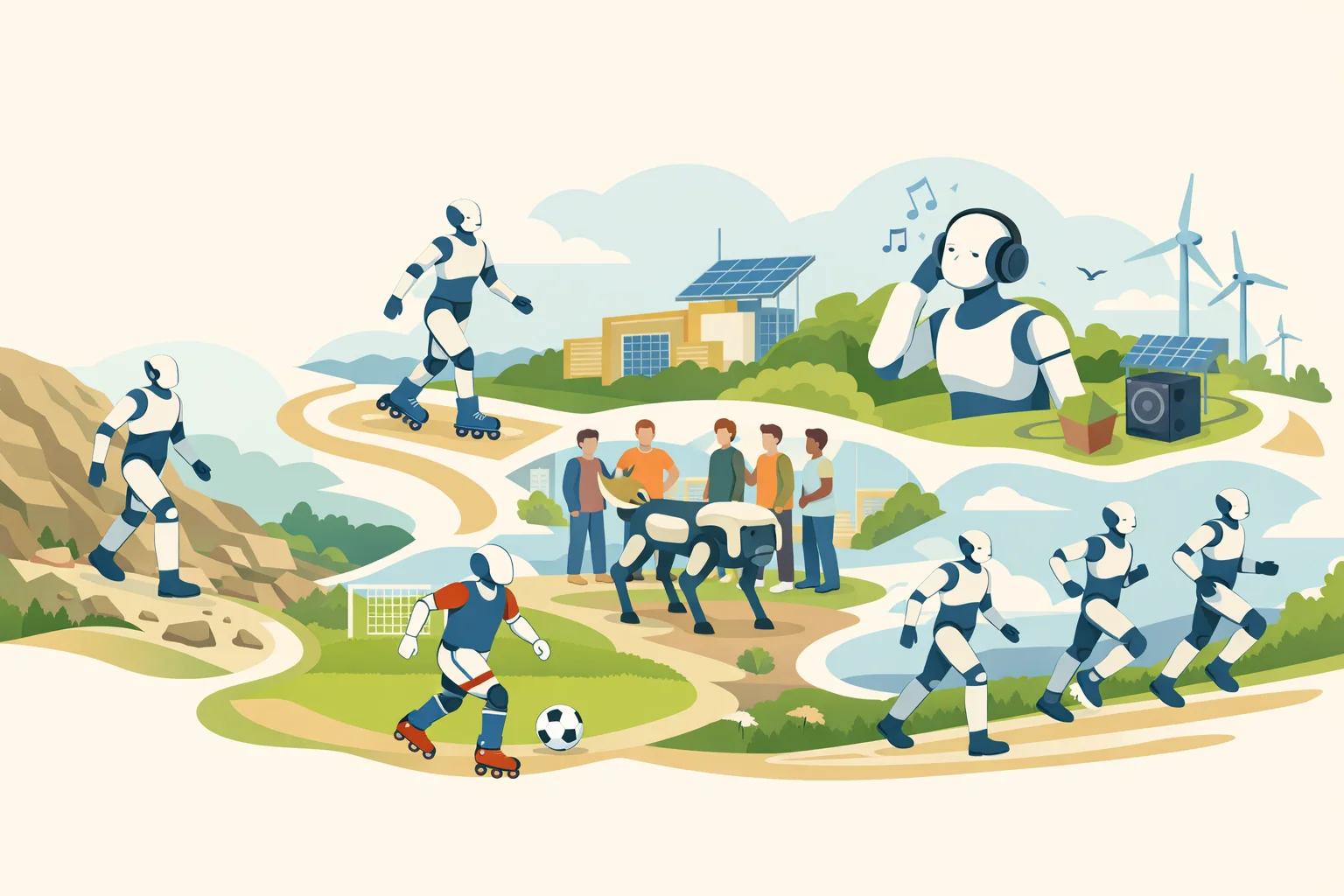
Terrain, gait, robustness, and agile movement.
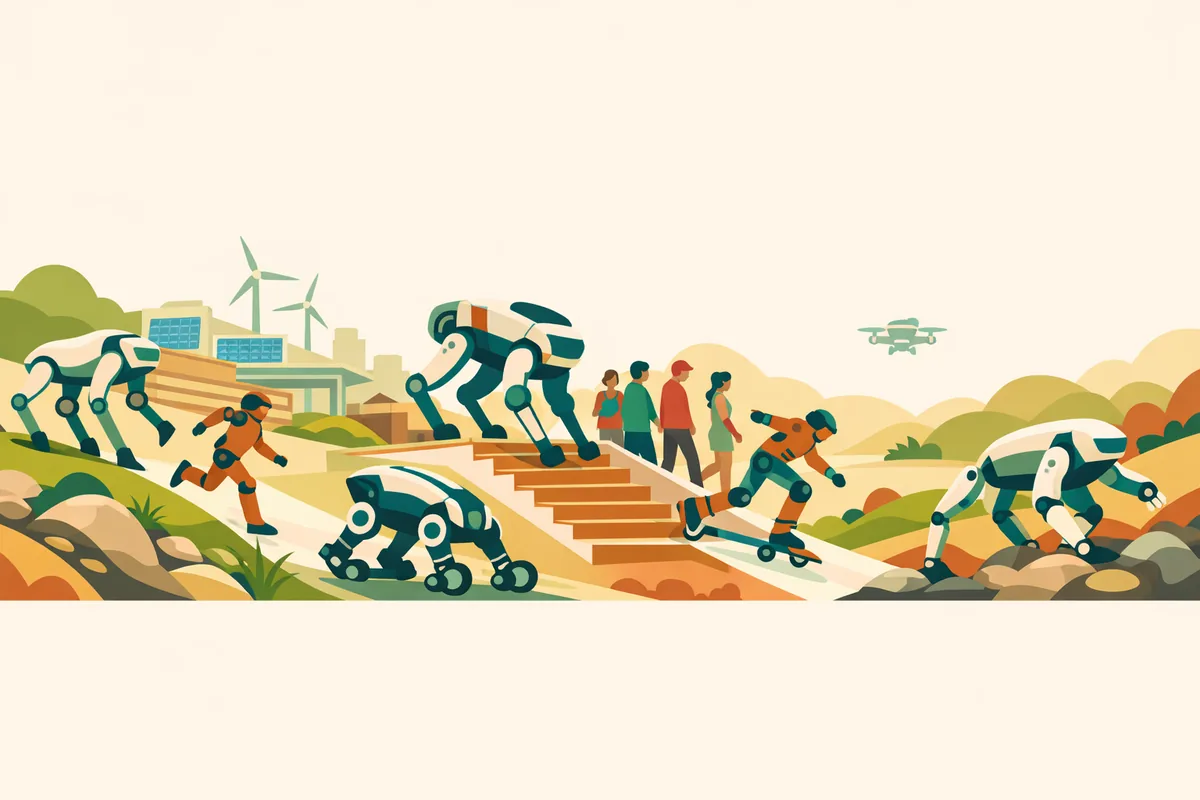
Keeps bipedal robots walking on loose slopes by using the feet to shape and push the ground.
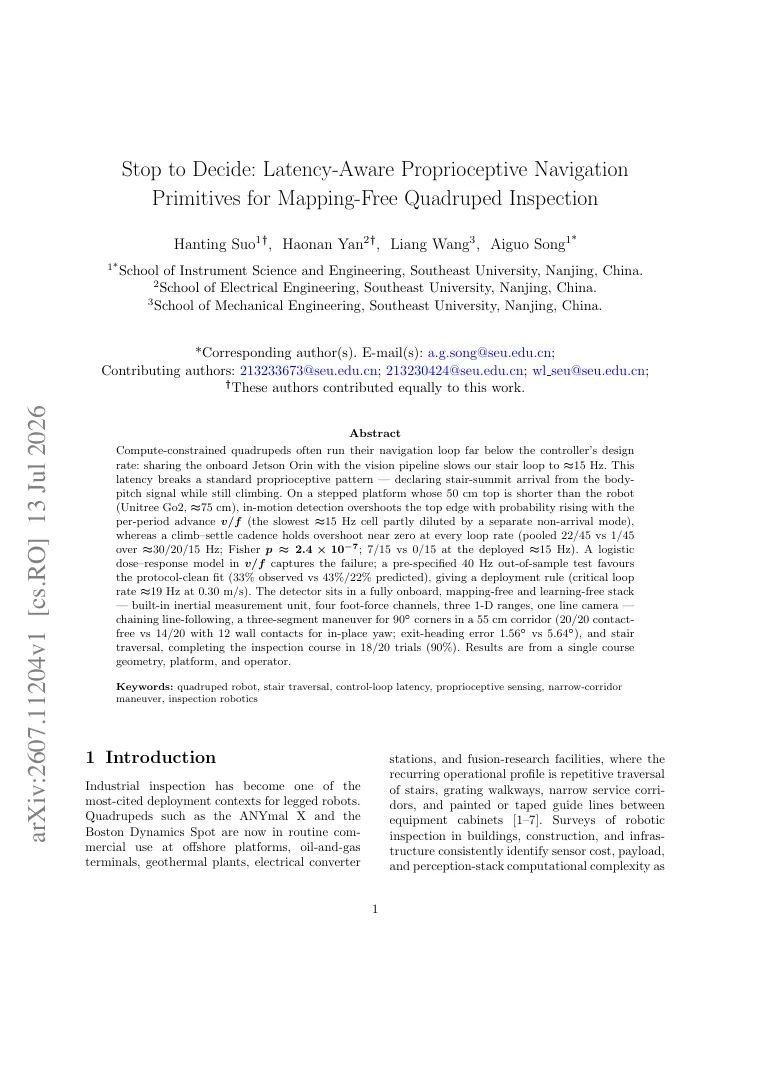
Helps a quadruped slow down or stop before hard turns and stairs so navigation stays stable.
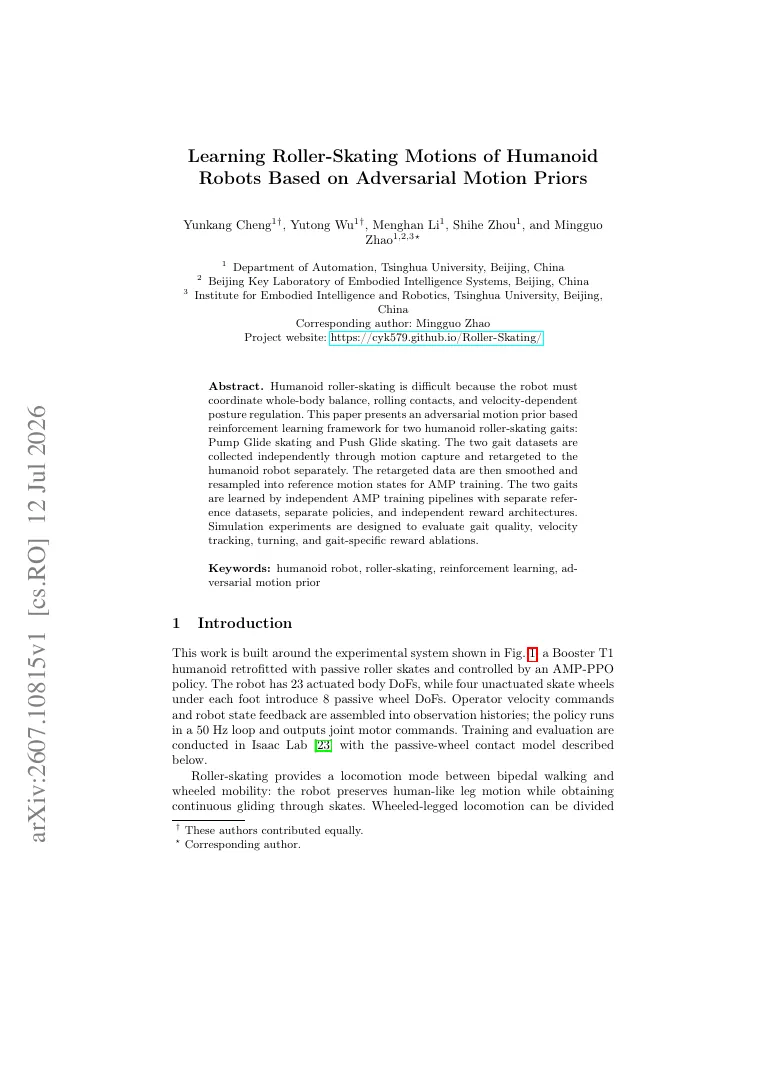
Teaches humanoids to roller-skate by copying skating motion patterns and learning how to balance on passive wheels.
Helps quadrupeds choose better footholds for parkour over gaps, stepping stones, and tilted walls using depth perception.
Teaches quadrupeds multiple outdoor movement skills so they can cross rough terrain from vision and body sensing.
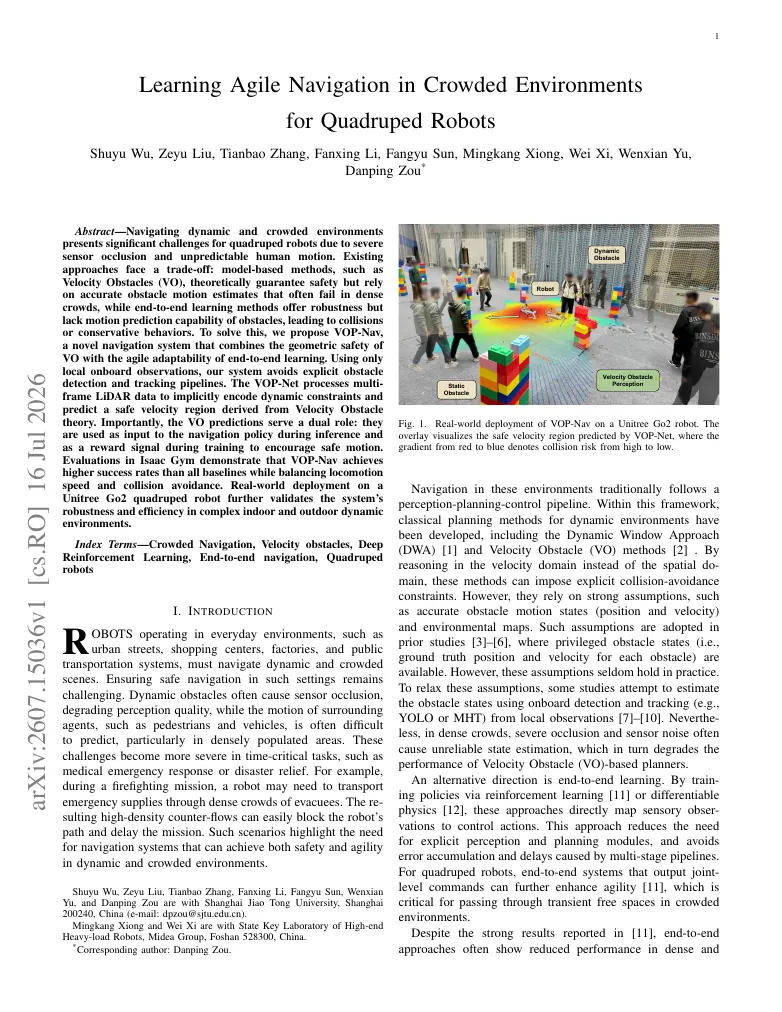
Teaches quadrupeds to move through crowds by choosing fast paths that avoid people and obstacles.
Grows a humanoid walking controller into one policy that can walk, jog, and run on command.
Reference motion, imitation, retargeting, and behavior priors.
Turns egocentric human terrain videos into demonstrations that humanoids can use for walking over complex ground.
Builds one humanoid behavior model that can track many full-body motion references across different robot setups.
Whole-body task contact: feet, torso, hands, and objects.
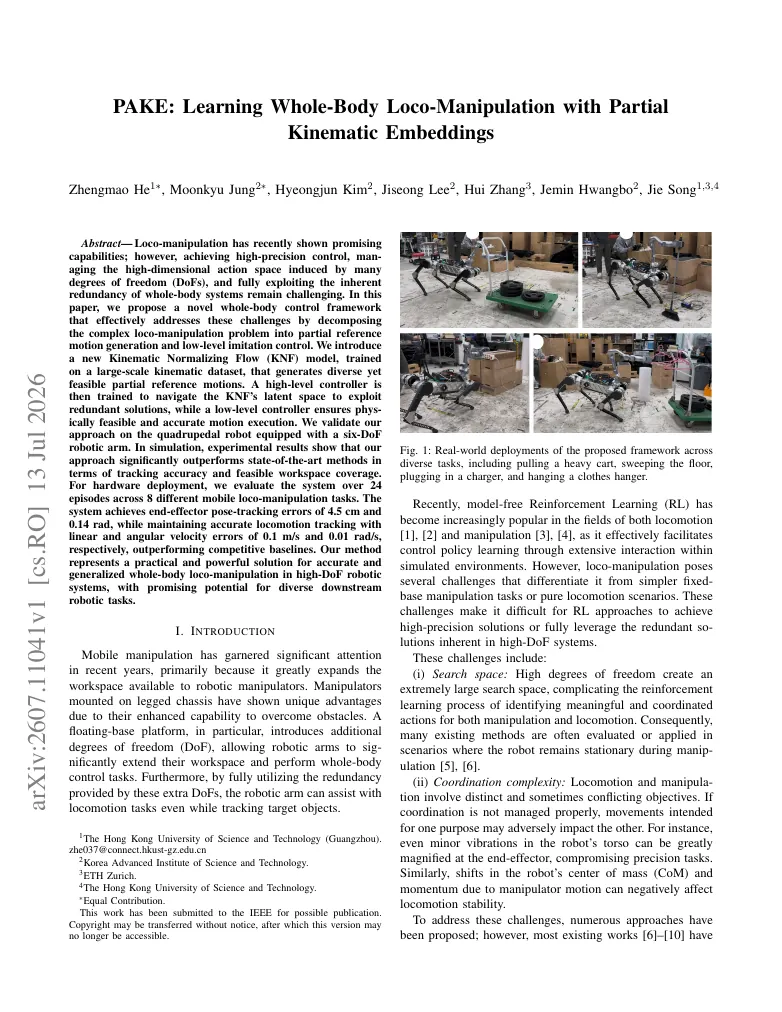
Teaches a quadruped with an arm to move its body and manipulate objects while tracking only the important motion cues.
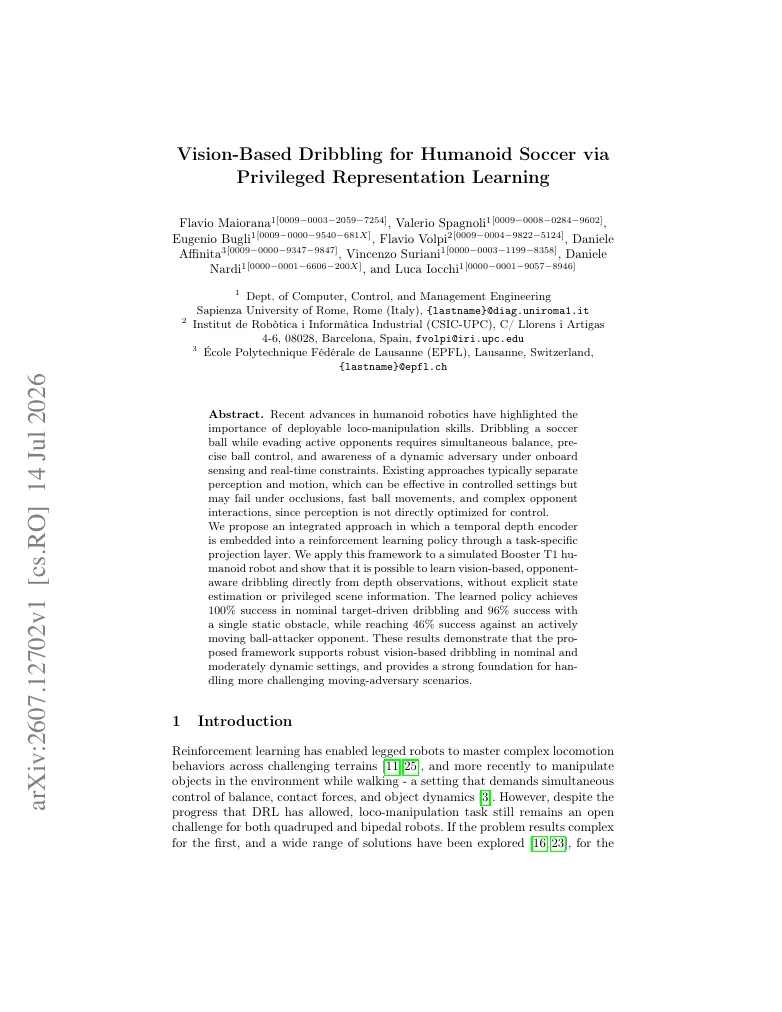
Teaches a humanoid to dribble a soccer ball using onboard vision while avoiding simple opponents.
MPC, impedance, safety layers, and whole-body coordination.
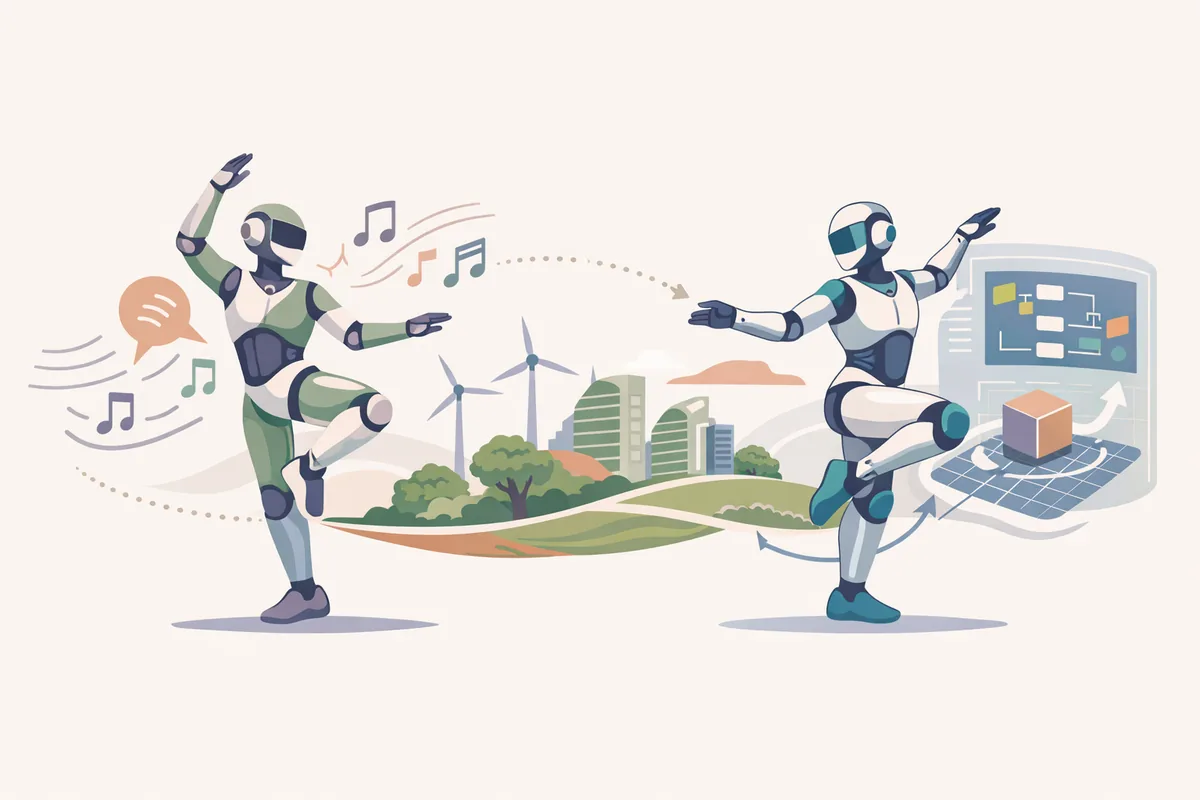
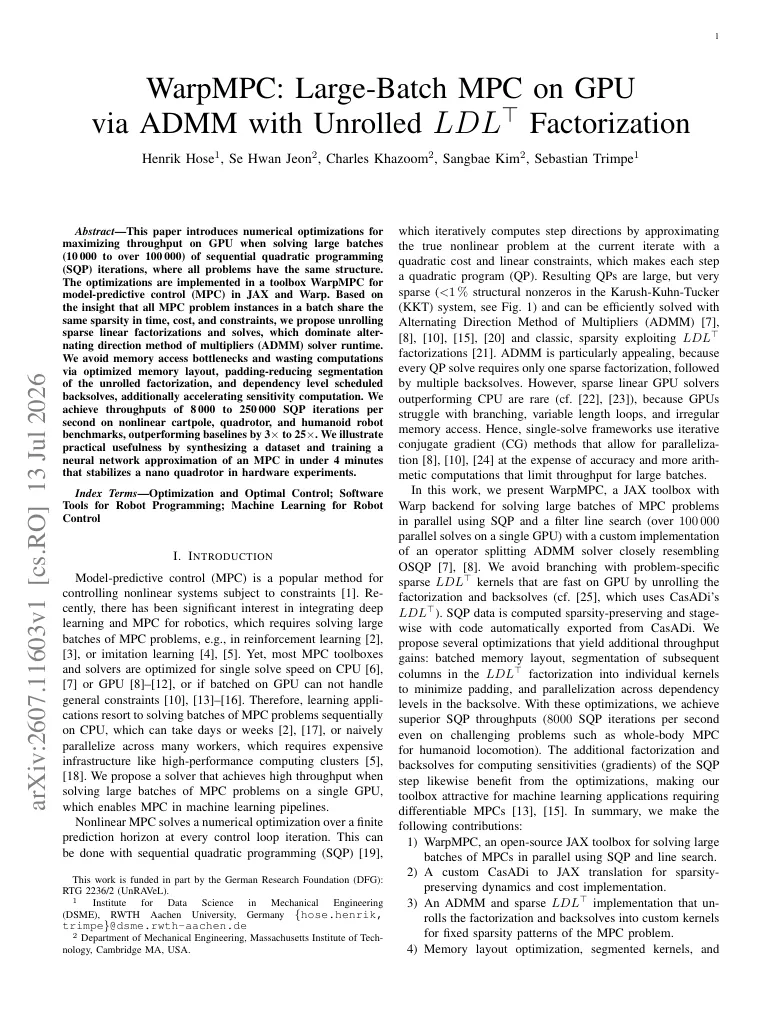
Runs many robot motion plans on a GPU so humanoid whole-body controllers can react faster.
Uses sound and language cues to make a humanoid whole-body controller react to dynamic events around it.
Benchmarks, datasets, rewards, simulators, and tooling.
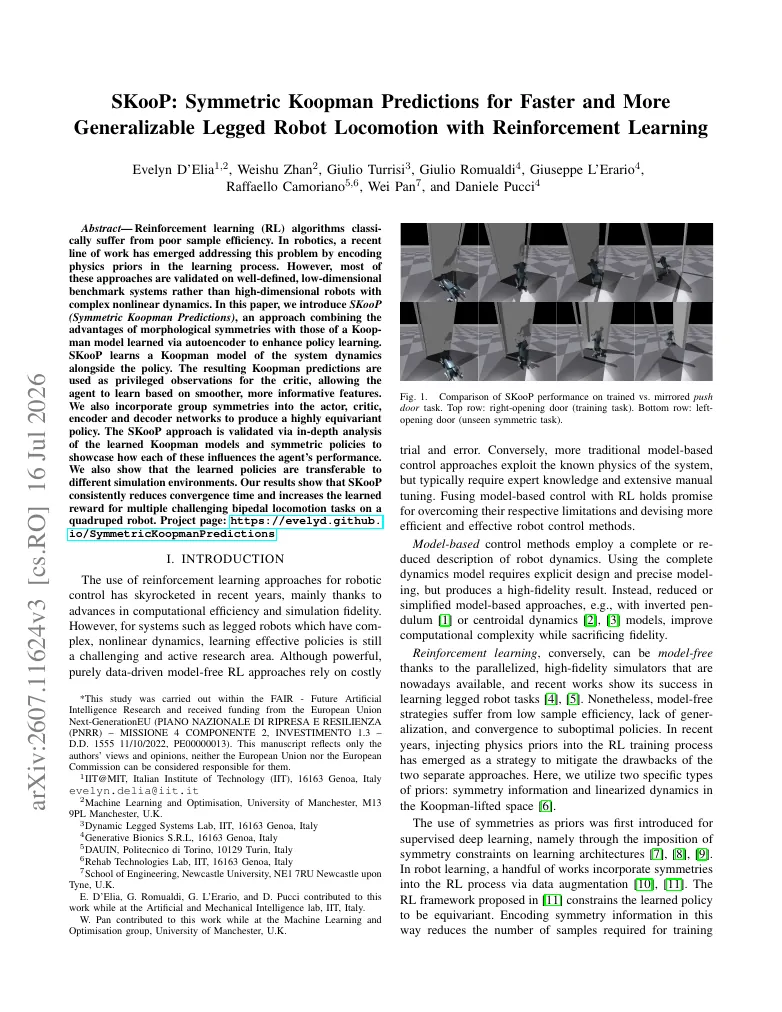
Speeds up legged robot training by using left-right body symmetry to predict more useful future motion.
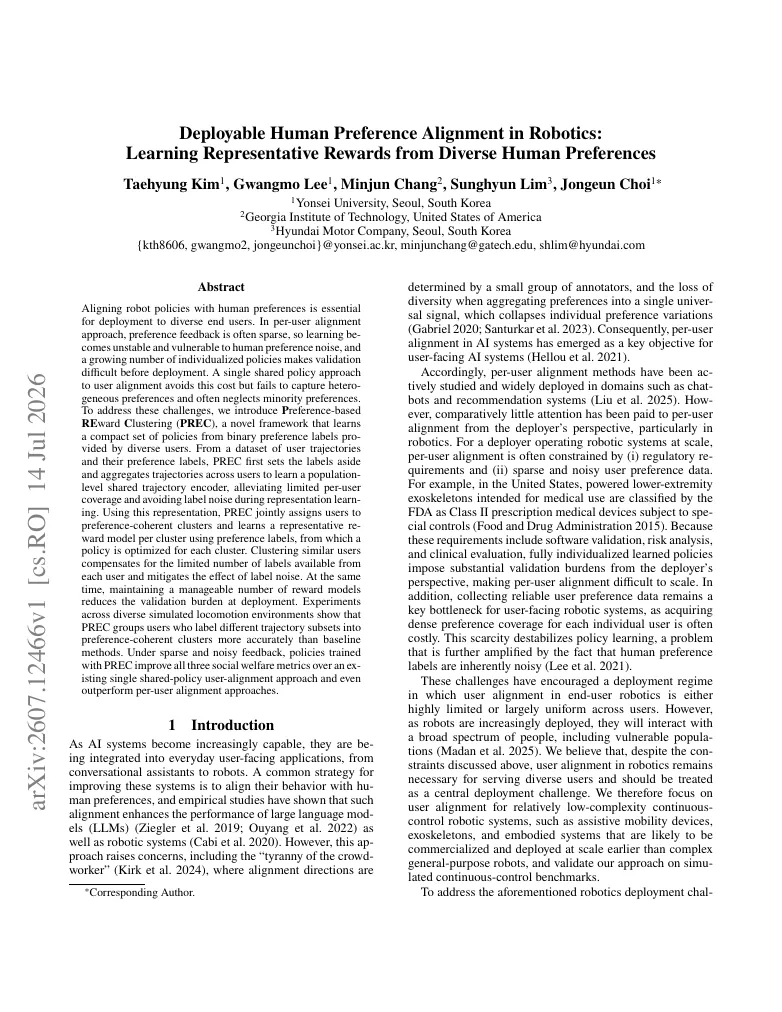
Learns a small set of robot rewards from different people so deployed robots can match user preferences with fewer labels.
Terrain, state, slip, sensors, and local context.
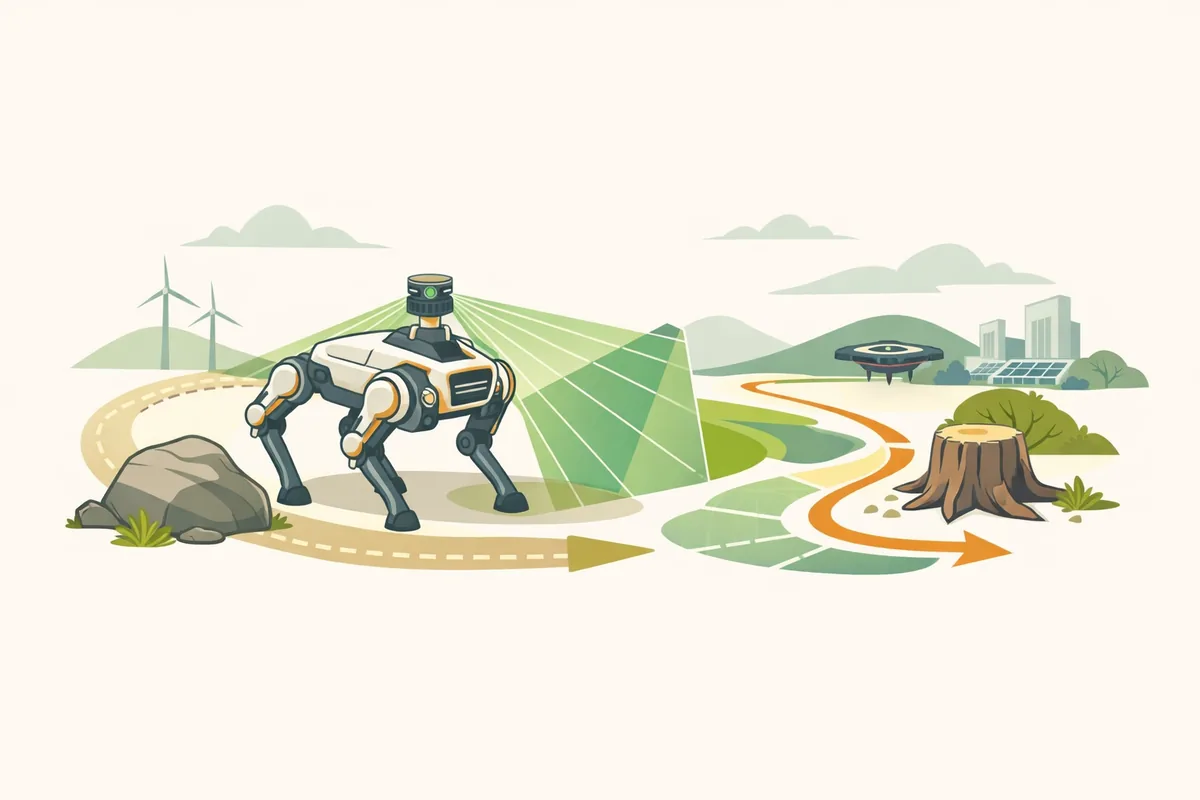
Helps quadrupeds avoid obstacles by splitting LiDAR memory into quick reactions and longer route planning.